Cluster flies are parasitic flies that spend summer in earthworms in your yard, then migrate to the warmest walls of your house every fall to overwinter. They get in through the same gaps as stink bugs and Asian lady beetles — window frame cracks, worn weatherstripping, gaps in siding, and damaged soffit screens. Seal those entry points before they start gathering in late summer and you stop the invasion before it starts. This article tells you exactly how.
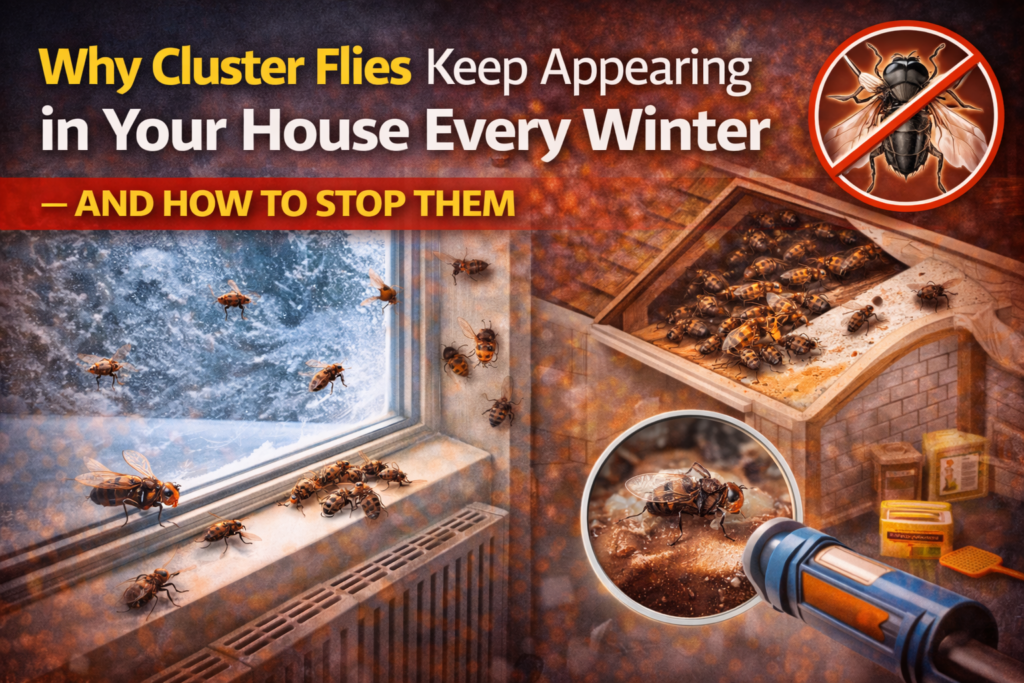
One warm afternoon in late October you notice something odd — a cluster of large, slow-moving flies on the inside of a south-facing window. Not a few. Maybe twenty or thirty, crawling sluggishly on the glass, bumping into each other, barely reacting when you approach. You open the window to shoo them out. The next day they’re back. More of them.
This is cluster fly behavior and it confuses homeowners every single fall for the same reason: these flies don’t come from inside your house. There’s no rotting food source, no breeding happening indoors, no hygiene problem you’ve overlooked. They come from outside — from your yard, specifically — and they’re inside your house for one reason only. They want to spend the winter there.
Understanding that single fact changes how you approach the problem completely. You don’t need to find a breeding source because there isn’t one indoors. You don’t need pesticide sprays all over your house. You need to find where they’re getting in and seal those entry points. Here’s how.
What Cluster Flies Actually Are
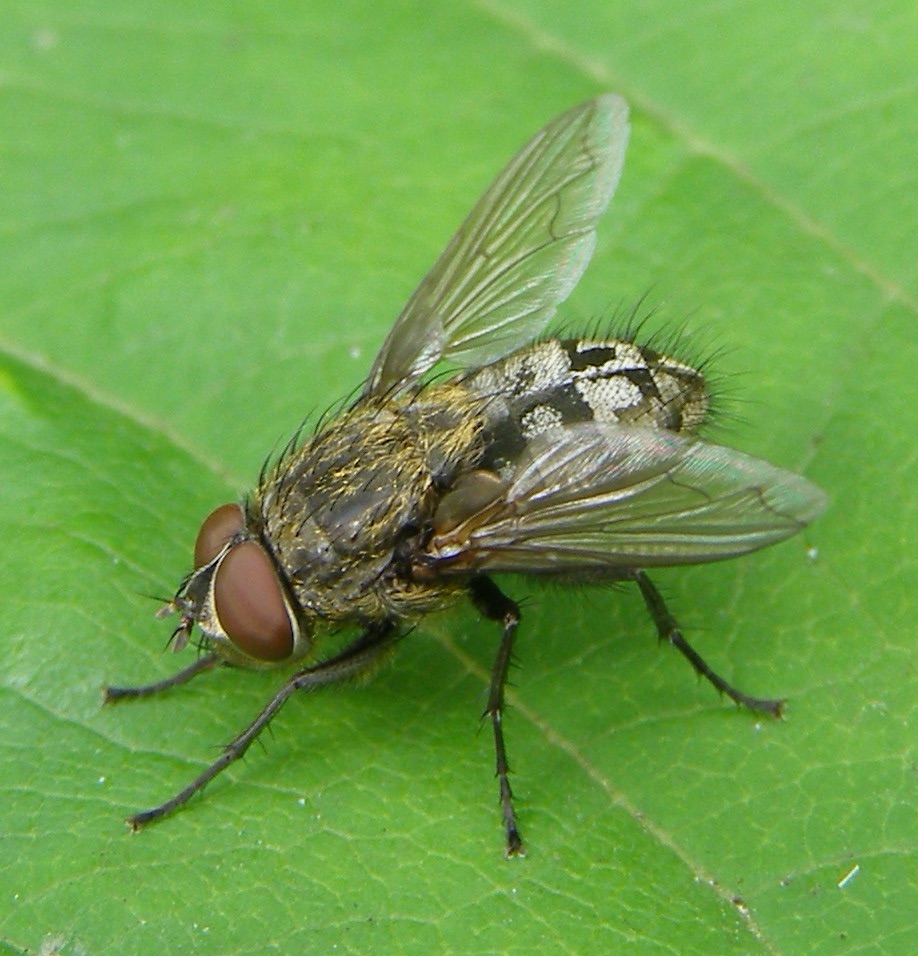
Cluster flies — Pollenia rudis and related species — are in the blowfly family but they bear almost no resemblance to the common housefly in behavior. They’re larger than a housefly, moving noticeably slower, and up close you can see a distinctive pattern of golden or yellowish hairs on the thorax that catches the light. They don’t breed in garbage or decaying food. They don’t carry disease in the way houseflies do. They’re a nuisance problem, not a sanitation problem.
Their life cycle is genuinely strange. In spring and summer, female cluster flies lay eggs in the soil. When the eggs hatch, the larvae seek out earthworms and parasitize them — burrowing inside the worm and feeding on it as they develop through multiple larval stages. After pupating in the soil, adults emerge in late summer, feed on plant nectar and aphid honeydew, and then begin their search for an overwintering site in early to mid fall.
Your house — specifically its south- and west-facing walls that absorb the most heat from the afternoon sun — is exactly what they’re looking for. They cluster on warm surfaces, find gaps in the exterior, work their way into wall cavities and attic spaces, and spend the winter in a dormant or semi-dormant state. On warm winter days they become active again and move toward light, which is when you find them crawling on windows and light fixtures inside your home.
How to Tell Cluster Flies From Other Flies
The confusion between cluster flies and common houseflies is understandable — they’re both flies. But there are clear differences. Cluster flies are noticeably larger, typically about 8-10mm versus the housefly’s 6-7mm. They move much more slowly and seem almost lethargic, particularly in cool conditions. When at rest they often overlap their wings completely flat over their abdomen in a distinctive way. And the golden hair on the thorax is visible in good light and unlike anything on a common housefly.
Behavior is the clearest identifier. If you have a large number of flies appearing on south-facing windows in fall or on warm winter days, clustering together rather than flying around actively, and there’s no obvious food source nearby — those are cluster flies. Common houseflies in fall are a hygiene or entry point problem. Cluster flies are strictly an overwintering problem.



Why They’re In Your House Year After Year
Like stink bugs and Asian lady beetles, cluster flies release aggregation pheromones that mark a good overwintering site. Once your house has been used as an overwintering location, the chemical signal persists and draws new flies back to the same entry points the following year. The population that overwinters in your walls this winter may be different individual flies from last year’s population, but they’re following the same chemical trail to the same gaps.
This is why cluster fly problems tend to get worse over time in a house that isn’t sealed properly — each year’s population reinforces the pheromone signal, and each year slightly more flies find the location. It also explains why certain windows or wall sections seem to attract flies every single year while others never do. The signal is localized and specific.
Cleaning away the pheromone residue after dealing with an infestation helps reduce but doesn’t fully eliminate this effect. Physical sealing of the entry points is the permanent solution — if there are no gaps to get through, the pheromone signal is irrelevant.


Finding Where They’re Getting In
Cluster flies are small enough to squeeze through gaps you might not think of as openings. A gap of 3mm — just over an eighth of an inch — is large enough for a cluster fly to enter. Systematic inspection of your home’s exterior is the most important step in stopping them.
Start With the South and West Walls
Cluster flies orient toward warmth and light, which means south- and west-facing walls are where they concentrate and where they’re most likely to find and use entry points. Start your inspection on these walls and work methodically from the roofline down to the foundation.
Window Frames Are Almost Always the Primary Entry Point
The corners of window frames where horizontal and vertical members meet, the gap between the window sash and the frame channel, the meeting rail of double-hung windows, and the joint between the window frame and the exterior siding — all of these areas develop gaps over time as wood moves through seasonal cycles and caulk ages and cracks.
On a calm day in early fall before cluster flies start appearing, inspect every window on your south and west walls. Look at the exterior caulk joint around the entire frame perimeter. Press it with your finger — if it’s hard, crumbly, or pulling away from either surface, it needs to be replaced. Look at the corners of the interior frame for gaps where the members meet. If you can push a business card into any joint, a cluster fly can get through it.
For a detailed walkthrough of how to seal window frames properly with silicone caulk and foam weatherstrip tape — addressing both the static joints and the moving sash seams — our article on stopping Asian lady beetles through windows covers the exact same techniques that work for cluster flies.
Roofline, Fascia, and Soffit Areas
Cluster flies frequently enter through the roofline area — gaps where fascia boards meet, where the soffit panel system has gaps or damaged sections, and where the soffit meets the exterior wall. This is a common entry point that homeowners miss because it’s high up and not easy to inspect without a ladder.
Get up on a ladder on a sunny fall day and look carefully at the entire roofline on your south and west sides. Look for gaps between soffit panels, between the soffit and the fascia, and where the soffit meets the siding below it. Any gap wider than a few millimeters is a usable entry point. Small gaps can be filled with exterior caulk. Larger gaps in soffit panels may need replacement panels or can be covered with hardware cloth if the gap is a ventilation opening.
Gable Vents and Attic Access Points
The gable vents at each end of your attic — those triangular louvered openings — are major entry points for cluster flies when the screens are damaged or missing. Cluster flies overwinter heavily in attic spaces because attics have stable temperatures and lots of protected nooks between insulation batts and framing members.
If you go into your attic on a warm fall day and find large numbers of flies — sometimes hundreds — clustered on the south-facing roof sheathing or on the attic floor near the gable vent, the vent screen is your entry point. Replace damaged screens with fine mesh hardware cloth with openings no larger than 1/16 inch, fastened securely around the entire perimeter of the vent opening.
For more detail on how insects exploit attic vents and what to do about it, our piece on reasons bugs invade your home’s air vents is worth reading.
Gaps Around Siding, Trim, and Utility Penetrations
Anywhere exterior materials meet — lap siding joints, where trim boards meet siding, around outdoor electrical boxes, where pipes exit the wall — is a potential cluster fly entry point. Walk the perimeter of your south and west walls and look closely at every junction. Probe suspect areas with a fingernail or thin tool. Any gap that goes through to a void or wall cavity is fair game.
The Fix: Sealing Entry Points Methodically
Clear Silicone Caulk for All Static Gaps
Clear silicone caulk is your primary tool for sealing the gaps cluster flies use. It bonds to wood, vinyl, metal, and masonry, stays flexible through temperature extremes, and doesn’t crack or shrink over time the way latex caulk does. Clear silicone on window frames and trim disappears visually once cured — it’s essentially invisible.
Work methodically around every window on your south and west walls first, then move to the roofline area, then utility penetrations, then any remaining gaps in siding and trim. Don’t rush. A careful, complete job done once lasts for years. A rushed job with gaps missed has to be redone the following fall.
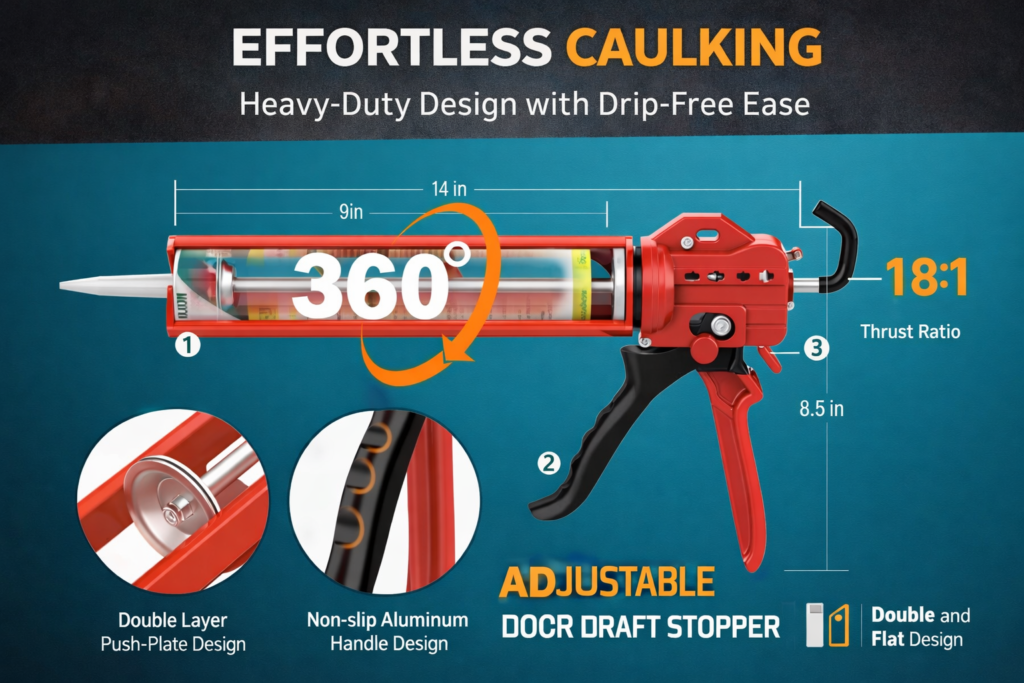
Caulk gun: The 2026 One Touch Drip Free Caulk Gun makes detail work significantly easier — the anti-drip mechanism stops the flow immediately when you release the trigger so you’re not fighting drips between gaps. Worth it for a full exterior sealing job.
Foam Weatherstrip Tape for Window and Door Seams
The moving parts of windows — the sash, the meeting rail, the sides of the sash in the frame channels — can’t be caulked because they need to open and close. Foam weatherstrip tape applied to the compression surfaces creates a seal when the window is closed without preventing operation.

Weatherstrip tape: The 40FT Weather Stripping Door and Window Seal provides a continuous compression seal on window sash and door frames. Clean the surface before applying, press firmly for full adhesion, and replace every two to three years as foam compresses permanently over time.
Hardware Cloth for Vents
For attic gable vents, soffit vents, and any other ventilation openings where screens are damaged or missing, fine mesh hardware cloth is the solution. Use 1/16 inch or 1/8 inch opening hardware cloth, cut it generously oversized, and fasten it with staples or small screws around the entire perimeter of the opening. Pull it taut so there are no sags that bugs can push through.
Expandable Foam for Large Gaps
For gaps larger than about half an inch — around large pipe penetrations, in gaps between framing members that have opened up, in areas where siding has pulled away from sheathing — expandable spray foam fills the void completely and sets firm. Use minimal-expanding foam near window and door frames to avoid distorting them. Standard expanding foam is fine everywhere else.


Dealing With Cluster Flies Already Inside
If cluster flies are already overwintering in your walls and attic, sealing the exterior stops new ones from getting in but the ones already inside will continue to emerge on warm days throughout winter and into spring. Here’s how to handle the indoor population.
Window Fly Traps Near Affected Windows
Cluster flies that have made it into your living space are drawn to windows — specifically to the light and warmth. Window fly traps positioned on or near the glass of affected windows catch them passively without any chemical smell or mess.
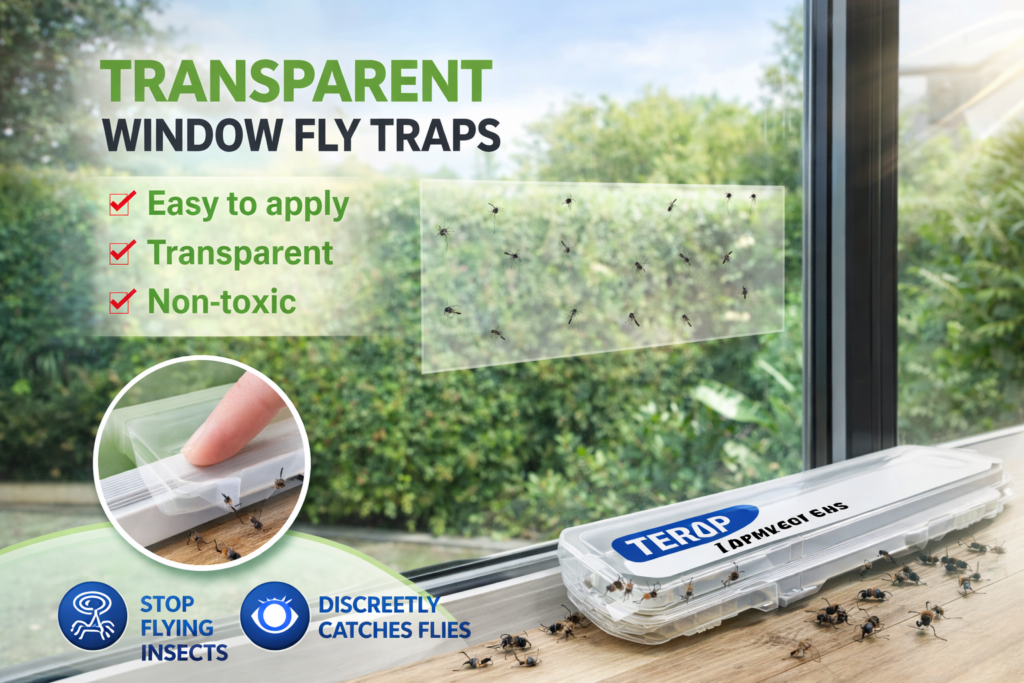
Window traps: The 50 Pack Window Fly Trap Clear Sticky Strips are clear so they’re nearly invisible on glass, work immediately, and a pack lasts a full season. Put them on the windows where cluster flies are most active and they’ll significantly reduce the number you’re dealing with on any given day.
Vacuum on Warm Days
On warm winter days when cluster flies become active and start crawling on windows and walls, a vacuum with a hose attachment is the fastest way to collect them. Unlike stink bugs they don’t release an offensive smell when disturbed, so vacuuming is clean and straightforward. Empty the vacuum outside.
Seal Interior Gaps Where They’re Emerging
If flies are emerging into living spaces from specific interior locations — gaps in window trim, around electrical outlets on exterior walls, from behind baseboards — seal those interior gaps with caulk as well. This keeps the overwintering population contained in the wall cavity rather than continuously emerging into your home. They’ll die off in the wall over winter without any ability to reproduce indoors.
Light Traps for Heavy Indoor Infestations
If the indoor population is large enough that window traps alone aren’t keeping up, a UV light insect trap placed in the most affected room — positioned away from windows so flies move toward the trap rather than the glass — can significantly reduce numbers. Run it overnight when the room is dark for best results.
Don’t use bug zappers indoors for cluster flies. The loud snap and potential for fly fragments to scatter is unpleasant indoors. Sticky light traps that catch rather than electrocute insects are the better choice for indoor use.
Why Exterior Spray Treatments Have Limited Effectiveness
Residual pesticide sprays applied to exterior walls in early fall are sometimes recommended for cluster fly control, and they can provide some reduction in the number of flies that make it inside. But their effectiveness is limited for a few reasons worth understanding.
First, timing is critical and narrow. The spray needs to be applied before cluster flies start gathering on the walls — typically late August to early September. Applied after flies are already clustering, contact insecticides kill some on the surface but don’t deter new flies from landing. The aggregation pheromone is a stronger attractant than the repellent effect of most insecticides at typical application rates.
Second, exterior sprays don’t address flies that enter through upper-story and roofline entry points where spray coverage is difficult to achieve. And they need to be reapplied after rain, which in early fall can mean frequent reapplication to maintain effectiveness.
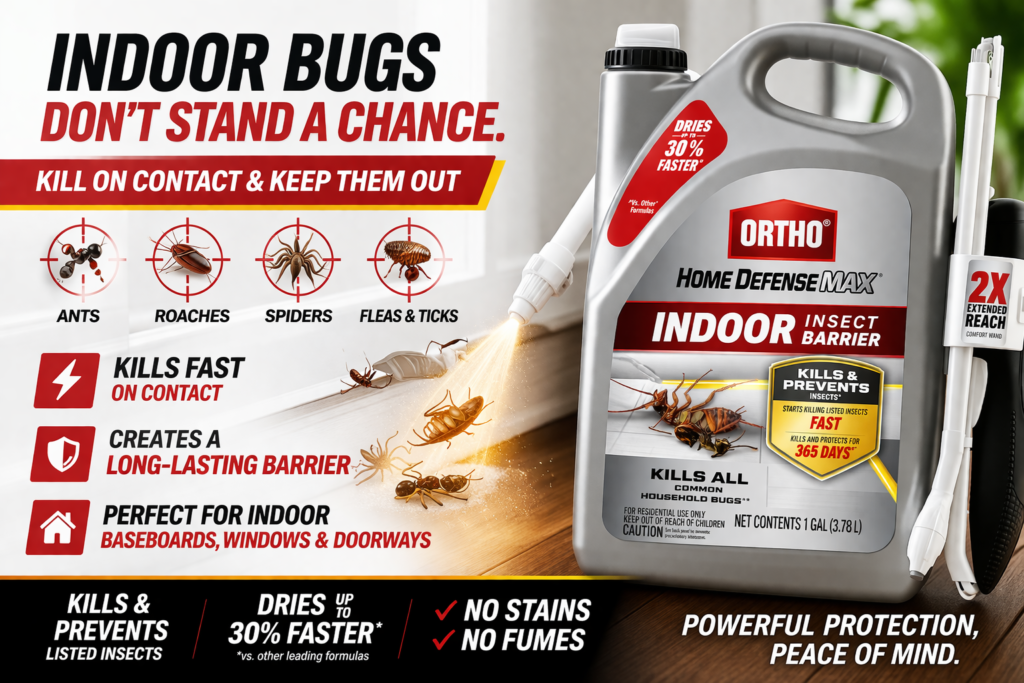
Physical sealing lasts for years and works regardless of weather or timing. If you’re going to invest effort in cluster fly prevention, sealing is a far better use of that effort than spraying. Our guide on stopping bugs before they take over with spray covers situations where exterior treatment does make sense as a supplemental measure.



The Role Your Lawn Plays
Here’s a piece of the cluster fly puzzle that surprises most homeowners: the flies breeding in your yard are the same flies trying to get into your house. Cluster fly larvae develop in earthworms in the soil, and earthworm populations are typically highest in well-maintained lawns with good organic matter content — exactly the kind of yard most homeowners want.
This means you can’t eliminate the source population without eliminating your earthworms, which nobody wants to do. The only practical solution is preventing the adult flies from getting into the house rather than trying to eliminate them in the yard. Treating soil with pesticides to kill earthworms is neither effective nor desirable — it harms soil health and the flies would repopulate from neighboring areas anyway.
Homes surrounded by agricultural land, orchards, and pastures tend to have worse cluster fly problems simply because there’s more habitat nearby supporting larger populations. If you’re in a rural area and cluster flies are severe, that context matters — your sealing job needs to be thorough because the pressure from outside is higher.
The Prevention Timeline That Actually Works
Getting ahead of cluster flies requires acting before they appear, not after. Here’s the window that matters most.
Late July through August is when cluster fly larvae are finishing development in the soil and adult flies are beginning to emerge and feed before overwintering behavior kicks in. This is your window to inspect and seal. Walk your south and west walls. Find every gap. Caulk every window frame exterior joint. Replace worn weatherstripping. Check soffit and gable vents. Do all of this before the end of August.
Early September is when flies begin orienting toward warm walls. If you see a few on a south-facing wall on a warm afternoon this is normal — they’re scouting. This is your last chance to address any gaps you missed in August. After this point flies that have found entry points are already beginning to work their way inside.
October onward is management mode — vacuuming, window traps, sealing interior emergence points, and waiting for cold temperatures to put the indoor population fully dormant.
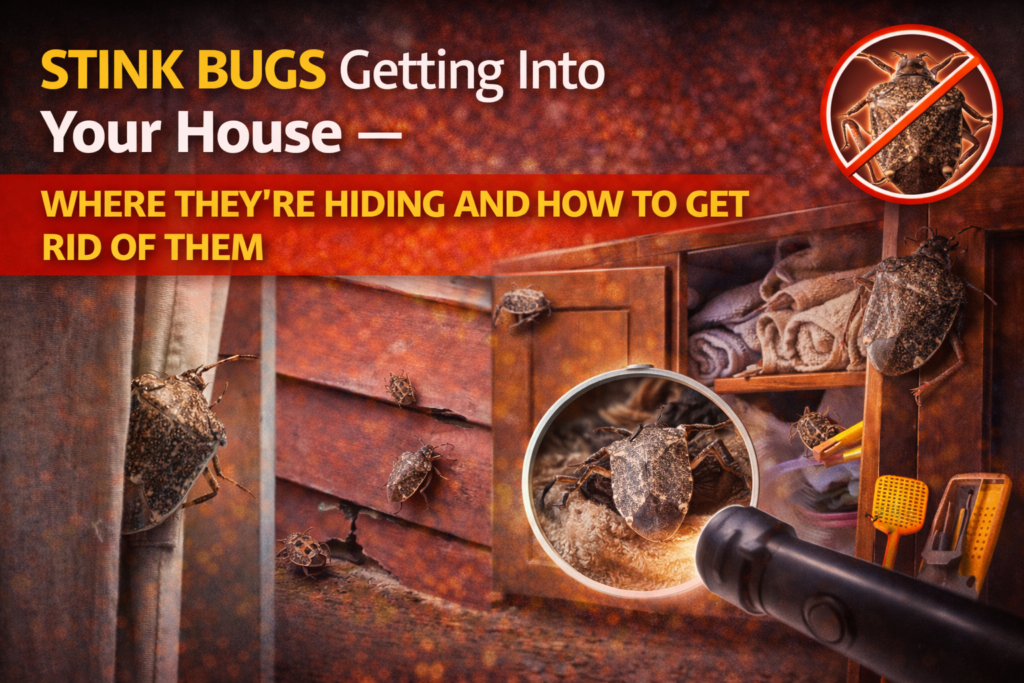
The same prevention schedule applies to stink bugs and Asian lady beetles, which is a useful convergence — one round of exterior sealing done properly in late summer addresses all three of these overwintering pest problems simultaneously. Our article on stink bugs getting into your house and our piece on stopping Asian lady beetles cover those species in depth — the sealing approach is nearly identical across all three.



What Spring Looks Like With and Without Proper Sealing
One thing homeowners who’ve never dealt with cluster flies before often don’t anticipate: the spring emergence. As temperatures warm up in March and April, the cluster flies that successfully overwintered in your walls and attic become active and attempt to exit back to the outdoors. If your interior gaps are sealed they stay in the wall cavity and work their way out through exterior gaps — which is fine. If your interior is unsealed they flood into living spaces looking for a way out, which is decidedly not fine.
On warm sunny days in late winter and early spring, check south-facing windows for sluggish flies clustered on the glass trying to get outside. These are overwintering cluster flies that have become active. Opening the window on warm days gives them a way out. Vacuuming them up is the alternative. Either way, this spring emergence is normal and finite — it ends when the overwintering population has fully exited.
A house that was properly sealed the previous fall will have dramatically fewer spring emergences than one that wasn’t, because fewer flies made it inside in the first place. The investment in sealing pays dividends across both the fall entry period and the spring exit period.
The Bottom Line
Cluster flies are one of the most misunderstood pest problems homeowners face because nothing about their indoor appearance makes intuitive sense. There’s no food source. There’s no breeding happening. There’s no obvious entry point. They just appear, in large numbers, on certain windows, in certain rooms, every fall and every warm winter day.
The explanation is simple once you understand it: they’re overwintering insects that came from your yard, entered through gaps in your exterior that you’ve never thought to seal, and are now spending the winter in your walls. The solution is equally simple: find the gaps and seal them before the flies start gathering in late summer. Clear silicone on the static joints, foam weatherstrip tape on the moving sash seams, hardware cloth on damaged vent screens, and expandable foam on large gaps around utilities.
Done thoroughly once in late August, this work lasts for years and solves the problem for stink bugs, Asian lady beetles, and cluster flies simultaneously. That’s a pretty good return on a few hours and twenty dollars in materials.
About the Author — Dave Pritchard
Dave Pritchard spent fifteen years as a residential building inspector before transitioning to full-time writing about home repair and maintenance. He’s seen the inside of more walls, crawl spaces, and attics than he can count, and his approach to home problems is always the same: find the actual cause before reaching for a fix. He contributes regularly to DIY Home Wizard on topics ranging from pest exclusion to structural issues and energy efficiency.