
Few things are more frustrating than a circuit breaker that keeps tripping — especially when it refuses to reset no matter what you do. Before you reach for the phone to call an electrician, take a breath. In most cases, this is something a homeowner can diagnose and fix themselves without spending hundreds of dollars on a service call.
This guide walks you through exactly what’s happening, why it’s happening, and how to fix it step by step.
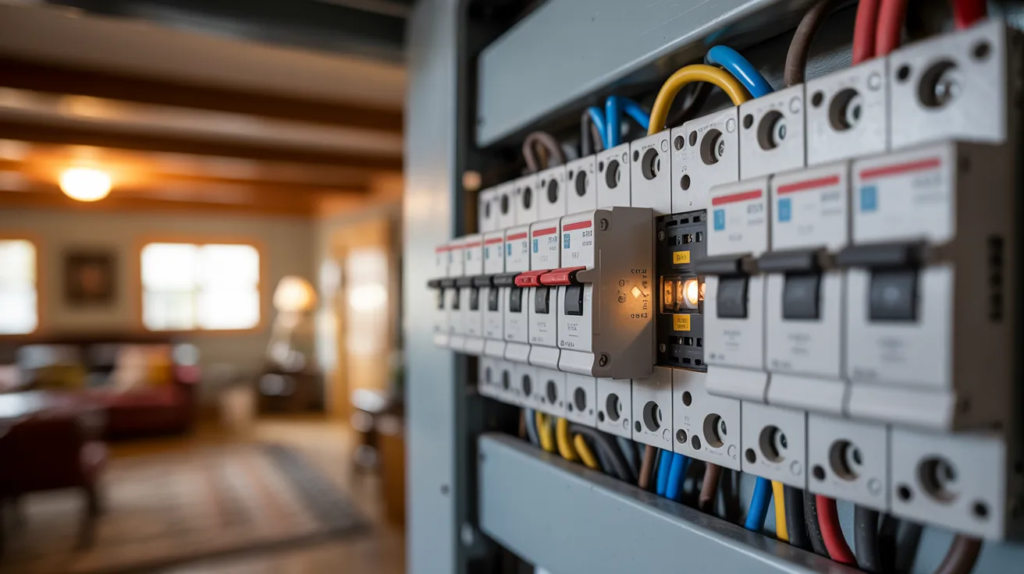
What Does It Mean When a Circuit Breaker Trips?
Your circuit breaker is designed to be the hero of your electrical system. When too much electricity flows through a circuit — or when something dangerous happens like a short circuit — the breaker “trips,” cutting power to that circuit before damage or fire can occur.
Think of it as a built-in safety switch. It’s not the enemy. It’s doing its job.
The problem is when it keeps tripping, or when it trips and simply won’t reset. That’s your home telling you something needs attention.
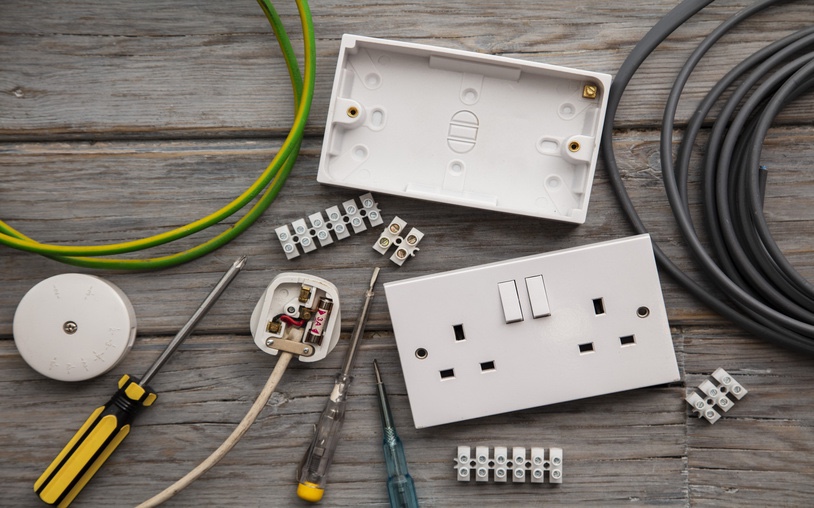
If you’re new to home electrical basics, it’s worth reading through our Mastering Home Electrical Safety: A Comprehensive Guide for Every Homeowner before diving in.
The 3 Most Common Reasons a Circuit Breaker Trips
1. Overloaded Circuit
This is by far the most common cause. An overloaded circuit means you’re drawing more electricity than the circuit is rated to handle. Think of a kitchen circuit with a microwave, toaster, coffee maker, and air fryer all running at once — that’s a recipe for a tripped breaker.
2. Short Circuit
A short circuit happens when a hot wire touches a neutral wire, either inside an outlet, appliance, or somewhere in your wiring. This causes a sudden surge of electricity and the breaker trips immediately. Short circuits are more serious than overloads and need to be addressed carefully.
3. Ground Fault
Similar to a short circuit, a ground fault occurs when a hot wire contacts a grounded surface — like a metal outlet box or the ground wire. These are especially common in bathrooms, kitchens, and garages where moisture is present.
There’s also a fourth, less common cause: the breaker itself is simply worn out and needs to be replaced.


How to Safely Reset a Tripped Circuit Breaker
Before you do anything, make sure your hands are dry and you’re standing on a dry surface. Electrical panels aren’t dangerous when handled correctly, but respect is always required.
Step 1: Identify the tripped breaker. Open your electrical panel. A tripped breaker will be in the middle position between ON and OFF — it won’t be fully flipped to OFF yet.
Step 2: Turn it fully OFF first. Don’t just push it back to ON. You need to push it all the way to the OFF position first. This resets the internal mechanism.
Step 3: Turn it back ON. Firmly flip the breaker to the ON position. You should feel a solid click.
Step 4: See if it holds. If the breaker stays on, you likely had a simple overload. Unplug some devices from that circuit and you’re done.
If it trips again immediately — or won’t reset at all — keep reading.
Why Won’t My Breaker Reset?
If your breaker trips the moment you reset it, or won’t budge at all, here’s what to check:
Unplug Everything on That Circuit First
Before resetting, go around and unplug every device and turn off every light connected to that circuit. Then try resetting. If it holds, you had an overload — plug things back in one at a time until you find the culprit.
Look for a Burning Smell or Scorch Marks
Open the panel carefully and look for any visible scorch marks, melted plastic, or burning smell near the breaker. This indicates a more serious short circuit issue. If you see this, do not attempt to reset the breaker — call an electrician.
Check Your Outlets
Sometimes the problem isn’t in the panel at all — it’s in an outlet. Check every outlet on that circuit for scorch marks or damage. A damaged outlet can cause a short that keeps tripping the breaker.
Is It a GFCI Outlet Issue?
In bathrooms, kitchens, garages, and outdoor areas, you’ll find GFCI outlets — the ones with the small TEST and RESET buttons on them. One tripped GFCI outlet can cut power to an entire circuit. Look for a GFCI outlet that needs to be reset before assuming it’s the breaker.
The Breaker Itself May Be Faulty
Circuit breakers don’t last forever. If a breaker is old, has been tripping frequently for years, or simply won’t hold position even with nothing plugged in, the breaker itself may need to be replaced. This is a job most confident DIYers can handle — but if you’re unsure, it’s worth getting a professional opinion.


When to Call an Electrician
DIY is great — and this site is built for homeowners who love to tackle problems themselves. But electrical work has limits. You should call a licensed electrician if:
- You see scorch marks, melted plastic, or smell burning near the panel
- The breaker trips instantly even with nothing plugged in
- Multiple breakers are tripping at the same time
- You have an older home with aluminum wiring or a Federal Pacific or Zinsco panel (these are known fire hazards)
- You’re not comfortable working near the electrical panel
There’s no shame in knowing when to call in help. Staying safe is always the right DIY decision.
Preventing Circuit Overloads Before They Happen
Once you’ve resolved the immediate problem, a little prevention goes a long way.
Spread your appliances across circuits. High-draw appliances like microwaves, space heaters, hair dryers, and air fryers should never share a circuit if possible.
Know your circuit ratings. Most household circuits are rated for 15 or 20 amps. A simple wattage calculation can tell you how much you can safely run.
Don’t use power strips as a permanent solution. Daisy-chaining power strips is one of the fastest ways to overload a circuit.

Consider a smart plug to monitor energy use. A device like a smart plug can show you real-time wattage draw on a circuit so you know exactly when you’re approaching the limit. Check out our guide on DIY Home Automation: Mastering Smart Plugs for the Savvy Homeowner for recommendations.
Keep up with regular home maintenance. Electrical issues rarely come out of nowhere. A consistent Home Maintenance Plan helps you catch small problems before they become expensive ones.
Other Electrical Issues Worth Knowing About
While you’re thinking about your home’s electrical system, here are a few related topics that every homeowner should be familiar with:
- Installing outdoor or pool wiring — If you’ve ever considered running underground electric to an outbuilding or pool, our guide on Installing Underground Electric for Your Pool walks you through the process safely.
- Carbon monoxide safety — Electrical problems aren’t the only hidden household danger. Know How to Identify a CO Leak Before It’s Too Late and make sure your detectors are working.
- Saving money as a homeowner — A tripping breaker that goes unaddressed can cost you in repairs down the road. Our 10 Money Saving Tips for Homeowners covers practical ways to stay ahead of home costs.
The Bottom Line
A circuit breaker that keeps tripping and won’t reset is your home’s way of asking for help. Most of the time, the fix is simple — an overloaded circuit, a faulty appliance, or a GFCI outlet that needs a reset. By following the steps above, you can diagnose the problem yourself, fix it safely, and prevent it from happening again.
As always, know your limits. If something feels beyond your skill level, calling a professional is always the right call. But for the majority of tripping breaker situations? You’ve got this.
Looking for more DIY home repair guides? Browse all of our DIY Home Repair and Troubleshooting guides at DIY Home Wizard.