Don’t pay a fence company $300 per post. Most leaning fence posts can be fixed in an afternoon for under $50. Here are 4 proven DIY methods that actually work.
By Mike Callahan | DIY Home Repair Specialist | Updated: March 2026
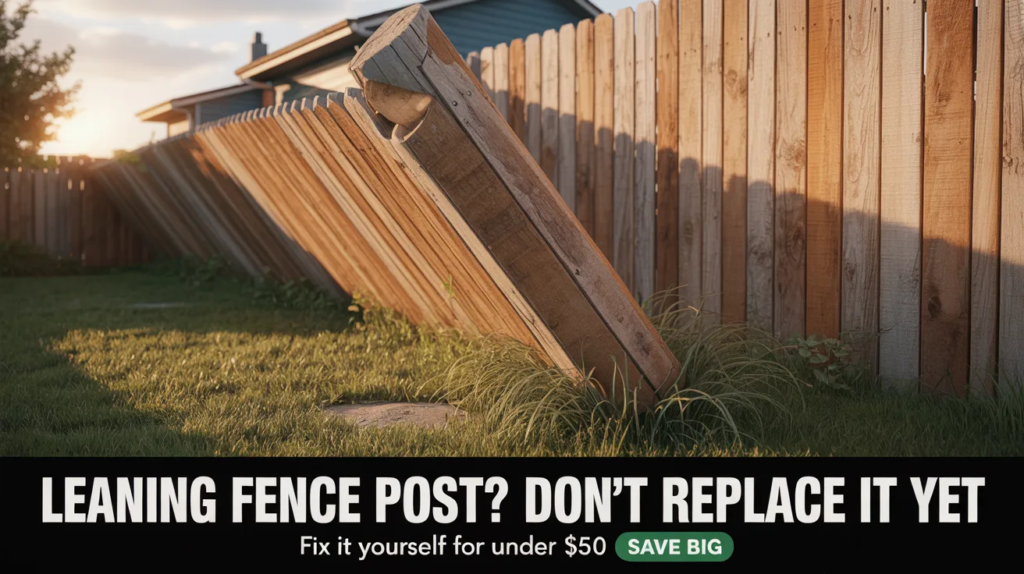
Quick Answer: A leaning fence post doesn’t always need to be replaced. In most cases you can fix it by digging out the base, adding fresh concrete, and resetting the post plumb — saving yourself hundreds of dollars in labor and materials. The key is acting before the wood rots through completely. This guide walks you through every method from quick temporary bracing to a permanent professional-grade fix. Before digging around a fence line, use What Does Each Color Mean On Utility Marker Flags? to identify underground utilities and plan the repair safely.
I’ve fixed more leaning fence posts than I can count over the past 18 years of DIY home repair. And almost every time my neighbor or a friend calls a fence company for a quote, they come back shell-shocked at the price. A single post replacement can run $200 to $400 installed. Multiply that by a few posts on a run of fence and you’re suddenly looking at a bill that makes your eyes water.
The truth is, most leaning fence posts can be fixed — not replaced — with a bag of concrete, a few hours, and the right technique. Let’s get into it.
Why Fence Posts Lean in the First Place
Before you fix the problem, it helps to understand what caused it. Fence posts lean for a few common reasons, and identifying yours determines which fix makes the most sense.
Soil erosion or settling is the most common cause. Over years, soil shifts and compacts unevenly. Posts that were once firmly set start to rock and eventually lean as the ground around them moves.
Rotted post base is the other big one. The section of a wooden fence post that sits underground is constantly exposed to moisture. Over time — usually 10 to 20 years depending on wood type and soil conditions — the base rots and loses its structural grip in the soil.
Inadequate original installation is more common than you’d think. Posts that were set without concrete, or with too little concrete, were never going to last. One good windstorm or a few years of ground movement and they start to go.
Frost heave affects colder climates significantly. Ground that freezes and thaws repeatedly through winter literally pushes posts upward and sideways over time, breaking the concrete footing loose from the surrounding soil.
Impact damage from a vehicle, fallen tree, or heavy equipment can knock a post out of plumb suddenly rather than gradually.



First — Assess Whether the Post Can Be Saved
Not every leaning post is worth fixing in place. Before you start digging, do a quick assessment.
Check the wood condition at ground level. Press a screwdriver firmly into the post right at the soil line. If the wood is solid and the screwdriver doesn’t penetrate easily, the post has structural integrity worth saving. If it sinks in with little resistance, the wood is rotted through and replacement is the smarter call.
Check how far it’s leaning. A post that’s leaning 2 to 4 inches can almost always be reset. A post that’s leaning dramatically — or has actually snapped at the base — needs replacing.
Check what’s attached to it. If the leaning post is pulling fence panels, rails, or gates with it and causing them to rack or warp, fix it sooner. The longer you wait, the more collateral damage accumulates.

For a full breakdown of whether repair or replacement makes more sense for your specific situation, check out our detailed guide Should I Repair or Replace My Leaning Fence?
Method 1: The Sister Post Method (Fastest Fix)
Difficulty: Easy | Cost: $20–$40 per post | Time: 1–2 hours
This is the quickest permanent fix for a leaning post that still has solid wood. Instead of touching the original post at all, you drive a new steel or wood post directly alongside it and bolt the two together. The new post does the structural work while the old one stays in place.
What you need: A steel fence post or pressure-treated 4×4, sledgehammer or post driver, two 3/8-inch carriage bolts with nuts and washers, drill, wrench.
- Drive the new post into the ground directly alongside the leaning post, as close as possible
- Drive it deep — at least 2 feet for a standard 6-foot fence
- Push or pull the leaning post back to plumb using a level
- Clamp the two posts together while you drill
- Drill through both posts and install two carriage bolts — one near the top of the overlap, one near the bottom
- Tighten firmly with a wrench
- Backfill any disturbed soil and tamp firmly
This fix is fast, cheap, and surprisingly strong. The steel sister post in particular lasts decades without rotting.

For more fence repair techniques see our complete guide on How to Fix a Leaning Wood Fence and Save Big.
Method 2: Reset with Fresh Concrete (Best Long-Term Fix)
Difficulty: Medium | Cost: $15–$30 per post | Time: 2–3 hours + 24–48 hours curing
This is the gold standard fix for a leaning post with solid wood that has simply lost its footing due to soil movement or an insufficient original concrete base. You’re essentially giving the post a brand new foundation.
What you need: Digging bar or post hole digger, level, fast-setting concrete mix (Quikrete or similar), water, gravel, temporary bracing lumber.
- Dig around the base of the post to expose the existing concrete footing — typically you need to go down 6 to 12 inches
- Break up the old concrete footing with a digging bar if needed
- Push or pull the post back to plumb — have a helper hold it or use temporary 2×4 braces nailed at an angle to stakes in the ground
- Check plumb in two directions with a level
- Add 4 to 6 inches of gravel at the base for drainage — this dramatically extends post life
- Mix fast-setting concrete and pour it around the post
- Check plumb again as you pour — concrete is heavy and can push the post
- Shape the top of the concrete so it slopes away from the post — this sheds water and prevents rot
- Keep the post braced for 24 to 48 hours while concrete cures
Pro tip from 18 years of doing this: the gravel layer at the base is not optional. It’s the difference between a post that lasts 8 years and one that lasts 25. Water sitting at the base of a wooden post is what kills it. Gravel lets it drain.


Method 3: Expanding Foam Post Fix (Quick and Surprisingly Effective)
Difficulty: Easy | Cost: $15–$25 per post | Time: 1 hour
This is a newer method that a lot of experienced DIYers swear by. Products like Sika Post Fix use an expanding two-part foam that you pour into the hole around the post. It expands to fill every gap, sets in about 3 minutes, and reaches full strength in 15 minutes — dramatically faster than concrete.
What you need: Post fix foam product, level, temporary bracing.
- Dig out enough soil around the leaning post to allow it to be reset plumb — usually 4 to 6 inches deep is enough
- Reset the post plumb and brace it temporarily
- Pour the two-part foam mixture into the hole according to product instructions
- The foam expands and fills all gaps around the post
- It sets firm in about 3 to 5 minutes
- Check plumb once more immediately after pouring — you have a short window to adjust
This method works best for posts in reasonably good soil that just need their footing refreshed. It’s not ideal for posts in very wet or loose sandy soil where concrete gives better long-term results.
Method 4: Fix a Leaning Post Without Digging (Temporary Stabilization)
Difficulty: Very Easy | Cost: $10–$20 | Time: 30 minutes
Sometimes you just need to stabilize a leaning post quickly — maybe bad weather is coming, or you need time to plan a proper fix. This method uses diagonal bracing to hold the post in position without any digging.
- Cut a 2×4 to roughly 4 feet long
- Set one end against the post at about shoulder height
- Drive a stake into the ground at the other end of the 2×4 at an angle
- Nail or screw the brace to both the post and the stake
- Add a second brace from the opposite direction for stability
- Check that the post is plumb before finalizing
This is not a permanent fix. Plan to do a proper reset within a season. Temporary bracing under prolonged wind load or fence tension will eventually fail.



How to Keep Fence Posts From Leaning Again
Fixing a leaning post is satisfying. Fixing the same post twice is not. Here’s how to make sure your repair lasts.
Use pressure-treated lumber rated for ground contact. If you’re resetting a post or sistering a new one, make sure it’s rated UC4B or higher for ground contact applications. This rating means the wood is treated to resist rot and insect damage underground.
Always slope the concrete away from the post. Water pooling at the base of a fence post is the number one cause of premature rot. When you pour or re-pour concrete, dome the top so water runs away from the wood.
Add gravel drainage beneath the footing. Four to six inches of gravel under the concrete base allows water to drain away instead of sitting against the wood.
Seal the post base before installation. Applying an end-grain wood sealer to the bottom of a post before it goes in the ground dramatically reduces moisture absorption.

Inspect your fence line annually. It only takes a few minutes to walk your fence and look for posts that are starting to lean, rails that are pulling loose, or concrete that is cracking. Catching it at 2 inches of lean is a one-hour fix. Catching it at 8 inches is a half-day project. Adding this to your seasonal routine is exactly the kind of task covered in our Home Maintenance Plan guide.
How Much Does It Cost to Fix a Leaning Fence Post?
One of the most common questions homeowners ask before starting this project is whether DIY is actually worth it versus hiring out. Here’s an honest breakdown.
DIY cost per post: $15 to $50 depending on method and materials. Most homeowners fix 3 to 5 posts in a single afternoon once they have the tools and materials on site.
Hired cost per post: $150 to $400 per post for a fence contractor, depending on your region and the extent of work needed.

For a detailed breakdown of what professional fence repair actually costs versus doing it yourself, check out our article How Much Does It Cost to Fix a Leaning Fence?
The math on DIY is hard to argue with on this one.



When a Leaning Post Actually Needs to Be Replaced
There are situations where fixing in place isn’t the right call. Be honest with yourself about these:
The wood is rotted at or below ground level. If the screwdriver test shows soft, spongy wood, no amount of new concrete will save it. You need a new post.
The post has snapped or cracked structurally. A post that has broken — even partially — at the base has lost its structural integrity and needs replacing.
Multiple consecutive posts are leaning. If three or more posts in a row are leaning the same direction, you may have a broader soil or drainage problem that needs addressing before any individual post fix will hold.
The post is pulling the fence panels into a severe rack. Sometimes a leaning post damages fence panels and rails to the point where replacement is the more cost-effective overall solution.

For guidance on that decision see Can a Leaning Fence Be Repaired Without Replacing the Posts? and How to Fix a Leaning Fence Without Replacing It.
Tools That Make This Job Easier
A few tools make fence post repair significantly faster and less frustrating. A good post hole digger or digging bar is essential for exposing the old footing. A cordless drill with long bit is needed for the sister post method. And a quality level — not the $3 bubble level from the dollar store — is non-negotiable for getting a post truly plumb.

For a full rundown of tools every DIY homeowner should own check out Top Tools for Every DIY Enthusiast and The Ultimate List of Essential Tools for the Avid DIY Enthusiast.


Frequently Asked Questions
Can I fix a leaning fence post without removing it?
Yes — the sister post method and expanding foam method both fix a leaning post without fully removing it from the ground. For posts with solid wood that have simply lost their footing, these methods are fast, affordable, and very effective.
How deep should a fence post be set to prevent leaning?
The general rule is one third of the total post length should be underground. For a 6-foot fence using 8-foot posts, that means burying at least 2 feet. In frost-prone areas, go deeper — below the frost line for your region.
Will a leaning fence post fix itself over time?
No. Leaning posts only get worse as gravity, wind load, and fence tension continue pulling them further out of plumb. The longer you wait the harder the fix becomes and the more damage accumulates to surrounding panels and rails.
How long does a fence post concrete repair last?
Done correctly — with proper drainage gravel, sloped concrete, and pressure-treated lumber — a reset fence post should last 15 to 25 years. Skipping the gravel and slope dramatically reduces that lifespan.
Is it worth hiring a fence company to fix a leaning post?
For one or two posts, most homeowners are better off DIYing it. The materials cost $15 to $50 per post and the job takes 1 to 3 hours. Hiring a fence company for the same work typically runs $150 to $400 per post plus a service call fee. The skill level required is genuinely beginner-friendly.
The Bottom Line
A leaning fence post is one of those problems that looks intimidating but turns out to be very manageable for a homeowner willing to spend a Saturday afternoon and about $30. Whether you choose the sister post method for a quick strong fix or dig out and reset with fresh concrete for the best long-term result, you’re saving hundreds of dollars every time you handle this yourself.
Assess the wood. Pick your method. Get it plumb. Pour the concrete. Done.
Your fence will outlast the neighbor’s — and you’ll have the satisfaction of knowing you fixed it yourself.

Find this helpful? Browse all of our outdoor and fence repair guides at DIY Home Wizard — written by real DIYers for real homeowners.
About the Author: Mike Callahan is a DIY home repair specialist with 18 years of hands-on experience tackling everything from fence lines to full room renovations. He contributes regularly to DIY Home Wizard, helping everyday homeowners build the confidence to fix things themselves and stop overpaying for simple repairs.