
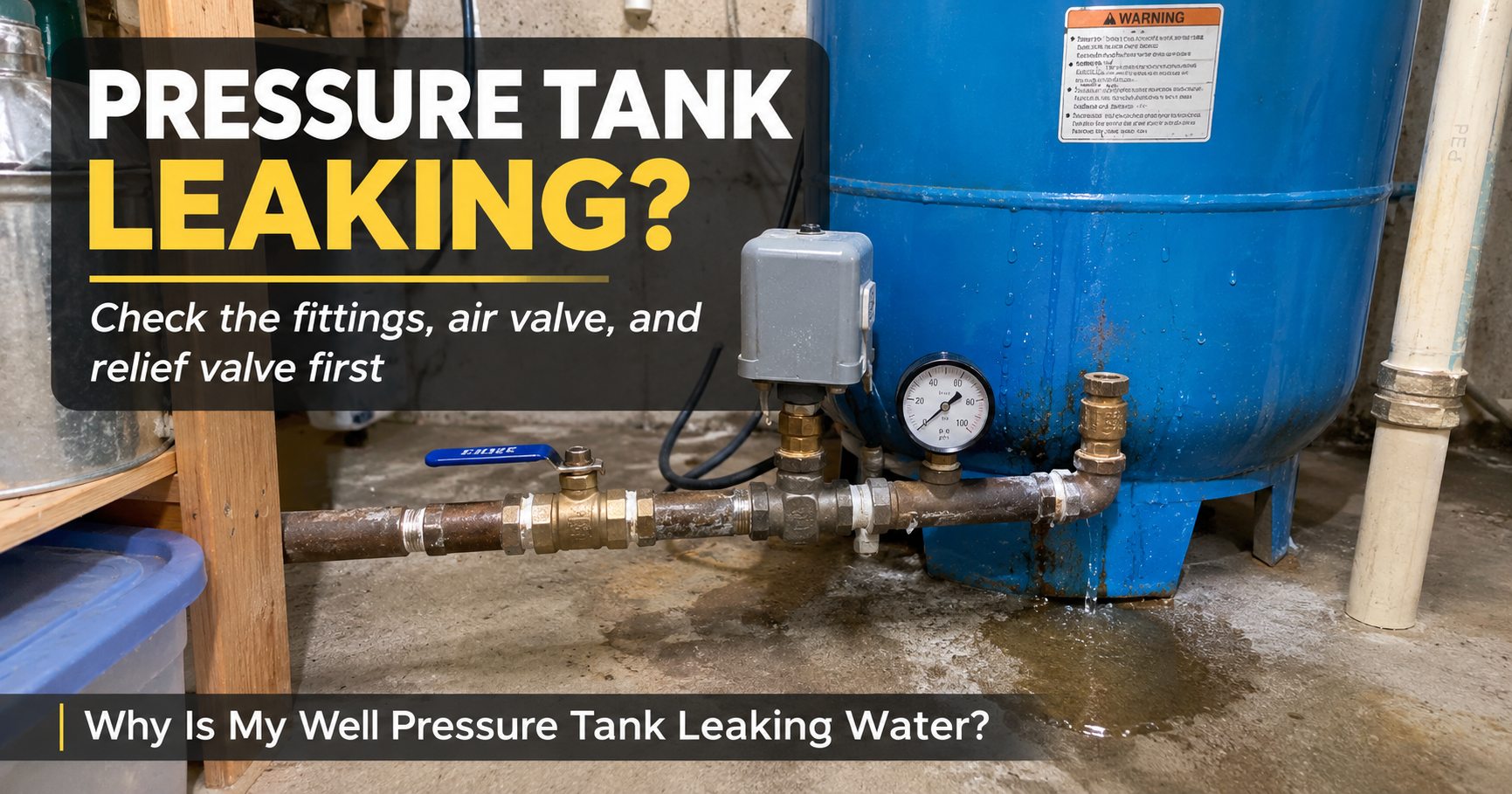
Water around a well pressure tank can mean anything from a loose fitting that needs attention to a rusted tank that is close to failing.
The important part is not guessing from the puddle on the floor. Water from a fitting at the top of the tank can run down the side and make it look like the bottom is leaking. A cold tank can also sweat in a humid basement and fool you into thinking the steel has rusted through.
My first move is always the same: dry everything completely, then watch where the water comes back.
That simple step can keep you from replacing a tank that is fine, or from missing a leak that is slowly getting worse.
What a leaking well pressure tank usually means
A pressure tank is part of the system that keeps water pressure steady between pump cycles. It is connected to plumbing, a pressure gauge, a pressure switch, a relief valve, and usually a tank tee at the bottom.
Any one of those places can leak.
The three most common reasons I would investigate are:
- A plumbing fitting or valve is dripping onto the tank.
- The outside of the tank is covered in condensation.
- The steel tank shell has rusted through or the tank is failing.
The difference matters. A loose fitting may be a straightforward plumbing repair. Water coming through a rusty tank wall is usually a replacement situation.



Start by drying the tank and floor
Before trying to identify the leak, turn off nearby appliances or anything that could splash water around the tank area. Then dry the tank from top to bottom with an old towel or rag.
Dry the floor too.
I want the entire tank shell, the fittings, the pressure gauge, the relief valve, the pipe connections, and the area around the tank tee to start dry. A flashlight helps a lot here, especially in a dim basement, crawl space, or well house.
Once everything is dry, watch the system through a normal pump cycle if it is safe to do so.
Look for the very first place moisture appears.
If water starts at the top and runs down, the tank itself may not be leaking at all. If a bead forms directly from a rust spot, seam, or pinhole in the tank shell, that is a much more serious clue.
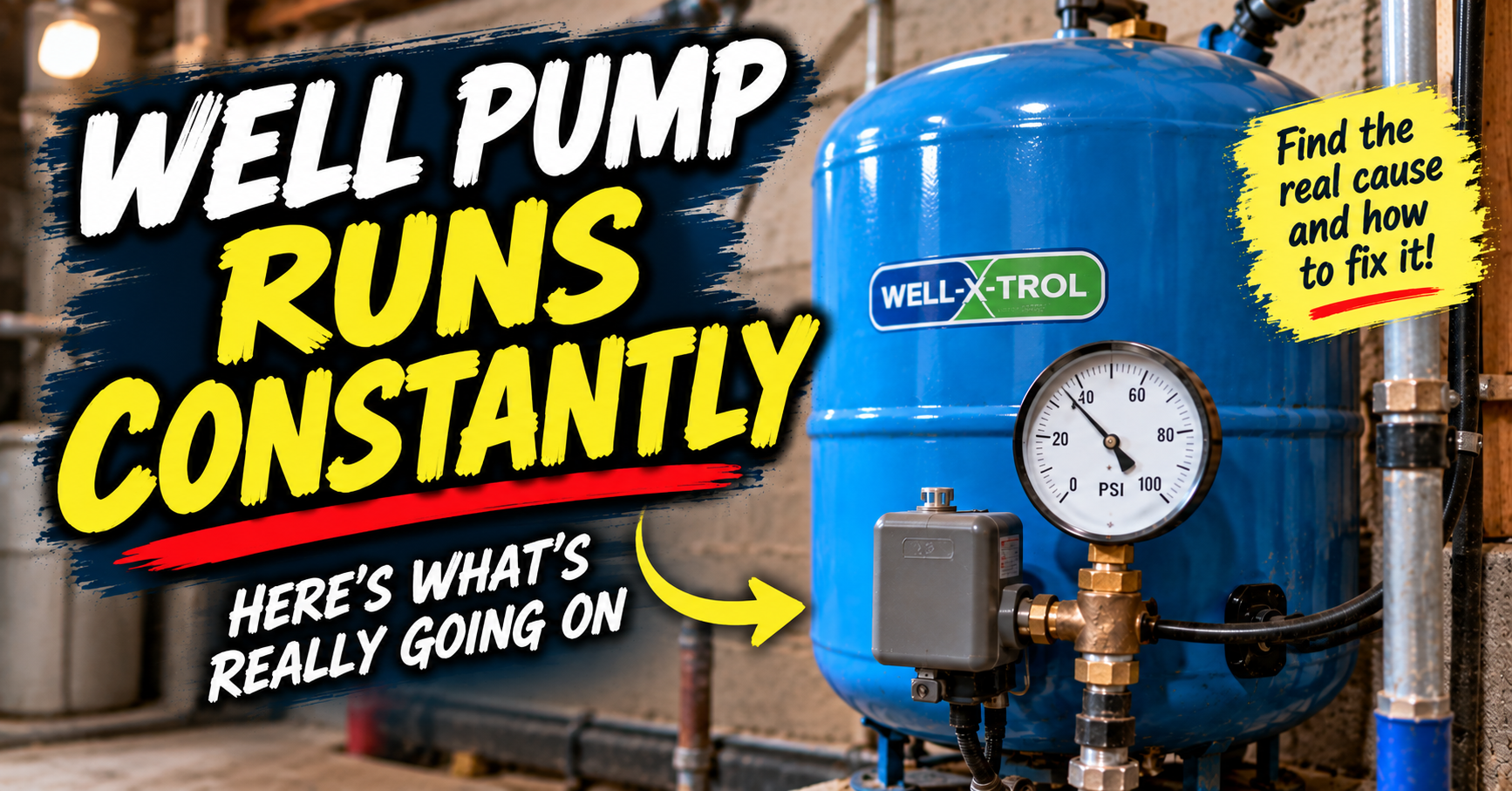

Is the water coming from the top or bottom?
People often say their pressure tank is “leaking from the bottom” because that is where the water ends up.
That does not always mean the bottom of the tank has failed.
Water can begin at the pressure gauge, a threaded fitting, a relief valve, a drain valve, or the piping above the tank. Gravity does the rest. It runs down the outside and pools around the base.
I follow the water upward instead of staring at the puddle.
A dry paper towel is useful for this. Touch it to each fitting one at a time. A small damp spot around a threaded connection can be easier to find that way than by looking alone.
If the top fittings are dry but water forms directly on the steel near the bottom, keep reading before assuming the tank is bad. Condensation can look almost identical at first.
Could it just be condensation on the pressure tank?
Yes. A pressure tank can sweat.
Well water is often colder than the air in a basement, utility room, or crawl space. When humid room air touches the cold metal tank, moisture can collect on the outside just like it does on a glass of ice water.
Condensation usually has a few recognizable clues:
- The tank feels cool and damp over a broader area, not just one pinpoint spot.
- The moisture may be spread across much of the lower shell.
- It is worse on hot, humid days.
- It may appear after the pump has been running or water has been used heavily.
- The tank has no obvious rust hole, split seam, or dripping fitting.
A real tank leak is more likely to create water repeatedly from one location. You may see a rusty bubble, a dark streak, a wet seam, or a tiny area that keeps beading after the rest of the tank is dry.
If I am not sure, I dry the tank completely and leave it alone for a while. If it stays dry when the pump has not run and becomes damp after normal water use, condensation becomes more likely.



Why a pressure tank may leak from the bottom
Water at the bottom of the tank is worth taking seriously, especially when there is rust.
A steel pressure tank can corrode from the outside in, from the inside out, or around weak spots near the base. Moisture on a concrete floor, a damp basement, small plumbing drips, and years of humidity can all encourage outside rust.
Once a tank shell develops a pinhole, it does not heal itself. The hole can slowly get worse as the tank flexes through normal pressure cycles.
I would look closely for:
- Flaking rust or bubbling paint near the base.
- A brown or orange streak running down one spot.
- Water beading directly from the shell rather than a fitting.
- A damp ring that returns in the same place after drying.
- A soft-looking or badly corroded section of steel.
A tank that is leaking through the actual shell is generally not a “tighten something and move on” repair. It needs a well professional or plumber to assess replacement.
Pressure tanks are pressurized equipment. I do not try to patch a leaking shell with epoxy, tape, sealant, or a screw. That may slow a drip for a moment while leaving the real risk in place.
What if the leak is at the tank tee?
The tank tee is the plumbing assembly around the lower connection of many bladder-style pressure tanks. It may hold the pressure gauge, pressure switch, relief valve, drain valve, and pipes that run to the house and well.
That gives it plenty of possible leak points.
A leak at the tank tee may come from a fitting that has worked loose, corroded threads, an aging valve, or a cracked fitting. It can sometimes be repaired without replacing the tank, but that depends on exactly what is leaking and how the system is plumbed.
I would not start wrenching on the tank tee while the system is pressurized or the pump circuit is live. The pressure switch and nearby wiring are electrical components, and a lot of the plumbing can still be under significant pressure even when nobody is using water.
If the leak is active, put a bucket under it if that can be done safely, protect anything nearby from water damage, and have the repair evaluated before it gets worse.



Could the pressure relief valve be leaking?
Yes. The pressure relief valve is usually a small valve near the tank plumbing. It is there as a safety device, not as a regular drain.
If water is dripping from it, I do not assume the valve itself is the only problem.
A relief valve can leak because:
- The valve is old, dirty, or failing.
- System pressure is climbing too high.
- The pressure switch is not shutting the pump off when it should.
- The pressure gauge is inaccurate and hiding the real pressure.
- Sediment or mineral buildup is preventing the valve from sealing fully.
A little water around a relief valve deserves attention because it may be warning you about the pressure-control side of the well system.
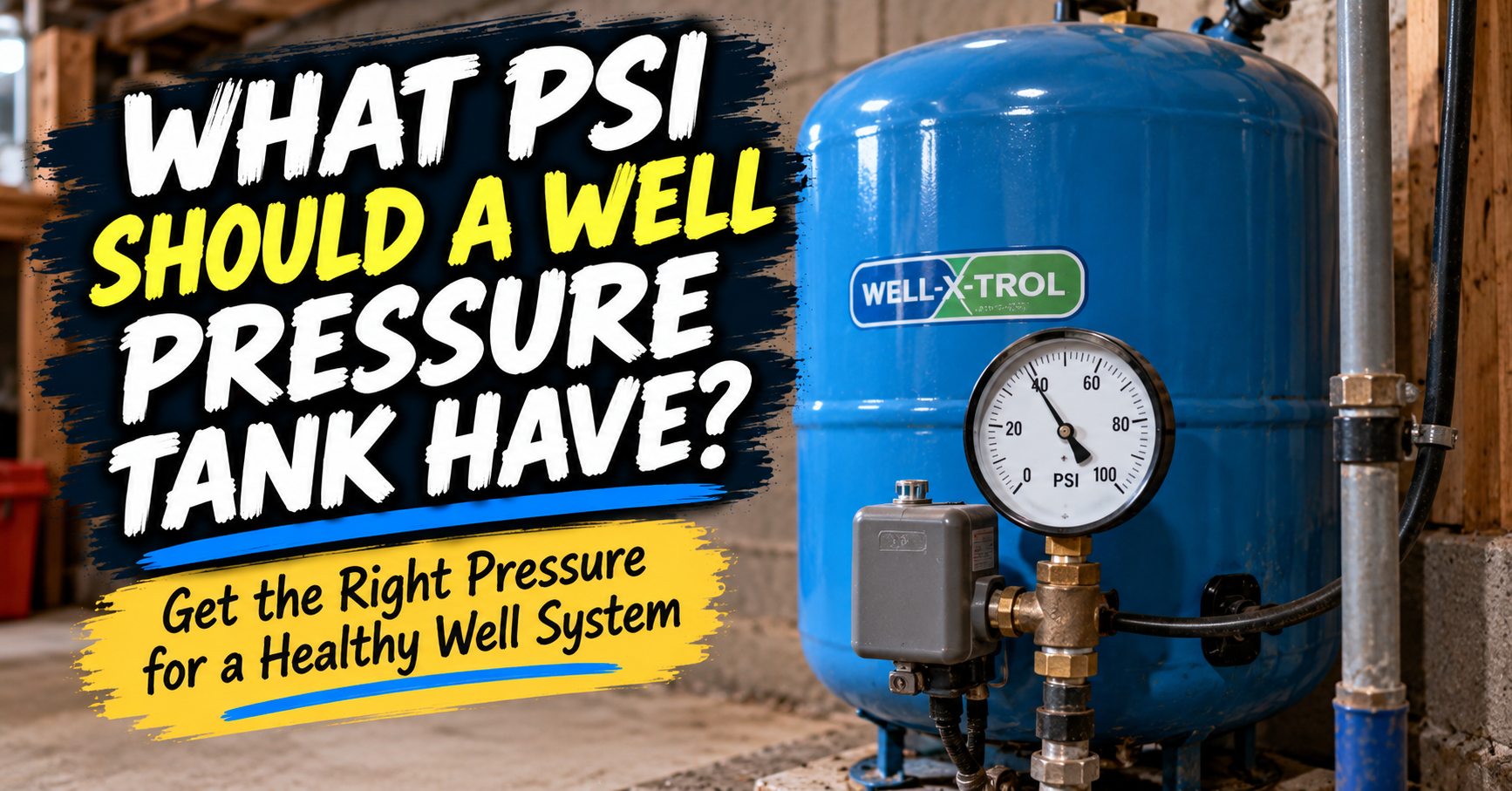
Before anyone changes settings or touches the pressure switch, it helps to understand what PSI a well pressure tank should have. The usual 30/50 or 40/60 numbers matter, but the correct setting is based on the equipment that is actually installed.
What if water comes out of the air valve?
The air valve on a bladder-style pressure tank looks a lot like a tire valve.
It is not supposed to release water.
If water comes out when the valve is checked, that can point to a failed bladder or diaphragm inside the tank. The tank may also become waterlogged, which reduces usable drawdown and makes the pump start more often.
That does not mean every wet air valve proves the same exact failure. But it is a strong reason to stop guessing and have the tank evaluated.
A tank with a damaged internal bladder may still look normal on the outside while causing short cycling, uneven water pressure, or a pump that starts after very little water use.
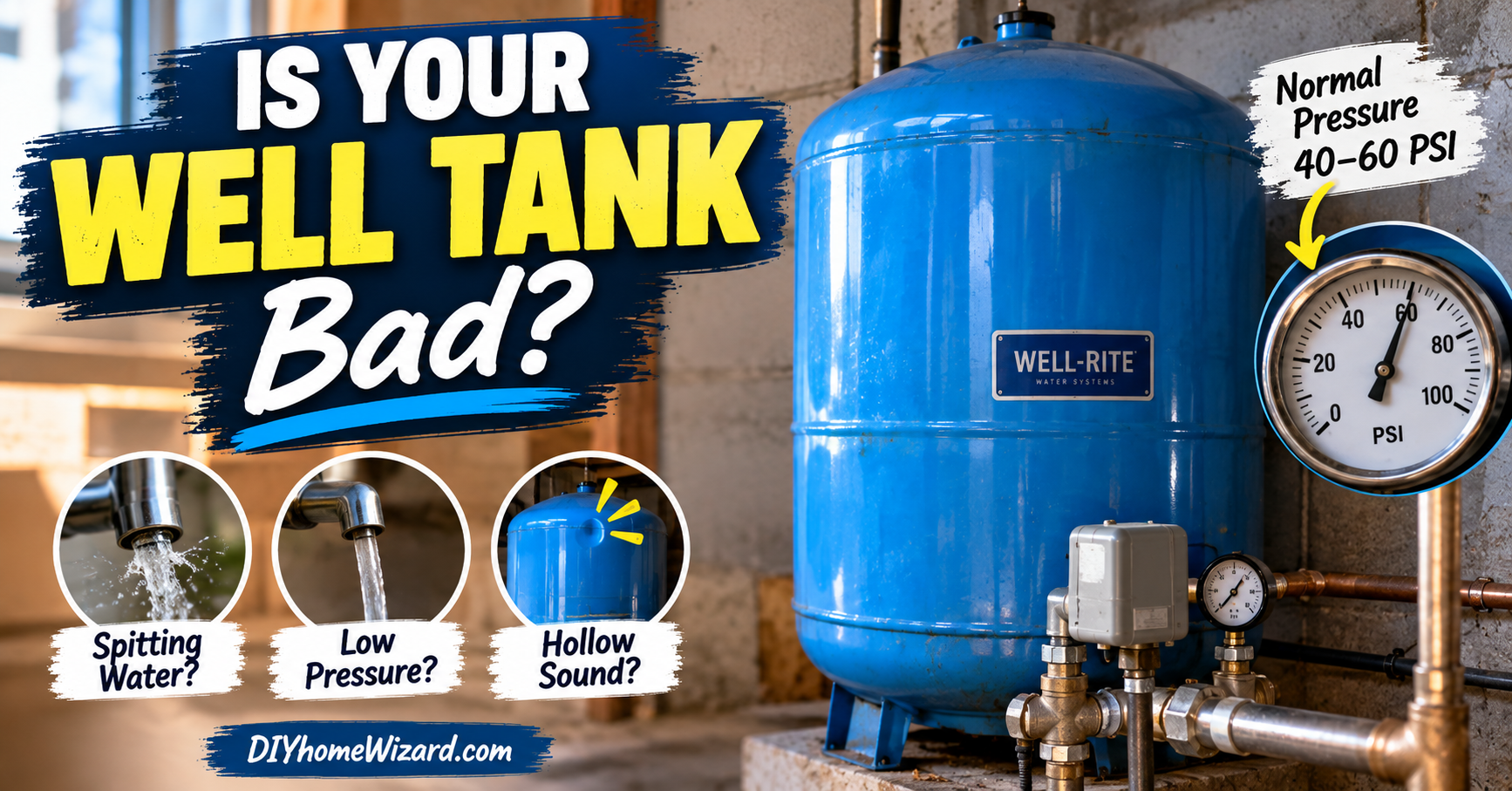
The warning signs in how to tell if a well pressure tank is bad can help connect a visible leak with the way the system has been behaving inside the house.



A bad pressure gauge can make this harder to diagnose
The pressure gauge tells you whether the pump is building pressure, staying steady, or climbing too high.
If the gauge is stuck, fogged, wildly inaccurate, or does not move while the system is clearly changing, it can send you in the wrong direction.
For example, a relief valve may be leaking because pressure is excessive, but a failed gauge may still appear to show a normal reading. Or the tank may seem waterlogged when the real issue is that the gauge is not showing the actual cut-in and cut-out cycle.
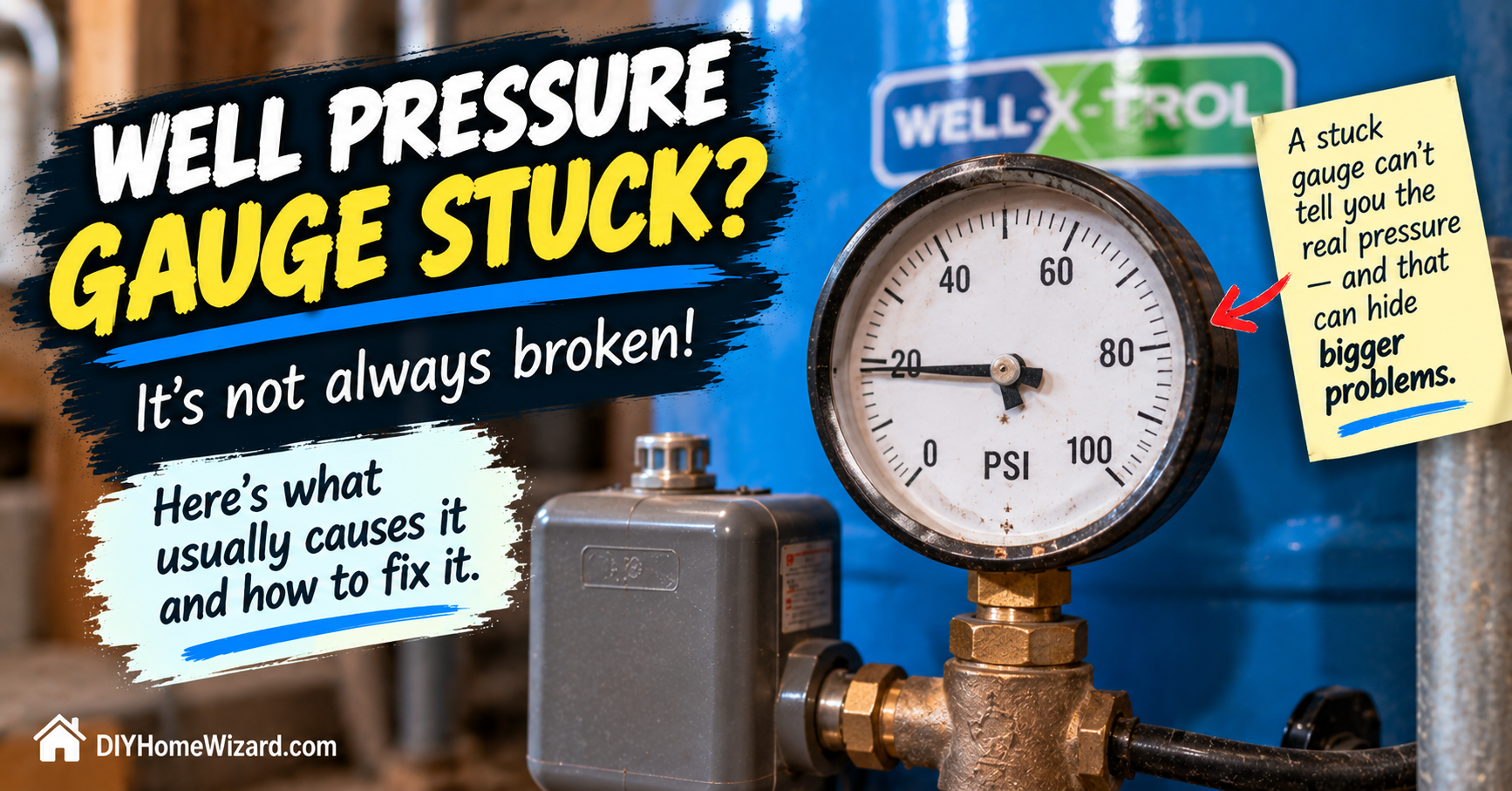
A working gauge should move down as water is used, trigger the pump near the system’s cut-in pressure, then rise until the pump shuts off. If yours is not doing that, I would check whether the well pressure gauge is stuck before drawing big conclusions from the number on its face.
How I would check a leaking pressure tank safely
There are useful things a homeowner can observe without opening electrical boxes or trying to repair pressurized equipment.
This is the safe order I would use:
- Look for active water near electrical parts. If water is reaching the pressure switch, wiring, outlet, or control box, stay clear and have the system checked promptly.
- Dry the tank shell, plumbing fittings, and floor.
- Take a clear photo before the water returns. It helps if you need to explain the problem later.
- Watch where moisture first appears during normal system operation.
- Check whether the tank is broadly sweating or leaking from one exact point.
- Look for rust, blistered paint, wet seams, and damp fittings.
- Watch the pressure gauge through a normal cycle if it appears to be working.
- Listen for rapid cycling, repeated clicks, or a pump that keeps running.
- Note whether the leak appears only when the pump runs or even when the system has been sitting still.
- Call a well contractor or plumber if the tank shell is leaking, pressure is acting abnormally, or water is near live electrical components.
I do not recommend removing the pressure-switch cover, forcing switch contacts closed, or adjusting the tank air charge while trying to figure out a leak. Those are the points where a simple homeowner check can become a shock or pressure hazard.



Should I turn off the well pump if the tank is leaking?
It depends on where the leak is and how severe it is.
A little moisture that appears to be condensation is not automatically an emergency. A small drip from an accessible plumbing fitting may allow the system to keep running briefly while you arrange a repair, as long as water is nowhere near electrical components and the leak is contained.
I would shut off pump power and call for help sooner when:
- Water is coming from the tank shell itself.
- The tank is heavily rusted or visibly damaged.
- Water is spraying or flowing rather than slowly dripping.
- Water is reaching the pressure switch, control box, outlet, or wiring.
- The pressure gauge rises abnormally high.
- The relief valve is actively discharging.
- The pump is short cycling or running continuously.
- The tank is shifting, bulging, or making unusual noises.
A pressure tank problem can become a water-damage problem fast. If the tank is in a finished basement, near storage, or beside electrical equipment, it is worth acting before a small puddle becomes a much bigger cleanup.
Can a leaking well pressure tank be repaired?
Sometimes the plumbing around the tank can be repaired. The tank shell itself usually cannot be repaired safely in a lasting way.
A leaking pressure gauge, drain valve, relief valve, pipe fitting, or tank-tee connection may be replaceable. A professional can isolate the system, release pressure safely, identify the exact part, and make the repair.
A steel tank leaking through rust, a seam, or a pinhole is different. That usually means the tank has reached the end of its useful life.
Even if a patch seems to stop the drip, the surrounding metal may be thinning. A pressure tank is not something I would gamble with just to postpone replacement.
Does a leaking pressure tank cause low water pressure?
It can.
A small leak may not change the shower pressure much at first. But a larger leak, a failed bladder, or a problem around the tank controls can cause pressure to drop, make the pump run too often, or stop the system from reaching normal shutoff pressure.
The symptoms may include:
- Water pressure that starts strong and fades.
- A pump that kicks on after small amounts of water use.
- Pressure swinging quickly between high and low.
- A pump that runs longer than normal.
- A leak that gets more noticeable when the pump starts.
A leak outside the tank is not always the reason for weak pressure. Clogged filters, pressure-switch problems, a failing pump, plumbing leaks, and a waterlogged tank can all create similar symptoms.
That is why I start with the source of the water instead of assuming every wet tank needs the same repair.
Why a pressure tank may sweat more in summer
Summer humidity can make a perfectly sound pressure tank look suspicious.
Cold well water cools the metal tank. Warm damp air hits that cool surface and turns into moisture. The water runs down the outside and often gathers at the base, which makes it look like a bottom leak.
If the tank only gets wet during hot, humid stretches and there is no rusty hole, wet fitting, or repeatable pinpoint drip, sweating is more likely.
A dehumidifier, better airflow, or insulation in the tank area may reduce the annoyance. But I would still dry the tank and verify what is happening before writing it off as condensation.
Why rust around a pressure tank should not be ignored
Surface rust does not always mean the tank is leaking today. But it is worth paying attention to because it can show that moisture has been sitting against the metal for a long time.
I would look for the cause of rust before simply painting over it.
The source could be:
- Tank condensation.
- A small plumbing drip from above.
- A damp floor or water seepage in the basement.
- A past leak that was never fully corrected.
- Corrosion beginning from inside the tank.
If the rust is only cosmetic and the tank remains dry, you may be able to improve the environment around it. If the metal is deeply pitted, blistered, or actively weeping water, replacement is much more likely.
Can a pressure tank leak only when the pump is running?
Yes, and that pattern is helpful.
When the pump runs, system pressure rises toward its cut-out setting. A weak fitting, failing valve, or small crack may leak more noticeably under that higher pressure.
I would dry the area, have someone run water at a faucet, and watch the tank from a safe distance as the pump cycles. Do not touch wet electrical components or place your face near a pressurized fitting.
If the drip begins or speeds up only when pressure rises, write that down. It gives a plumber or well contractor a useful clue.
Why is there water under my well pressure tank?
Water under a pressure tank may come from a leaking fitting, drain valve, relief valve, rusty tank shell, nearby plumbing, or condensation running down the outside of the tank. Drying the area and watching where moisture first returns is the best first check.
Is condensation on a well pressure tank normal?
It can be normal, especially in a humid basement or well house. Cold well water can make the tank sweat. Condensation is usually spread over a broader area, while a true leak often returns from one specific fitting, seam, rust spot, or pinhole.
Is a leaking pressure tank dangerous?
A small plumbing drip may not be dangerous by itself, but water near a pressure switch, electrical wiring, outlet, or control box needs prompt attention. A rusted tank shell or a pressure-relief valve that is discharging also needs professional evaluation.
Can I patch a rust hole in a pressure tank?
I would not patch a rusted pressure-tank shell. The tank is pressurized, and visible rust can mean nearby metal is weakened too. A tank leaking through its steel shell generally needs replacement.
Why is my pressure tank leaking from the top?
The leak may be at the pressure gauge, relief valve, pressure-switch connection, pipe fitting, or another part of the tank tee. Water can run down the tank and pool at the bottom, so always inspect above the puddle.
Does a bad bladder cause a pressure tank to leak?
A failed bladder does not always create an outside leak, but it can cause the tank to waterlog and short cycle. Water coming from the tank’s air valve is a strong sign the internal bladder or diaphragm may have failed.
Should I replace a pressure tank that is rusty?
Light surface rust may not require immediate replacement, but deep rust, flaking metal, blistered paint, pitting, or water coming through the shell should be treated seriously. The condition needs to be assessed before the tank is trusted under pressure.