
A faucet that coughs, spits, or throws a blast of air before the water settles down can get your attention in a hurry. It always feels like the well is about to quit on you, especially when the pressure has been acting funny too.
Sometimes the cause is simple. Other times, that air is the little warning sign that shows up before a bigger well-pump, pressure-tank, or water-level problem makes itself impossible to ignore.
I would not start taking fittings apart just because one faucet sputtered once. The pattern matters more than the drama of that first blast.
Start with one simple question: is it every faucet?
This is the quickest way I know to keep from blaming the well when the problem is really sitting right on the sink.
If only one faucet is sputtering, remove and inspect the aerator first. A clogged aerator, a loose faucet part, or debris after plumbing work can make water come out in an uneven, spitty mess.
If every cold-water faucet in the house is doing it, I would look farther back toward the well system.
If it only happens on the hot side, I would pay attention to the water heater and hot-water plumbing before assuming the well itself is the culprit.
That little bit of detective work can save a homeowner from making a very expensive guess.



Tiny white bubbles are different from bursts of air
A glass of water can look cloudy or milky right after you fill it, then clear from the bottom upward in a minute or two. That is often dissolved air coming out of the water once it reaches normal household pressure.
It looks strange, but it is not the same as a faucet actually sputtering, coughing, or sending out pockets of air.
The more concerning version is when the water repeatedly blasts air, pressure drops, the stream pulses, or the faucet goes from air to water to air again. That points to air entering the system somewhere or the pump struggling to pull steady water.


The timing of the sputter tells you a lot
I would pay close attention to when it happens instead of just how bad it looks.
It happens right after plumbing work
Air can get trapped in the lines after a filter change, pressure-tank work, a repair, or any time the water was shut off and drained.
Run the affected faucets for a few minutes. Start with a lower faucet if you can. If the sputtering clears and stays gone, it was probably trapped air making its way out.
It happens after several showers, laundry, or watering outside
This is more serious.
A well that gets drawn down too far can allow the pump to pull a mix of air and water. The house may have decent pressure at first, then faucets begin sputtering or pressure falls after the family has used a lot of water.
That pattern can happen when the well is not recovering as quickly as usual, the pump is set too high in the well, or outdoor water use is asking more from the system than the well can provide.
If the water improves after the house sits unused for a while, I would treat that as a reason to have the well and pump checked instead of simply hoping it behaves next time.
It happens every time the pump kicks on
That can point toward the pressure tank, a leaking check valve, a failing pressure switch, or a problem in the pipe between the well and the house.
Watch the pressure gauge while someone runs water. If the needle jumps around, falls unusually fast, or the pump starts and stops over and over, the air may be part of a larger pressure-system problem.
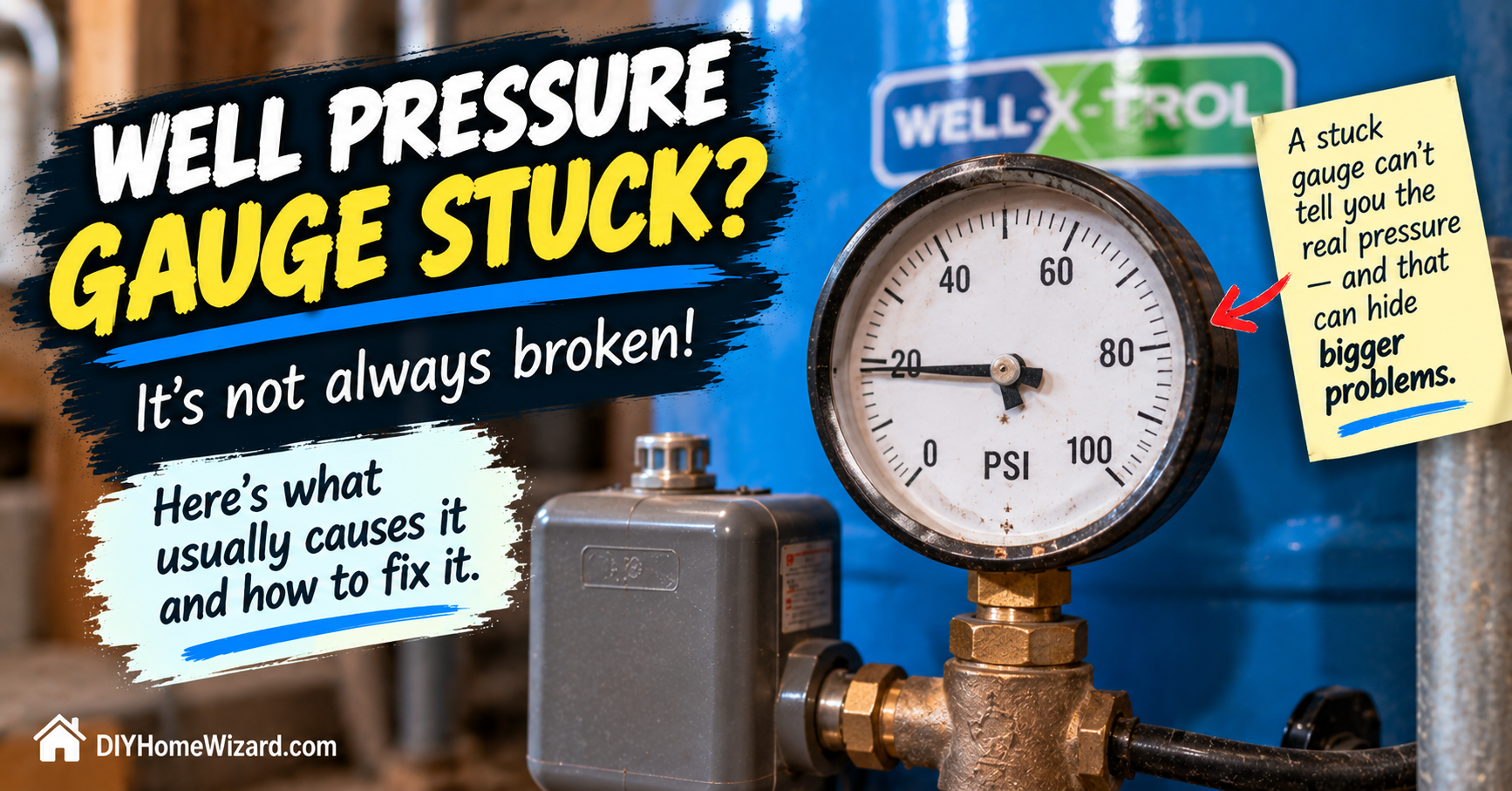
A gauge that is stuck or obviously lying can send you down the wrong road, so it helps to know how I tell whether a well pressure gauge is actually working before trusting every number it shows.
A waterlogged pressure tank can make the whole system act weird
A pressure tank is supposed to give the pump a break. It holds a cushion of air so the pump does not have to start every time somebody rinses a spoon.
When that air cushion is lost, the tank can become waterlogged. The pump may begin short cycling, pressure can pulse, and the system starts acting like it has had entirely too much coffee.
That does not mean every sputtering faucet automatically means a bad tank. Still, it is one of the things I would rule out when the sputtering comes with fast pump cycling or water pressure that rises and falls for no clear reason.
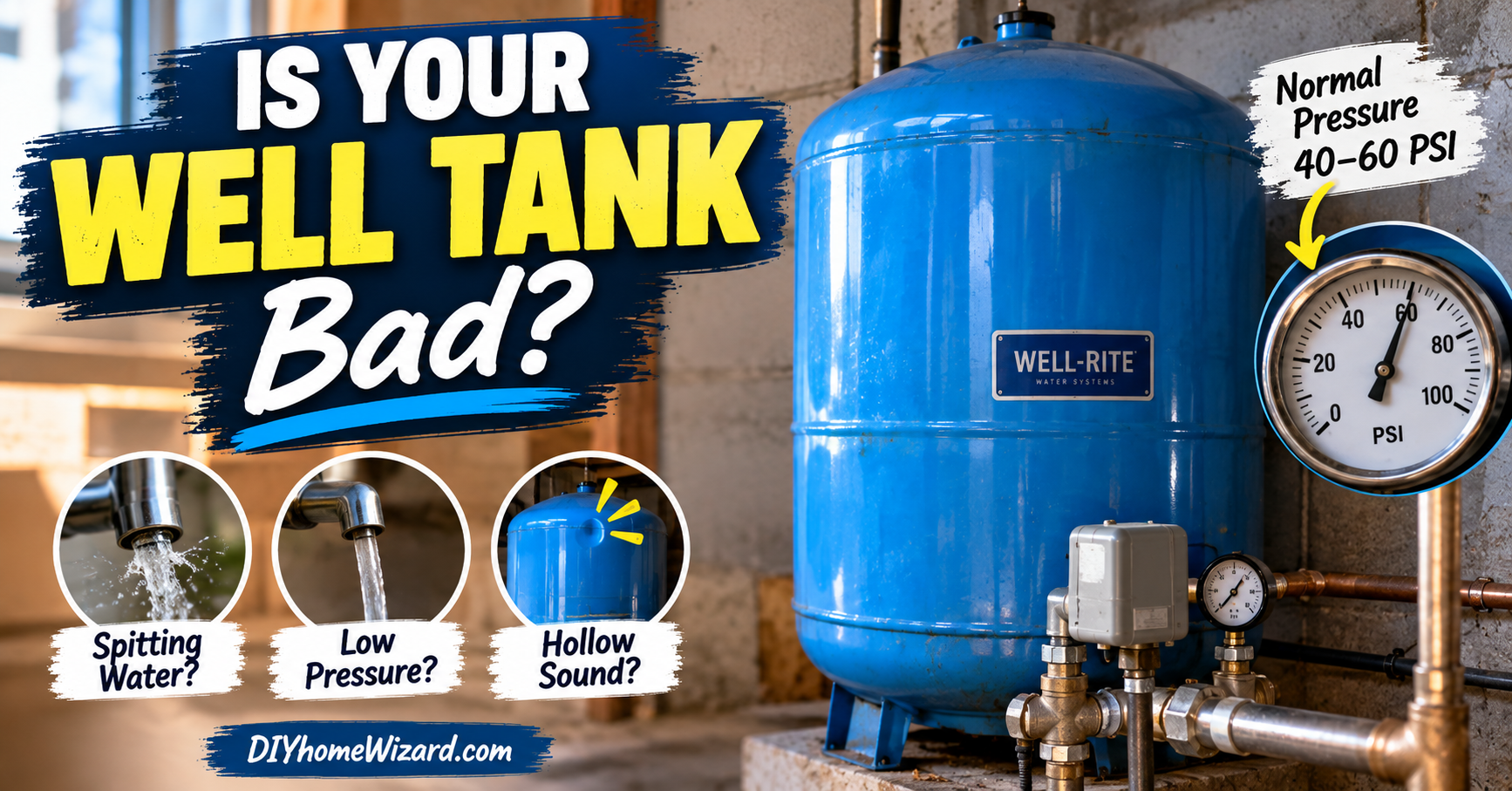
These pressure-tank warning signs are worth comparing against what your own system is doing, especially if the pump starts every few seconds during normal water use.
A jet pump can pull air through a suction-side leak
Homes with a shallow-well jet pump have a possible trouble spot that submersible-pump systems do not have in the same way.
The suction line has to stay sealed. A small leak at a fitting, a bad foot valve, cracked pipe, or loose connection can let air in without always leaking water out where you can see it.
That is one reason a jet pump can lose prime or suddenly sound like it is working harder than it should.
A pump that runs, gets loud, and still cannot build normal water pressure deserves attention quickly. Running a pump dry or making it fight for water is not a cheap experiment.
A check valve or drop-pipe problem can let water drain backward
If water drains back toward the well after the pump shuts off, air can work its way into the system and cause strange behavior at the faucets.
You may notice that the house has normal water for a moment, then pressure falls sooner than it should. The pump may come back on even when nobody is using water, or it may need to run longer to build pressure again.
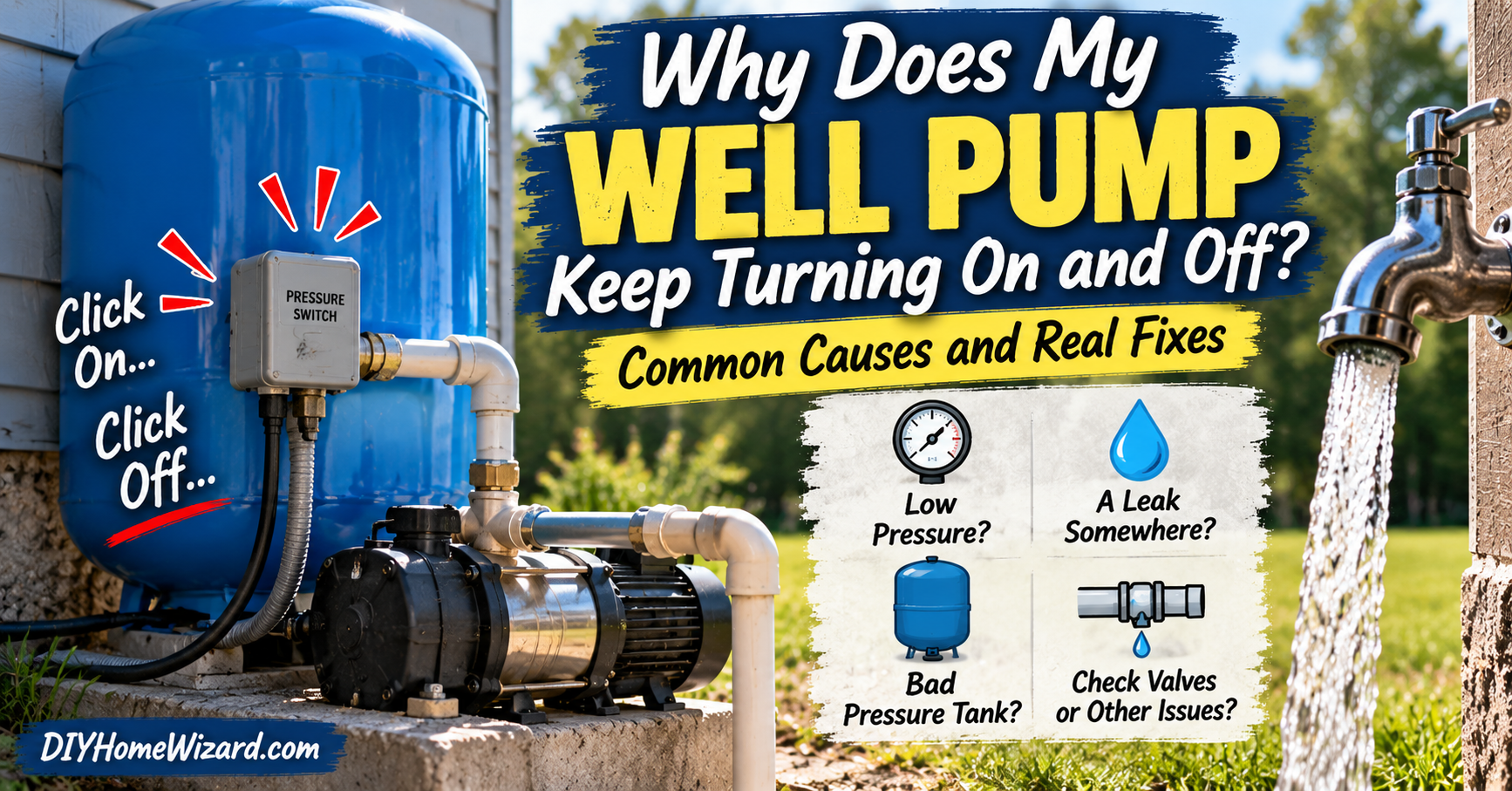
That is why I would not ignore a pump that is turning on and off when no one is asking for water. The sputtering faucet may be the part you see, but the real problem can be farther down the line.



When air at the faucet can point to a low-water well
This is the one that makes homeowners nervous, and honestly, it should get taken seriously.
When the water level in a well falls below the pump intake, the pump may start pulling water mixed with air. Faucets can sputter, pressure can fade, and the water may return after the system has rested long enough for the well to recover.
That does not always mean the well is permanently dry. Seasonal drought, a long stretch of irrigation, filling a pool, livestock water use, or several high-water-use jobs on the same day can all push a marginal well harder than usual.
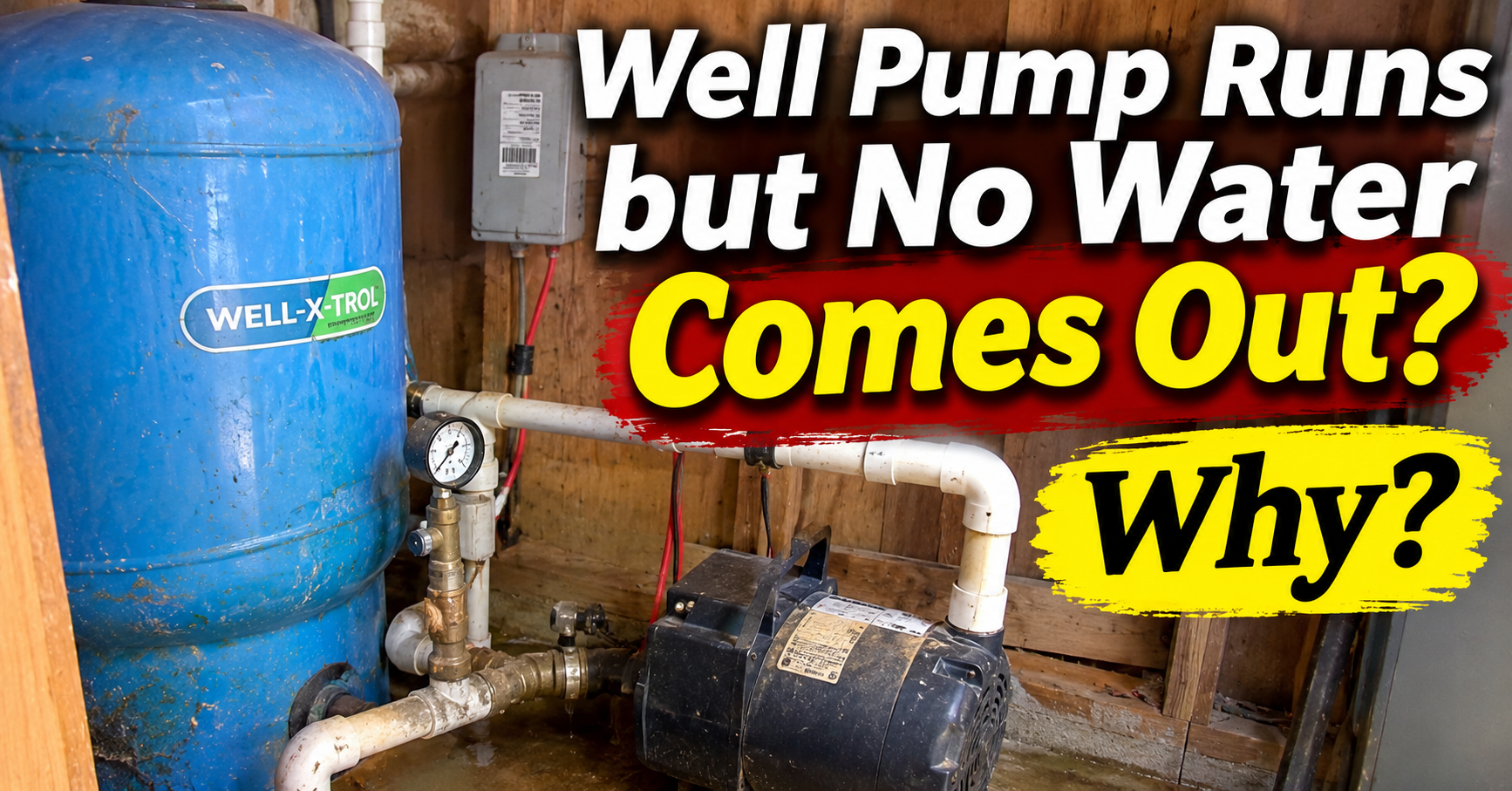
The important part is not to keep forcing the system to run endlessly. If the pump is running but water is barely coming out, or it is running with no water at all, shut it down if you can do so safely and read through why a running well pump may not deliver water.
What I would check before calling someone
- Run a cold-water faucet in another part of the house and see whether the sputtering happens there too.
- Check whether the hot side, cold side, or both are affected.
- Look at the pressure gauge while water is running. Notice whether pressure drops smoothly or jumps around like it cannot make up its mind.
- Listen for the pump cycling rapidly, clicking repeatedly, or running much longer than normal.
- Think back to what happened before the problem started. A filter change, a freeze, a plumbing repair, heavy water use, or a recent power outage can all be useful clues.
- Check the well house, pressure tank, visible fittings, and filter housing for water on the floor, corrosion, or a slow drip.
Those observations give a well contractor a much better starting point than, “My water did something weird this morning.” And they help you decide whether the issue is likely inside the house or down at the well.


When I would stop troubleshooting and get help
Call a qualified well or pump professional sooner rather than later if the sputtering comes with any of these problems:
- Water stops completely while the pump keeps running.
- The breaker trips or the pump makes a humming sound without producing water.
- Pressure falls to almost nothing and does not recover.
- The water has sand, sediment, discoloration, or a new odor along with the sputtering.
- The house has no water after heavy use, then only gets it back after hours of rest.
- You smell gas around the well area or have a strong rotten-egg or unusual chemical smell from the water.
A little trapped air after a repair is one thing. Recurring air at every faucet is the sort of symptom that deserves an honest look before it turns into a no-water morning.