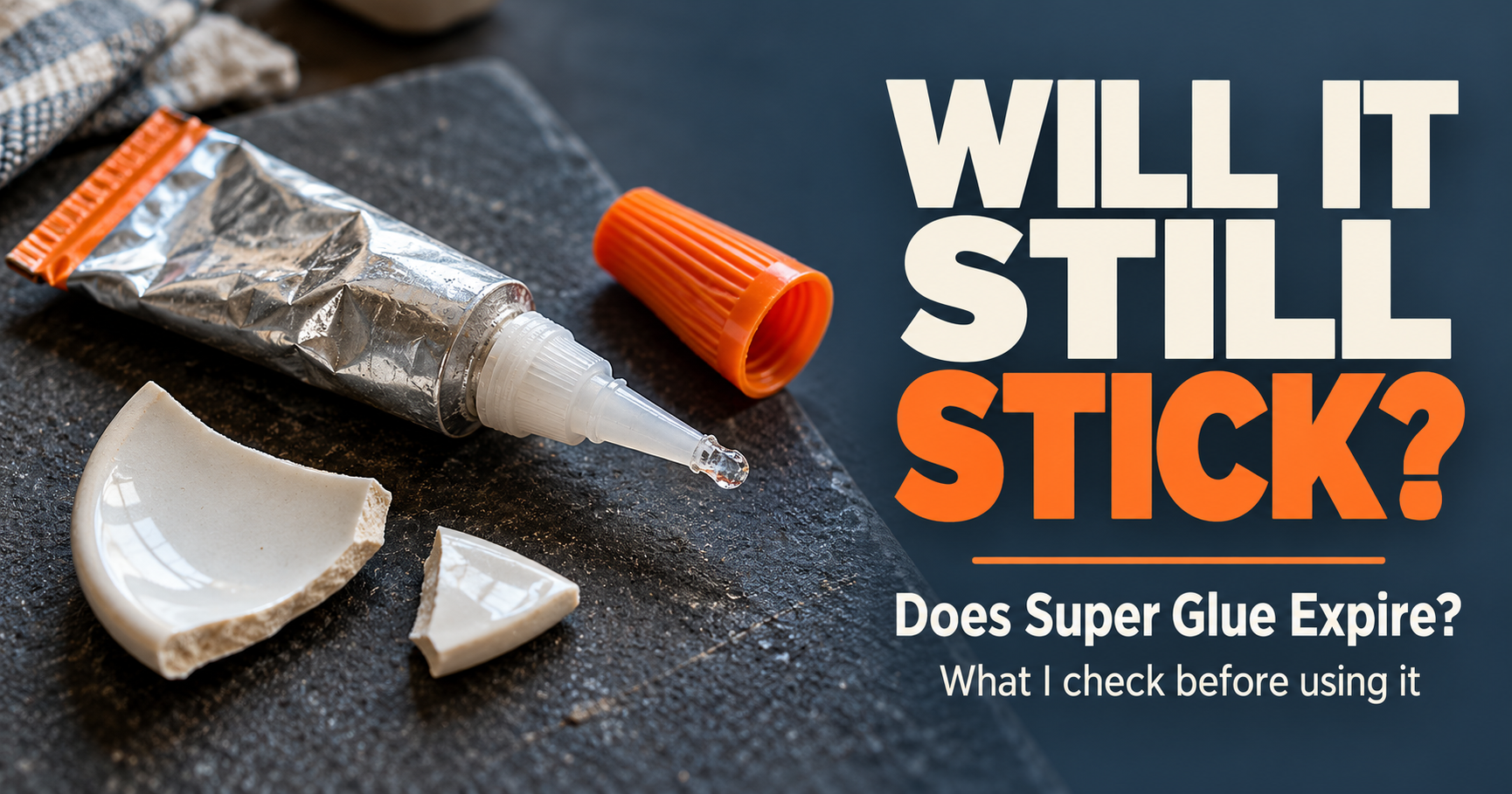
Super glue does expire, and I have learned not to judge a tube by whether it still feels full.
A tube can look brand new in the junk drawer, then refuse to come out, run thin like water, or set up so slowly that the repair gives up before the glue does. That is especially annoying when the broken item is in your hand and you have already told yourself, “This will be a quick fix.”
Before I use an old tube, I check the package date if I can find one, look at the nozzle, and test a tiny drop on something that is not the actual repair. Super glue is cheap. Breaking or redoing a repair because I trusted a mystery tube is not.
How long does super glue last?
Unopened super glue usually lasts around 12 months when stored properly. Some unopened tubes can remain usable longer, but I would not expect a tube found in the back of a garage drawer to perform like one I just bought.
Once opened, super glue has a much shorter useful life. I usually assume an opened tube may stay good for a few months if I seal it well and store it correctly. Sometimes it lasts longer. Sometimes the cap welds itself to the tube next week, because super glue enjoys keeping life interesting.
The reason is moisture.
Super glue, also called cyanoacrylate adhesive, cures when it reacts with moisture in the air and on the surfaces being bonded. Every time the cap comes off, air and humidity get a chance to start changing the glue inside.

Does unopened super glue go bad?
Yes. Unopened super glue can go bad.
The factory seal gives it a much better chance than an opened tube, but age, heat, and poor storage can still make it thicken or cure inside the package.
I have had unopened tubes that felt perfectly normal until I pierced the seal and found the glue had turned into a hard plug. That does not happen every time, but it happens often enough that I always test an older tube first.
An unopened tube is more likely to be usable when:
- The packaging is undamaged.
- The tube is not swollen or leaking.
- It has been kept out of extreme heat.
- It has not been stored in a humid area.
- It is still within, or close to, its printed date.
If the package is several years old, I might still open it for a quick low-stakes repair. I just would not trust it without seeing how it behaves first.


What does bad super glue look like?
Fresh super glue is usually clear and thin to medium-thin. Different formulas vary, but it should flow in a controlled drop rather than coming out as a stringy blob or refusing to move at all.
Bad super glue may be:
- Thick, jelly-like, or gummy.
- Cloudy or yellowed when it should be clear.
- Full of rubbery strings.
- Cured solid inside the nozzle.
- Slow to cure on a clean test surface.
- So thin and separated that it runs everywhere.
- Crusty around the cap or tube threads.
A dried nozzle does not always mean the entire tube is bad. I have sometimes cleared a small hardened plug with a pin and found usable glue behind it.
But if the glue is thick throughout the tube or comes out in stretchy strings, I do not waste much time trying to rescue it. Super glue is not a product I want to “probably” work.
The quick test I use before a real repair
I test old super glue on a small scrap whenever the repair matters.
For plastic, I use two little pieces of plastic packaging or an old disposable lid. For wood, I use wood scraps. For metal, I use two clean metal washers or small pieces of scrap hardware.
I put one tiny drop on one surface, press the pieces together, and hold them according to the directions on the package. Then I let the joint sit longer before testing it.
I am checking for three things:
- Does the glue come out smoothly?
- Does it grab and cure in a normal amount of time?
- Does the test joint actually hold?
If it stays wet forever, turns rubbery, or pops apart with almost no effort, the tube is done.
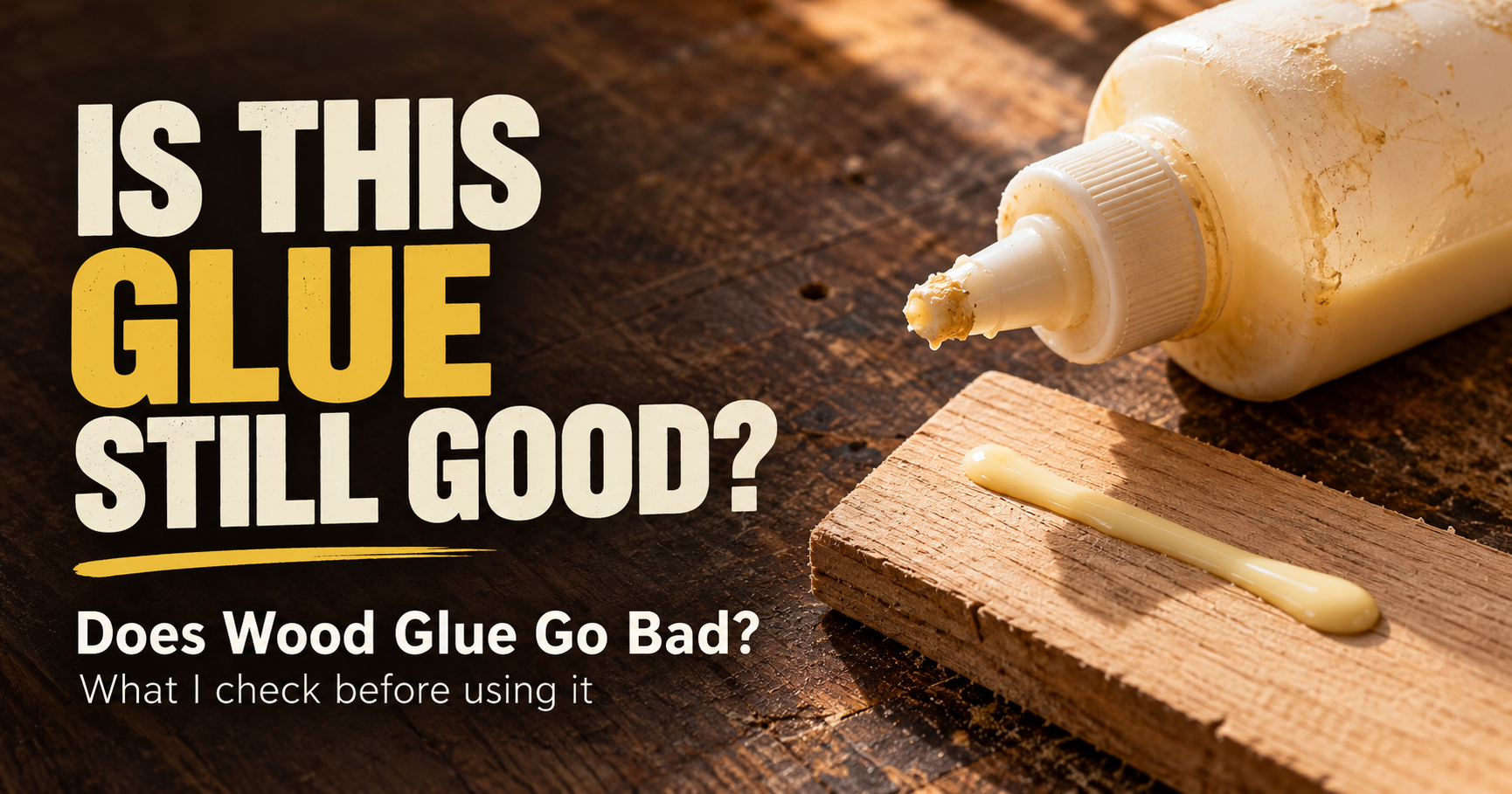
This is the same basic reason I test an older bottle of wood glue before I trust it on a project. The bottle can look harmless while the adhesive itself is no longer dependable.



Why super glue goes bad after opening
The main enemy is moisture in the air.
Super glue is designed to cure when it contacts small amounts of moisture. That is why it can bond so fast to your fingers, skin, or the one thing you did not intend to glue to the table.
Once a tube has been opened, humidity slowly works its way into the nozzle and bottle. The glue begins curing from the outside inward. It may start with a hard crust at the tip, then become thick and stringy deeper inside.
A loose cap, residue on the threads, and a warm humid storage spot all speed the process up.
I wipe the nozzle before putting the cap back on. It is a tiny habit, but it keeps dried glue from preventing the cap from sealing properly.
Does super glue go bad in heat?
Yes. Heat can shorten the life of super glue.
I do not leave super glue in a hot vehicle, sunny workshop window, or an uninsulated garage through the hottest part of summer. High heat can make the adhesive degrade faster, thicken, or cure prematurely inside the tube.
A little warmth while you are working is not a problem. Long-term storage in extreme heat is.
If I find a tube that has been sitting in a hot garage for a year, I treat it as questionable even if it is unopened.


Can super glue freeze?
Freezing temperatures are usually less likely to ruin super glue than high heat and humidity, but I still do not intentionally store it where temperatures swing far below freezing.
The bigger issue with cold storage is condensation. When a cold tube comes into a warm, humid room and gets opened right away, moisture can get into it.
If a tube has been stored somewhere cold, I let it return to room temperature while still sealed. Then I check it before using it.
A tube that has frozen and thawed repeatedly may still work, but I would test it first instead of using it on a favorite mug handle or an important repair.
Should I store super glue in the refrigerator?
A refrigerator can help unopened super glue last longer because it is cooler and more stable than many garages or drawers.
There is one catch: condensation.
If I refrigerate a tube, I keep it tightly sealed in a small airtight bag or container. Before opening it, I let it come to room temperature while it is still sealed. That keeps warm room air from condensing on a cold tube.
For most people, this is more effort than necessary for a single small tube. Keeping super glue in a cool, dry indoor cabinet works well enough.
But if I buy several tubes or have a bottle I want to keep as long as possible, cold storage can be helpful when done carefully.



How to keep opened super glue from drying out
I cannot make an opened tube last forever, but I can give it a better chance.
Here is what I do:
- Wipe the nozzle clean before replacing the cap.
- Tighten the cap without crushing the tube.
- Store the tube upright when possible.
- Keep it inside, away from garage heat and humidity.
- Put it in a small sealed bag or container.
- Avoid leaving the cap off while I gather other supplies.
- Do not let the nozzle touch dusty or dirty surfaces.
The last one matters more than it sounds. If the tip picks up dust, fibers, or dried adhesive, the cap may not seal right. That gives moisture a path inside.
Can you use thick super glue?
Maybe, depending on why it is thick.
Some super glues are sold as gel formulas. Those are supposed to be thicker and are useful when I need the adhesive to stay in place instead of running into every crack and onto my fingers.
But regular liquid super glue that has turned thick, stringy, or gummy with age is different. That is usually a sign it has started curing in the tube.
If it is only a little thicker but still clear, smooth, and able to make a strong test bond, it may be usable for a small repair.
If it pulls into threads, has soft lumps, or does not spread evenly, I replace it.


What if the super glue nozzle is clogged?
A clogged nozzle is common, especially with a tube that has already been opened.
First, I remove the cap and inspect the opening. If the dried plug is near the surface, I can often clear it with a pin, thin nail, or straightened paper clip.
I do this carefully and point the tube away from my face. Squeezing a blocked tube too hard is a fine way to send a surprise drop of glue somewhere it does not belong.
Once the opening is clear, I squeeze out a tiny amount onto cardboard. If the glue behind the plug is smooth and normal, I can keep using the tube.
If nothing comes out or the glue is thick and stringy, the problem is not just the nozzle.
Can I thin out old super glue?
No. I do not try to thin old super glue with water, acetone, paint thinner, or anything else.
Adding liquid changes the adhesive, makes the cure unpredictable, and can create a repair that looks finished but does not hold.
Acetone can help remove cured super glue from some surfaces, but it is not a refresh button for a dying tube.
When super glue is thick because it has started curing, the tube is finished. It is better to replace it than experiment on a repair you care about.
What happens when super glue is too old?
Old super glue can fail in a few different ways.
It may cure inside the tube and become unusable. It may come out thick and clumpy. It may take much longer to set than usual. Or it may appear to hold at first, then release when the item is handled.
That last one is the reason I do not use old glue for anything that could break again in an inconvenient or dangerous way.
I avoid questionable super glue on:
- Eyeglasses or safety glasses.
- A child’s toy.
- A frequently used handle or knob.
- Food-contact items.
- A repair that will carry weight.
- Anything near heat or moisture.
- A repair where glue failure could cause an injury.
Super glue is excellent for plenty of small repairs. It is just not a replacement for the right fastener, a proper wood joint, or a structural repair.
Does super glue expire faster than wood glue?
Usually, yes, especially after opening it.
Wood glue can often stay usable for a long time if it is stored well and protected from freezing. Super glue reacts to moisture, so a tiny amount of air exposure can start the slow process of curing it in the tube.
That is why I buy small tubes of super glue unless I know I have several repairs coming up. A big bargain bottle is not a great deal if half of it cures before I need it.
Small single-use tubes can be handy for that reason. They create less waste when I only need a tiny amount.
Can unopened super glue last for years?
It can, but I would not plan a project around it.
If an unopened tube is a few years old and has been stored in a cool, dry place, it might still work. I have seen old tubes surprise me in a good way.
But I have also opened an old tube to find a solid little plug that had no intention of helping with anything.
For a quick household repair, testing the old tube costs almost nothing. For a repair that matters, I buy a new one and keep the old tube for a low-stakes test.
Why does super glue turn white around a repair?
That white, chalky-looking haze is called blooming or frosting. It can happen when super glue fumes settle on nearby surfaces as the adhesive cures.
It does not always mean the bond is weak, but it can make clear plastic, glossy finishes, or dark surfaces look rough.
Too much glue, poor airflow, and a humid area can make blooming more noticeable. I use the smallest amount that will do the job, because super glue works best as a very thin layer.
More glue does not usually mean a stronger super glue repair. It often means more mess, more fumes, and more chance of getting it on something unintended.
How do I make a super glue repair stronger?
The first step is making sure super glue is actually the right adhesive for the job.
I clean the surfaces first. Oil, dust, loose paint, and old adhesive can keep even fresh glue from bonding well. For smooth plastic or metal, light scuffing with fine sandpaper can sometimes give the glue more to grab onto, as long as the material can handle it.
Then I use a tiny amount of glue, press the parts together firmly, and hold them still. Movement while the glue is setting can weaken the repair.
I also give the repair more time than the front of the package makes it sound like it needs. Super glue may grab quickly, but full strength can take longer.
A fresh tube helps. Good prep helps even more.
Does super glue expire if it has never been opened?
Yes. An unopened tube usually lasts longer than an opened one, but it can still thicken or cure inside from age, heat, or poor storage. Test it before using it on a repair that matters.
How can I tell if super glue is still good?
Good super glue should flow smoothly, look clear or normal for its formula, and bond a small test piece in a reasonable time. If it is stringy, lumpy, cloudy, solid, or slow to cure, replace it.
Why did my super glue not dry?
The glue may be old, too thick, or applied too heavily. Dirty surfaces, poor contact between the pieces, and certain materials can also affect how well it cures.
Can I use expired super glue on plastic?
You can test it on scrap plastic first, but I would not use expired glue blindly. Old super glue can appear to bond, then let go later when the item is bumped or flexed.
Does super glue stick better with water?
No. Super glue reacts with tiny amounts of moisture, but adding water to the repair is not a good way to make a stronger bond. Clean, dry surfaces and a very small amount of fresh glue work better.
Is gel super glue supposed to be thick?
Yes. Gel super glue is made to be thicker so it stays put on vertical surfaces and does not run as easily. Regular liquid super glue that becomes thick and stringy over time is a different situation and may be going bad.
Calder Voss writes about practical home fixes, garage projects, and the everyday household questions that usually show up five minutes before a project starts.