
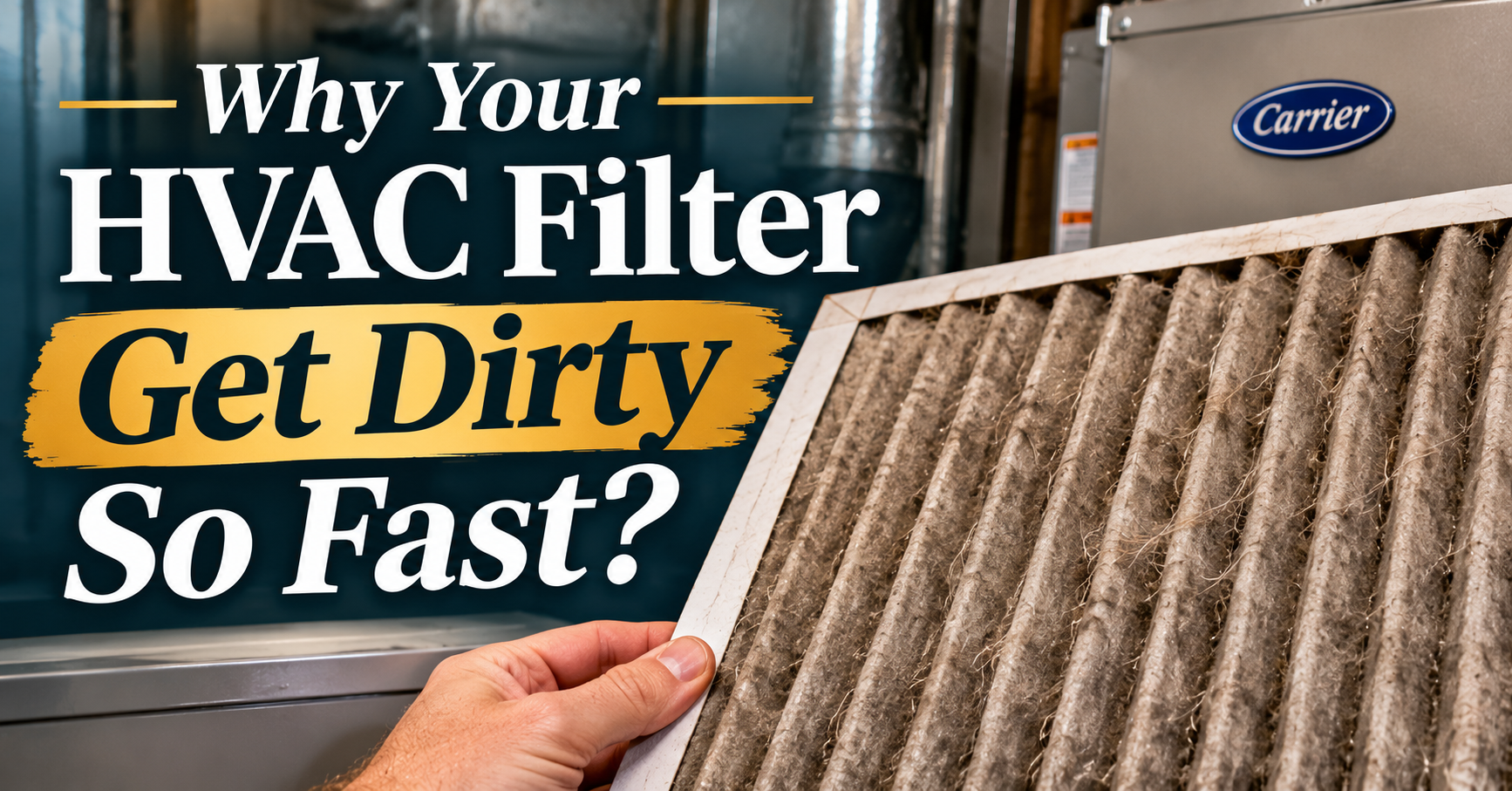
A dirty HVAC filter is normal. A filter that looks like it has been through a dust storm after only a couple of weeks is worth paying attention to.
Sometimes the answer is simple. You have pets, the fan runs all the time, somebody has been remodeling, or the system has been working overtime through a brutal stretch of weather.
Other times, a fast-dirtying filter is a clue that the return side of the HVAC system is pulling dust, insulation, or crawlspace air from somewhere it should not.
The filter is basically a little crime scene. The trick is knowing what to look for.
First, make sure “dirty fast” is actually unusual
A one-inch filter may need changed more often than the marketing on the package makes it sound.
A home with two dogs, kids, carpet, frequent cooking, and a furnace running hard through winter can load up a filter much faster than a quieter house with no pets and less system use.
The filter does not know it was supposed to last 90 days. It only knows how much air and dust are moving through it.
I would start checking it monthly. If it is getting heavily coated in just two or three weeks, then there is probably more going on than ordinary household dust.

Look at what is actually on the filter
The type of debris matters.
A filter covered evenly in soft gray lint, hair, and dust usually points toward normal indoor stuff. Pets, bedding, carpet fibers, clothing lint, and everyday life all eventually make their way into the return system.
A filter that is black or greasy may point toward candle soot, fireplace use, heavy cooking residue, smoking, or very fine particles in the home.
A filter with bits of insulation, gritty dirt, leaves, fiberglass fibers, or musty debris can point toward a return-duct leak. That is when the system may be pulling air from an attic, crawlspace, basement, wall cavity, or garage-adjacent space instead of just from inside the house.
A filter with dark streaks along one edge may not even be sealing correctly in its slot. Air can sneak around the side instead of flowing through the filter the way it is supposed to.



Check the thermostat fan setting
This one is easy to miss.
Most thermostats have a fan setting that says either Auto or On.
When the fan is set to Auto, the blower runs when the system is actively heating or cooling. When it is set to On, the blower can run almost continuously.
That means air is moving through the filter all day and night, whether the house actually needs heating or cooling at that moment.
A constantly running fan can make a filter get dirty much faster simply because it is processing far more air. It can also make the house feel drafty or push room-temperature air through the vents between heating cycles.
If the filter started clogging faster after somebody adjusted the thermostat, this is one of the first things I would check.
Pets can fill a filter faster than you would expect
Pet hair is obvious. Pet dander is not.
Even if you do not see much hair floating around, a house with shedding dogs or cats has more tiny particles moving through the air than a house without them. That stuff settles on furniture, gets stirred back up when people walk through the room, and eventually ends up at the return grille.
Regular vacuuming helps. So does brushing pets outside when possible. But there is nothing wrong with needing a new filter more often in a house with animals.
The goal is not to make a filter last as long as the box claims. The goal is to keep airflow healthy and replace it before it becomes restrictive.


Recent projects can overwhelm a filter quickly
Drywall dust, sanding dust, sawdust, concrete dust, old insulation, and even a big furniture move can load up a filter in a hurry.
If you have been painting, replacing flooring, cleaning out a basement, working in a garage, or doing any kind of project that creates fine dust, check the filter more often for a while.
This is especially true if the return grille is near the work area.
I would rather spend a few dollars on an extra filter than let that fine dust keep circulating through the blower and ductwork.
The filter may be too restrictive for the system
Higher MERV filters catch smaller particles. That can be useful for allergies, pets, and cleaner indoor air.
But higher filtration also creates more resistance as the filter collects debris. A very dense one-inch filter can become restrictive faster than a basic filter, especially in an older system with limited return airflow.
More expensive does not automatically mean better for every furnace or air handler.
If you switched to a thicker pleated filter or a much higher MERV rating and suddenly your airflow feels weak, your furnace gets louder, or the filter clogs quickly, I would check the equipment manual or ask an HVAC technician what rating the system can handle.
For many homes, the better long-term answer is a properly sized media cabinet that uses a thicker filter, not forcing an ultra-restrictive filter into a narrow one-inch slot.

Check whether the filter fits the rack correctly
Pull the filter out and compare its actual size to the size printed on the frame.
A filter can say 16 x 25 x 1 but be slightly smaller in real life. That is normal. What is not normal is a filter that rattles around, bows inward, falls out of the rack, or leaves obvious gaps around the edges.
A loose filter lets air bypass it. That means dirt gets farther into the blower compartment, but it can also leave strange dirty streaks around one edge of the filter.
Make sure the airflow arrow on the frame points toward the furnace or air handler. That little arrow causes more confusion than it should.
Return-duct leaks can pull in attic or crawlspace dirt
The return side of the HVAC system is under suction.
If a return duct has a gap, loose connection, disconnected section, or bad seal in a dusty attic or crawlspace, it can pull in dirty air that never passed through the living space at all.
This is one of the biggest reasons a filter can become filthy even when the house itself does not seem especially dusty.
A few clues that make me suspicious of return-duct leakage:
- The filter has insulation fibers, gritty dirt, or debris that does not look like normal house dust.
- The house gets dusty quickly even after cleaning.
- Certain rooms are harder to heat or cool than the rest.
- Utility bills seem higher than they should be.
- The filter becomes dirty much faster during certain seasons.
Accessible duct connections can sometimes be checked visually, but ductwork in an attic, crawlspace, or wall cavity is often best left to someone who can inspect and seal it correctly.


A dirty filter can create furnace problems too
A filter that stays in too long does more than make the air feel dusty.
Restricted airflow can make a furnace overheat. When that happens, the furnace may shut itself down early, cool off, and then try again later.
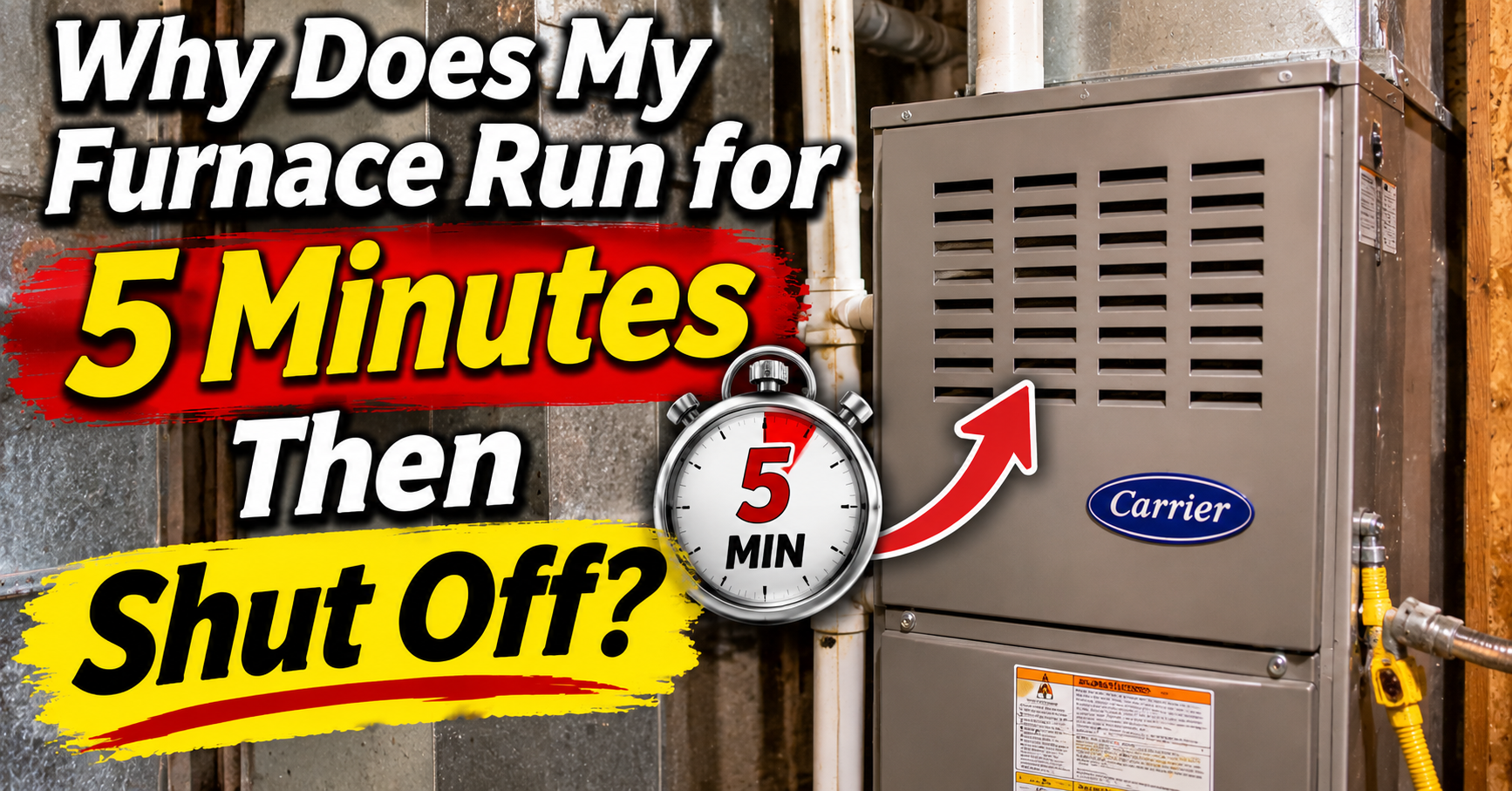
If your furnace has been starting, running briefly, and shutting off before the house warms up, there is a good chance the filter is one of the first things worth checking. A clogged filter can be the simple reason behind a furnace that quits after about five minutes.
In cooling season, poor airflow can also contribute to a frozen evaporator coil, weak air from the vents, and an AC system that runs longer without cooling the house well.
Do not try to stretch a clogged filter too far
Vacuuming the surface of a disposable filter may make it look better, but it does not remove all the debris buried inside the material.
Once a filter is dirty enough to restrict airflow, replace it.
Do not run the system without a filter while waiting for a new one unless a qualified technician specifically tells you to. Running without one can pull dust straight into the blower, coil, and other parts that are far more expensive to clean or replace.
A filter is cheap insurance. It is doing its job by catching dirt before the dirt gets deeper into the system.

When I would call somebody about it
Call an HVAC technician if the same filter gets heavily dirty again within a few weeks after you confirm the correct size, fan setting, and normal household dust sources.
I would also call if you find insulation fibers or gritty debris on the filter, see obvious gaps in accessible return ducts, notice weak airflow, or hear the furnace cycling on and off repeatedly.
A dirty filter can be normal. A filter that repeatedly looks like it spent the month inside an attic is usually trying to tell you something.