
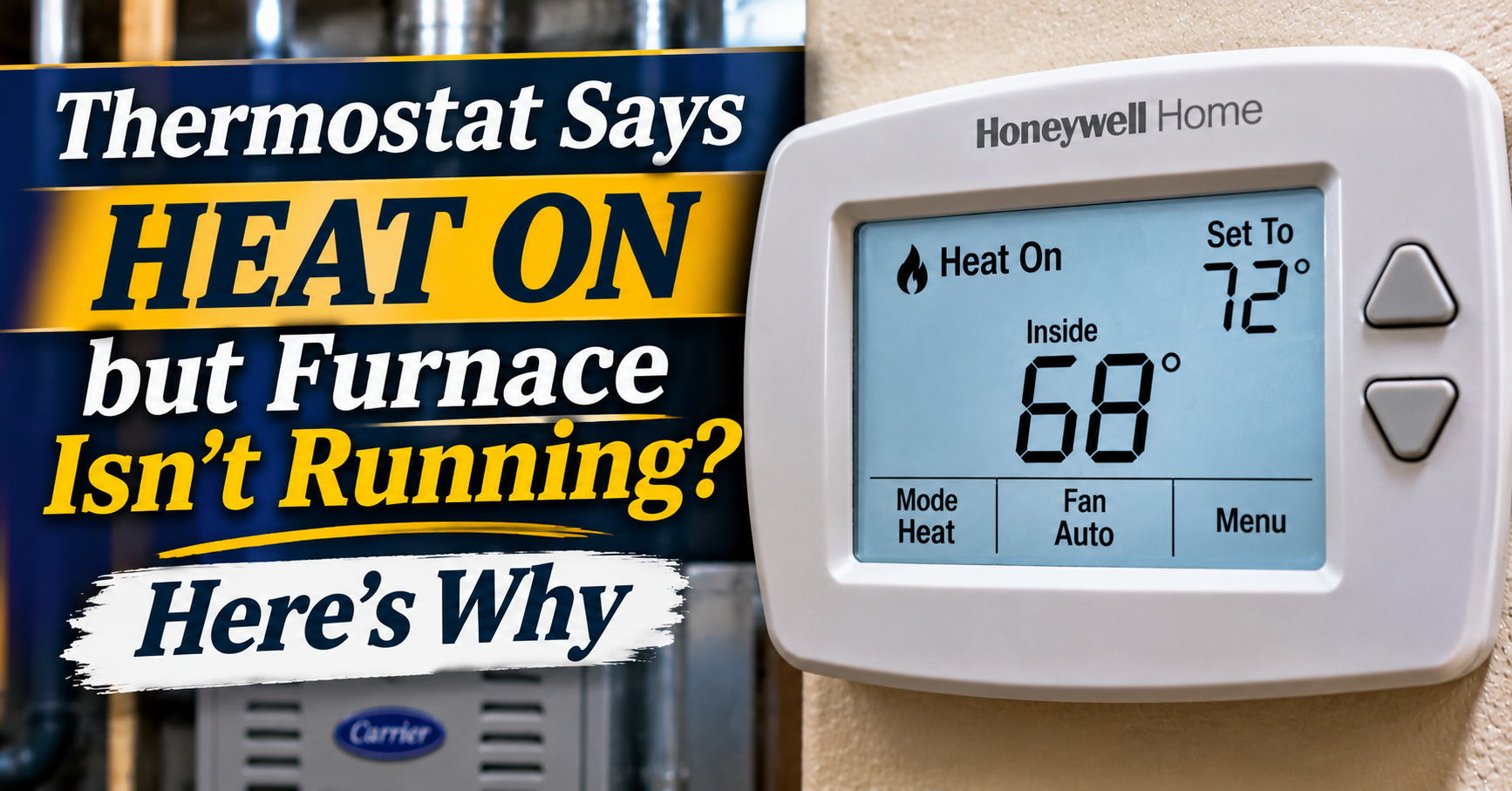
Seeing “Heat On” on the thermostat should mean the house is about to warm up. So when the screen says heat is on and the furnace sits there completely quiet, it is easy to assume the thermostat is lying to you.
Usually, it is not.
That message means the thermostat is asking the heating system to run. It does not mean the furnace actually received the signal, has power, has gas, has enough airflow, or passed all of its safety checks.
In other words, the thermostat is making the request. Something farther down the line may be refusing it.
Give the furnace a few minutes before assuming it failed
Some thermostats and furnaces have a built-in delay. The system may wait briefly after a power interruption, a recent cycle, or a thermostat adjustment before starting.
Set the thermostat to Heat. Set the temperature at least a few degrees above the current room temperature. Make sure the fan is set to Auto, then leave it alone for five minutes.
Do not keep tapping the temperature up and down every thirty seconds. That can restart the delay or make it harder to tell what the furnace is actually doing.
If nothing at all happens after several minutes, then it is time to start narrowing things down.

Figure out which version of “not running” you have
This problem gets much easier once you separate the symptoms.
The furnace is completely quiet
If you hear nothing from the furnace at all, the issue may be power, a shutoff switch, the access panel, a tripped breaker, a thermostat connection, or a control problem.
You hear a click or humming sound, but no heat starts
That can mean the thermostat is calling correctly, but the furnace is not getting through one of its startup checks.
The blower runs, but the air is cold
This is a different problem. The furnace may be running the fan without actually producing heat, or it may be shutting the burners down because of a flame, airflow, venting, or safety issue.
The furnace starts, then quits quickly
If it fires, runs for a few minutes, and shuts down before the house is warm, that is usually short cycling. It deserves a different diagnosis than a furnace that never starts at all.
The timing is not a minor detail. It is one of the best clues you have.


Start with the thermostat settings, even if they look right
I know. You already looked at the thermostat.
Look one more time anyway.
Make sure it is set to Heat, not Cool, Off, Emergency Heat, or a schedule mode that changed the setting behind your back. Make sure the temperature set point is actually higher than the room temperature shown on the screen.
Also check the fan setting.
For a gas furnace, Auto is usually the normal setting. If the fan is set to On, the blower can run continuously and make it seem like the furnace is blowing cold air between heating cycles.
A thermostat can also be fooled by where it sits. A thermostat near a sunny window, kitchen, fireplace, supply vent, or exterior door may sense a temperature that does not match the rest of the house.
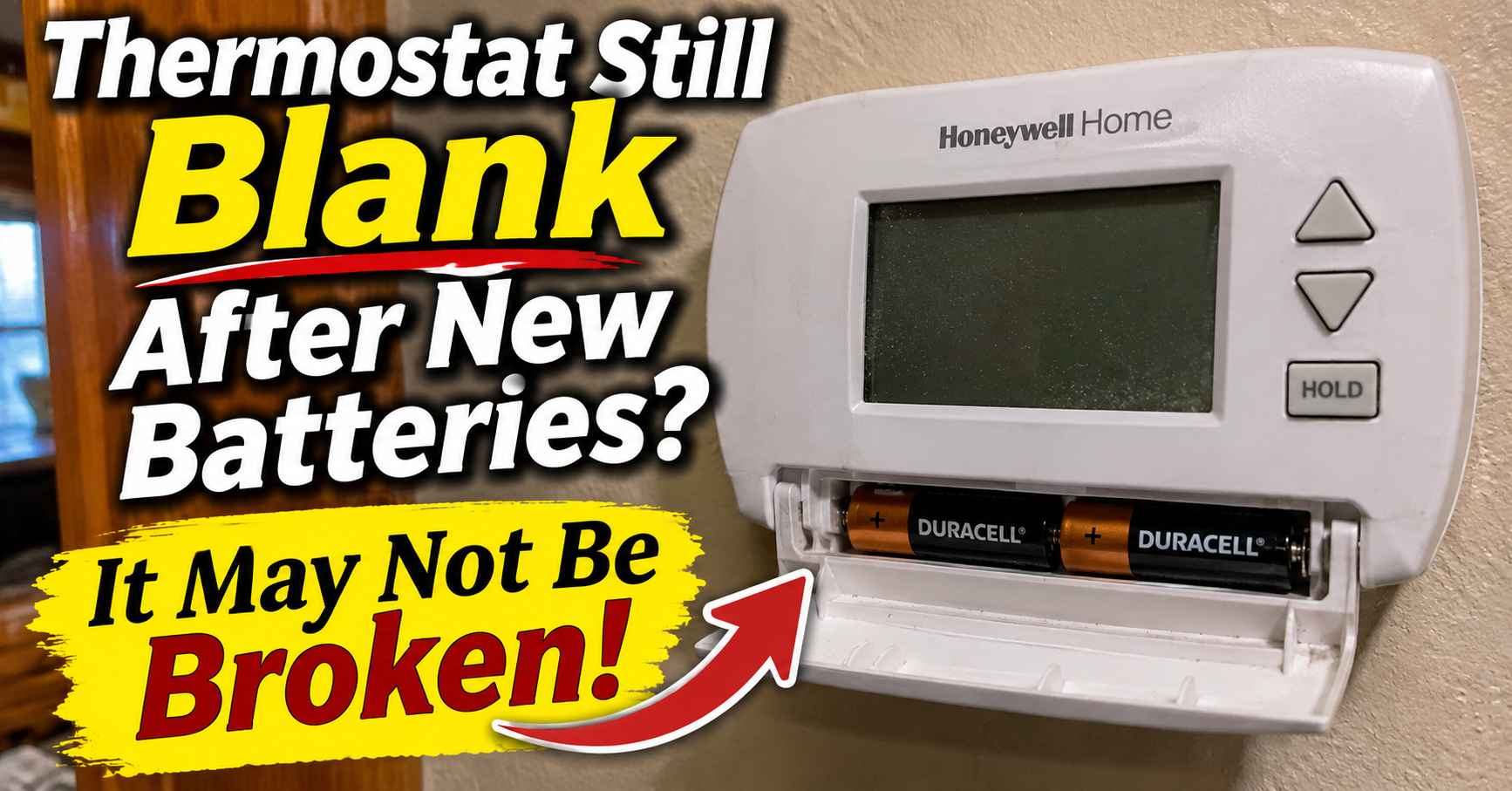
If the screen is dim, blank, losing settings, or otherwise acting strange, read what I would check when a thermostat stays blank after new batteries. A thermostat can have enough power to show a message but still have a wiring or HVAC-power problem behind it.
Check the furnace power switch
Many furnaces have a regular wall switch mounted nearby. It often looks exactly like a light switch.
That switch can get bumped off while someone is changing a filter, moving boxes, cleaning around the furnace, or working in a utility room. When it is off, the thermostat may still say Heat On because the thermostat does not always know the furnace lost power.
Find the switch near the furnace or air handler and confirm it is on.
Then look at the furnace itself. If it has a small display light, diagnostic light, or control-board light visible through a little window, notice whether it is lit or flashing.
A completely dead furnace with no lights may have a power issue. A furnace with a flashing light may be trying to tell you why it stopped.



Check the breaker, but do not keep resetting it
Go to the electrical panel and look for a tripped breaker.
A tripped breaker is often sitting halfway between On and Off instead of lining up cleanly with the others. Reset it by moving it firmly all the way off, then back on once.
If the breaker trips again, leave it alone.
Repeatedly resetting a breaker does not fix the reason it tripped. It can turn a small electrical problem into a damaged component or a bigger safety issue.
A furnace may have more than one electrical circuit involved, especially if you have an air handler, heat pump, humidifier, condensate pump, or equipment in an attic or crawlspace. If you are not sure which breaker serves what, it is better to pause than start flipping random breakers until something happens.
Make sure the furnace panel is fully closed
This is one of those simple checks that feels almost silly until it turns out to be the answer.
Most furnaces have a safety switch behind the lower access panel. The furnace will not run if the panel is removed or not seated correctly.
If you recently changed the filter, checked the furnace, or had somebody working nearby, remove the panel and reinstall it carefully. Make sure it sits flat and engages fully.
Do not tape down, hold down, or bypass the door switch. That switch is there because the furnace should not operate with the panel open.
A dirty filter can stop heat before it ever reaches the house
A clogged filter can cause more trouble than people give it credit for.
The furnace needs air moving across the heat exchanger. If a filter is packed with dust, pet hair, lint, drywall residue, or dirt, airflow drops. The furnace can overheat and shut itself down to protect internal parts.
Sometimes the furnace will still try to start. It may run briefly, get too hot, shut off, cool down, then try again later.
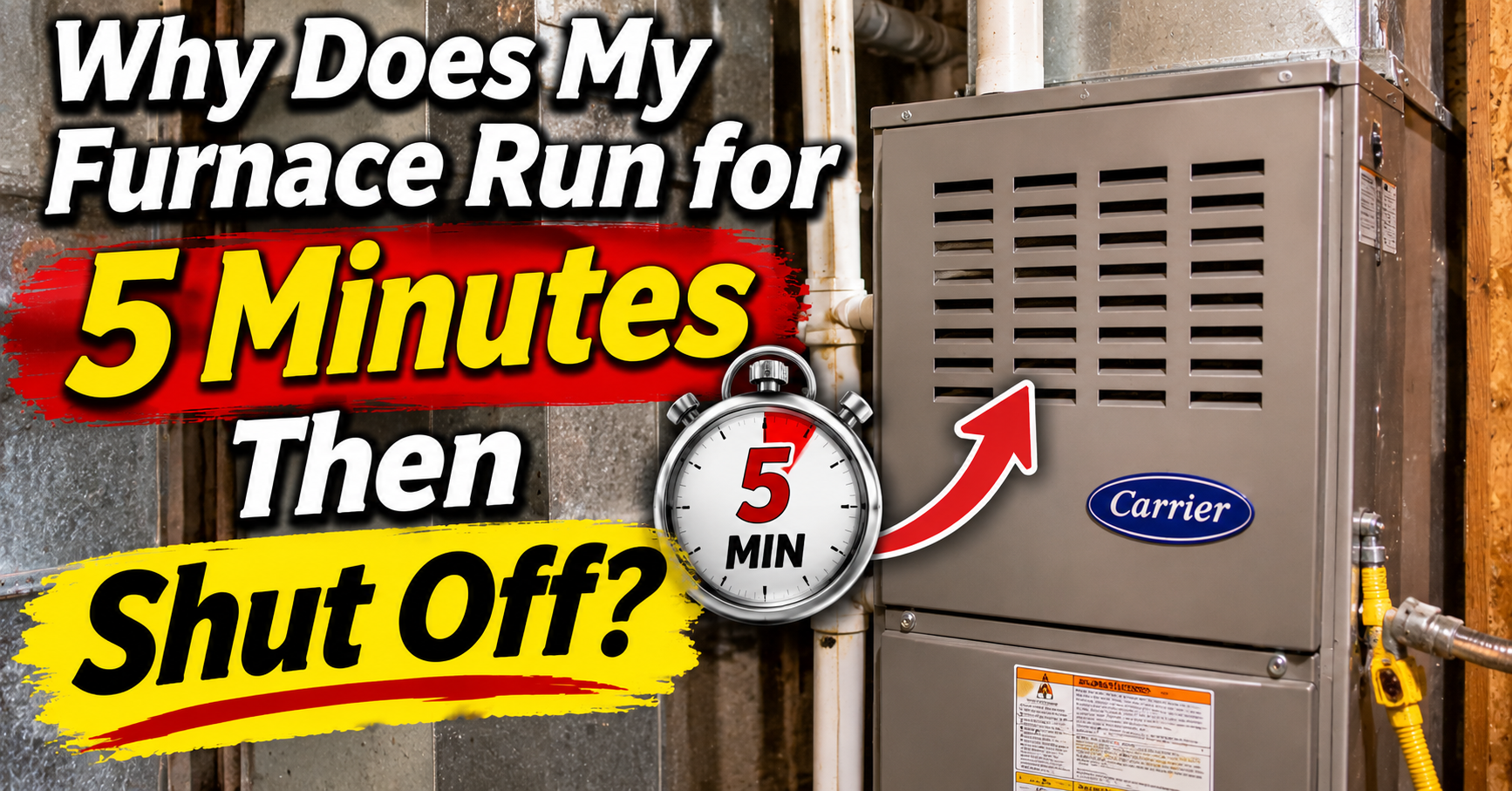
That is why a dirty filter can turn into a furnace that runs for five minutes and then quits.
Pull the filter out and hold it toward a light. If you cannot see much light through it, if it looks heavily gray or black, or if it is bowed inward from suction, replace it with the correct size.
The airflow arrow should point toward the furnace or air handler.
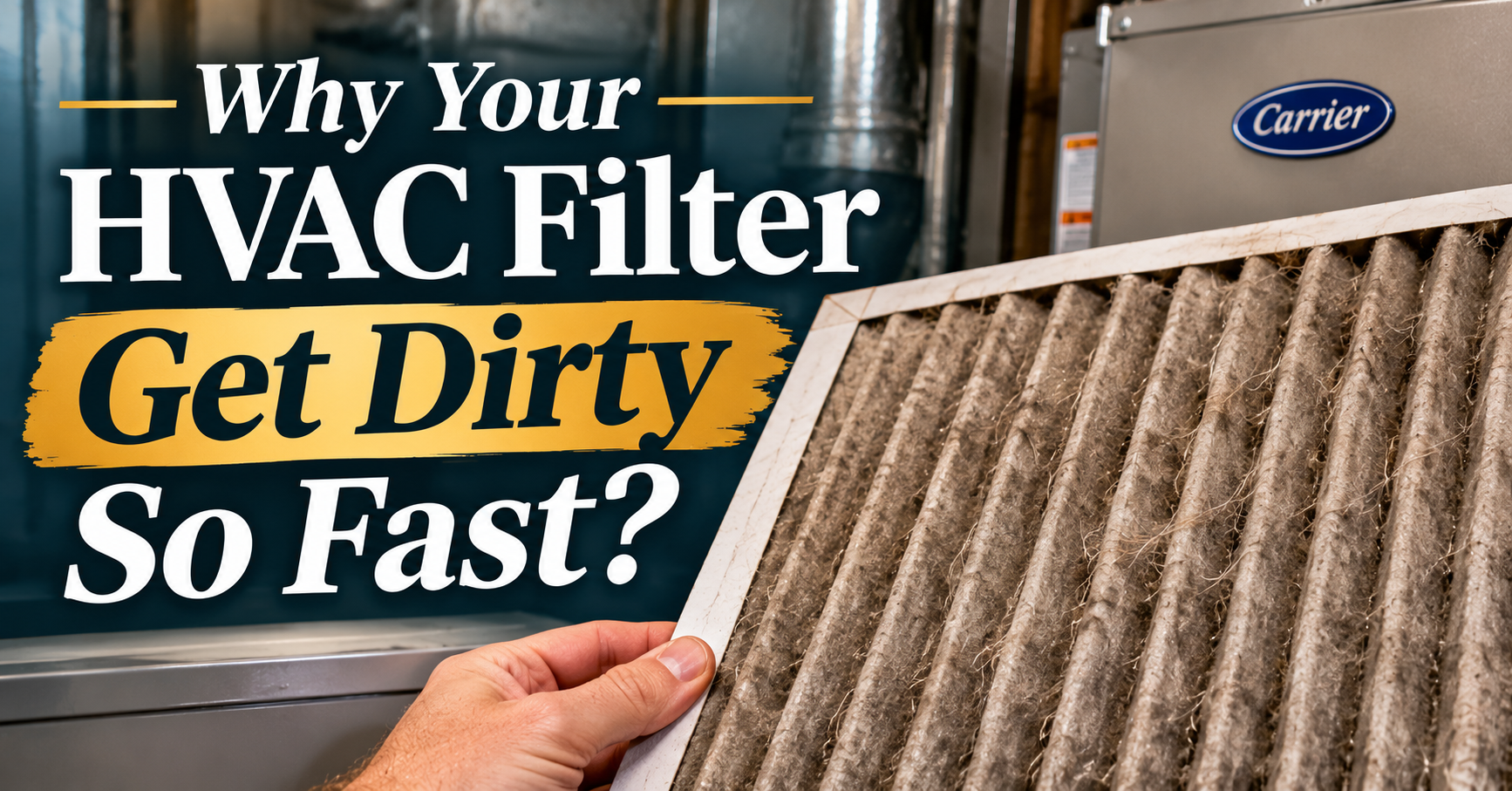
If your filter gets filthy again after only a few weeks, that may be more than ordinary dust. Look at why an HVAC filter can get dirty so fast before simply buying thicker filters over and over.
Open the vents and clear the returns
A furnace cannot heat the house properly if the air has nowhere to go.
Walk through the house and check that supply vents are open. Then check the larger return-air grilles. Those returns are often in hallways, living rooms, bedrooms, or ceilings.
Do not cover them with furniture, curtains, rugs, laundry piles, toy bins, or a dog bed that has quietly claimed the warmest spot in the house.
Closing vents in empty rooms may feel like a smart way to force more heat elsewhere. It can actually reduce airflow enough to make the furnace work harder or overheat.
If the filter is clean but the furnace still keeps stopping, open every vent and return before deciding the problem must be an expensive part.

Check for a flashing diagnostic light
Most modern furnaces have a small LED light that flashes a pattern when something is wrong.
One flash, two flashes, three flashes, a long flash followed by a short flash, it can all mean something different depending on the furnace brand and model.
The code legend is usually printed on the inside of the access panel. If you see a flashing pattern, take a video or picture before turning off power. That code may disappear after a reset, and it can give a technician a much better starting point.
Do not assume a blink code means you should replace the part it names. A pressure-switch code, for example, does not automatically mean the pressure switch itself is bad. The switch may be reacting to a venting issue, drain issue, inducer problem, or something else it is designed to monitor.
The code is a clue. It is not a shopping list.
Check the gas supply only from the outside of the system
If you have a gas furnace, make sure the gas service to the home is on and that other gas appliances are working normally.
The manual shutoff valve near the furnace should generally have its handle parallel with the gas pipe when it is open. If you are not comfortable identifying it, do not guess and do not turn random valves.
If you smell gas, stop troubleshooting immediately.
Do not flip switches, do not light anything, do not run the furnace, and do not use your phone inside the house. Leave the area and call your gas utility or emergency services from a safe location.
A furnace that will not start is annoying. A gas smell is a safety issue, not a DIY project.


High-efficiency furnaces need clear outdoor pipes
If your furnace has white PVC pipes venting outdoors, those pipes need to stay clear.
One pipe may bring in combustion air. Another may vent exhaust. Snow, ice, leaves, insect nests, bird nests, or debris can block them enough to keep the furnace from starting safely.
You can inspect the outside openings from ground level and clear obvious material around the end of the pipe.
Do not take vent pipes apart or push a tool deep into them. If the opening looks clear but the furnace keeps reporting a venting or pressure issue, the blockage may be farther inside or the problem may be with the condensate drain, inducer motor, or pressure switch.
Water around the furnace can shut the system down
High-efficiency furnaces and air handlers create condensation. That water has to drain somewhere.
If the drain line clogs, a safety float switch may stop the system before water overflows into the furnace, attic, closet, or floor.
Look for water in the drain pan, wet flooring near the furnace, a damp smell, or a small safety switch attached to the drain line.
Do not bypass that switch to get heat back temporarily. If the safety switch is tripped, it may be preventing a leak that causes much more damage than a cold house for a few hours.
A clogged drain is often repairable, but it should be fixed correctly.
New thermostat problems are often wiring or setup problems
If the furnace worked with the old thermostat but stopped after installing a new one, the new thermostat setup belongs near the top of the suspect list.
A thermostat can be physically mounted, lit up, and even show Heat On while still being wired incorrectly for the type of system you have.
Heat pumps, conventional gas furnaces, electric furnaces, multi-stage systems, and dual-fuel setups do not all use the same wiring or installer settings.
Do not start moving wires around based on a generic online diagram. Use the manual for your exact thermostat and system, or call an HVAC professional who can verify the wiring and configuration.
A wrong wire in the wrong terminal can blow a low-voltage fuse, damage a transformer, or leave you chasing a problem that was created by a five-minute thermostat swap.
What the furnace may be doing behind the panel
A furnace has a startup sequence.
The thermostat calls for heat. The furnace checks that it can vent safely. The inducer motor may start. The ignition system works. The burners light. The furnace confirms it has a proper flame. The blower starts after the heat exchanger warms up.
If any safety check fails, the furnace may stop itself.
That is why “thermostat says Heat On” does not guarantee the burners will light. The thermostat only begins the process. The furnace still has to pass every safety step after that.
This is also why the sound pattern matters.
If you hear nothing at all, think power or signal.
If you hear the furnace start but no flame appears, think startup or venting issue.
If the burners light and go out after seconds, a flame-sensing problem may be involved.
If it runs for several minutes and stops while the blower continues, overheating and airflow move higher on the list.
Those are useful observations to give a technician. They are much more helpful than simply saying the heat does not work.
When I would call for furnace service
Call an HVAC professional if you have confirmed the thermostat settings, furnace switch, breaker, access panel, filter, and vents, but the furnace still does not respond.
I would also call right away if you notice any of these things:
- A gas smell, burning smell, smoke, soot, or melted wiring.
- A breaker that trips again after one reset.
- A furnace that starts and stops repeatedly.
- Water around the furnace or a drain safety switch that keeps shutting the system down.
- Loud booming, banging, grinding, or squealing sounds.
- A flashing error code that returns after the furnace is restarted.
- The furnace runs but never produces warm air.
A thermostat saying Heat On is not proof that the thermostat is bad. Most of the time, it is proof that the thermostat did exactly what it was supposed to do. The useful question is what stopped the furnace after it got the message.