
Once a propane line runs from the house out to an outdoor grill, it is easy to stop thinking about it.
The grill works. The deck looks good. You turn a knob, hear that familiar click, and dinner is moving along.
But propane lines, shutoff valves, quick-connect fittings, flexible hoses, and regulators live through rain, summer heat, winter cold, insects, shifting wood, accidental bumps, and sometimes a dog or kid running through the wrong place at the wrong time.
That does not mean a newer propane line is likely to leak. It means it is worth knowing how to look it over before a small problem turns into an alarming one.
After my own gas-detector scare, I wanted a better system for checking the propane line that runs from our house to the deck grill. The point is not to become your own propane technician. The point is to spot obvious trouble, test accessible connections safely, and know exactly when it is time to stop and call somebody.
Start by knowing when not to test anything yourself
If you smell propane, hear hissing, see frost forming around a connection, or have a propane alarm sounding, do not start mixing soap and walking around the line.
Get people away from the area first.
Avoid light switches, outlets, lighters, cigarettes, vaping, vehicles, or anything that could create a spark. Call your propane supplier, fire department, or 911 from a safe distance if you believe there may be an active leak.
A propane leak is not something to “just see if it goes away.”
This article is for routine inspection, seasonal checks, and a calm situation where there is no obvious emergency.

Why a house-to-deck propane line deserves a closer look
A standard portable grill tank is easy to see. You notice the tank, hose, regulator, and connection every time you use it.
A permanent propane line to an outdoor grill can be easier to forget because much of it may be tucked under the deck, along the house, inside conduit, or behind the grill area.
The vulnerable places are usually not the middle of a properly installed pipe. They are the connection points.
That can include:
- The shutoff valve where the outdoor line branches off.
- Any exposed flexible connector.
- The quick-connect fitting at the grill.
- The regulator, if your grill setup uses one.
- The connection where the line enters the grill.
- Any spot where the line rubs against decking, metal, brick, or a sharp edge.
- Connections that have been bumped, pulled, or exposed to weather.
I would look at those areas at the start of grilling season, after a harsh winter, after moving the grill, after deck work, and anytime I notice a propane smell or unusual grill behavior.


Begin with a slow visual inspection
Do this with the grill off, cold, and no open flames anywhere nearby.
Start at the house and follow the line toward the grill.
You are looking for things that seem out of place, not trying to take apart the propane system.
Look for cracked rubber, worn spots, kinks, rust, loose mounting hardware, missing caps, corrosion around fittings, or a hose that is rubbing against something sharp.
If you have a flexible hose, inspect the full length of it. Rodents can damage hoses. Sunlight can age rubber. A hose that looks swollen, brittle, cracked, chewed, or flattened is not something I would keep using just because it still appears to work.
Look at the quick-connect fitting too. Dirt, spider webs, debris, and moisture can collect around outdoor connections. Make sure any protective cap is present when the grill is disconnected.
Do not force a stuck fitting, twist a pipe, or put tools on gas fittings unless you know exactly what you are doing. The goal of a visual inspection is to notice problems, not accidentally create one.
Check whether the grill has started acting differently
A propane line can give you clues before you ever smell gas.
Pay attention if your grill suddenly takes longer to light, has weak flames, makes popping sounds, heats unevenly, or burns with an unusual flame pattern.
A healthy gas grill flame is generally mostly blue with small yellow tips. A lot of yellow flame, lazy flame, popping, or poor heat can come from burner buildup, spider webs, grease, regulator trouble, low gas flow, or an issue farther back in the supply system.
Those symptoms do not automatically mean you have a leak. They do mean it is worth taking a closer look before your next cookout.

The soap-bubble test is still one of the best basic checks
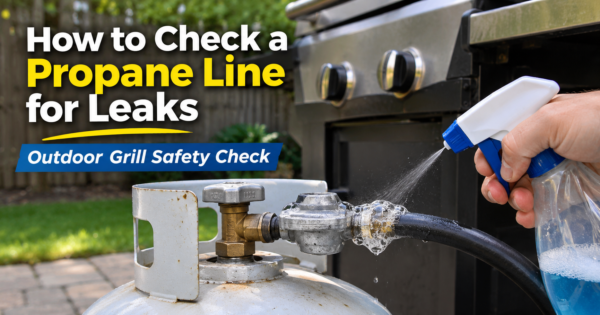
For accessible outdoor connections, a soap solution is a simple way to look for escaping gas.
You only need water, liquid dish soap, and something to apply it with. A small cup and paintbrush work well. A spray bottle can work too, but I prefer a brush when I am trying to control exactly where the solution goes.
Mix equal parts liquid dish soap and water.
The grill burners should stay off during the entire test. Do not light the grill. Do not create a flame nearby. Do not test in an enclosed porch, garage, or poorly ventilated area.
Apply the soap solution to the accessible connection points, then slowly open the gas supply according to your grill and propane-system instructions.
Watch the soap.
Still soap is normal.
Tiny foam from brushing it on is normal.
Bubbles that keep growing, swelling, or reforming at the same spot can mean gas is escaping.
If you see that, shut off the gas supply. Do not light the grill to “burn off” the gas. Do not keep testing the same leaking joint over and over.
A loose connection may need qualified tightening. A damaged hose, fitting, valve, quick-connect, regulator, or pipe may need replacement.
Where I would apply the soap solution
Every grill setup is different, so I would use the manufacturer’s manual as the final authority for the exact test points.
For a house-to-deck propane line, the accessible areas often include:
- The outdoor shutoff valve connection.
- The quick-connect fitting.
- The hose connection at the quick-connect.
- The hose connection at the grill.
- The grill’s regulator connection, if one is used.
- Any visible threaded joint or adapter between the house line and grill.
- The full exposed length of any flexible hose.
Do not spray soap into the inside of a quick-connect fitting, burner opening, valve, or regulator. Apply it around the outside of connections where you can see whether bubbles form.
If the line is buried, enclosed, inside a wall, or under decking where you cannot clearly inspect it, leave that part to a propane or HVAC professional.


Never use a flame to find a propane leak
This should not need said, but it does.
Do not use a lighter.
Do not use a match.
Do not turn on the grill “just for a second” to see where the flame acts funny.
Do not hold a candle near a fitting.
A propane leak can ignite suddenly. What started as a tiny leak at a grill fitting can become a flash fire in a moment.
Soap solution, a proper leak-detection product, or a quality handheld gas detector are the safer ways to investigate an accessible connection.
Why I like having a handheld gas detector too
Soap bubbles are simple and useful, but a handheld gas detector can help you check around several areas without coating every fitting in soapy water.
It can be especially handy around the quick-connect, shutoff valve, flexible hose ends, regulator, grill manifold, and the place where the propane line comes through the house or deck.
The TopTes handheld propane and natural-gas leak detector is the kind of portable sniffer I would keep with the grill tools instead of waiting until I have a scare to wish I had one.
A handheld detector is not there to prove a leak does not exist. It is there to help you identify a suspicious area that needs attention.
If it reacts around one connection, shut off the gas and treat that area seriously. Use the soap test only if it is safe to do so, or call a professional rather than trying to take fittings apart yourself.

How I would use a handheld gas sniffer around a grill line
First, follow the instructions that come with your specific detector. Different models have warm-up times, sensitivity settings, and alarm patterns.
In a calm, non-emergency situation, I would start with the detector warmed up and the grill burners off.
Then I would move slowly around the likely trouble spots:
- The outdoor shutoff valve.
- The connection where the house line reaches the deck area.
- The quick-connect fitting.
- The hose connection on both ends.
- The regulator area.
- The grill manifold and burner-control area.
- The full visible length of flexible hose.
Move slowly. Waving a detector around like a magic wand can make it hard to tell which exact fitting triggered a response.
If you get a reading near one area, pull back and approach it again slowly. See whether the detector responds consistently at the same connection.
The portable combustible-gas sniffer for propane fittings is especially useful because it gives you a second way to inspect connections that your nose alone may not catch.
Your nose is helpful, but it should not be the only test
Propane has an odor added to it to help people recognize a leak. Most people describe it as rotten eggs, skunk-like, sulfur-like, or something sharp and unpleasant.
If you smell it, trust that concern.
But do not assume no smell means no leak.
People can be congested, sick, outside in moving air, distracted, or simply less sensitive to the odor. A small leak outdoors may not smell strong enough to notice from a few feet away.
That is one reason I like a detector for a propane home.
After an aerosol spray set off my own detector, I learned that alarms can have more than one explanation. But I also learned that it is better to investigate a nuisance alarm carefully than to ignore a real issue because you do not smell anything.
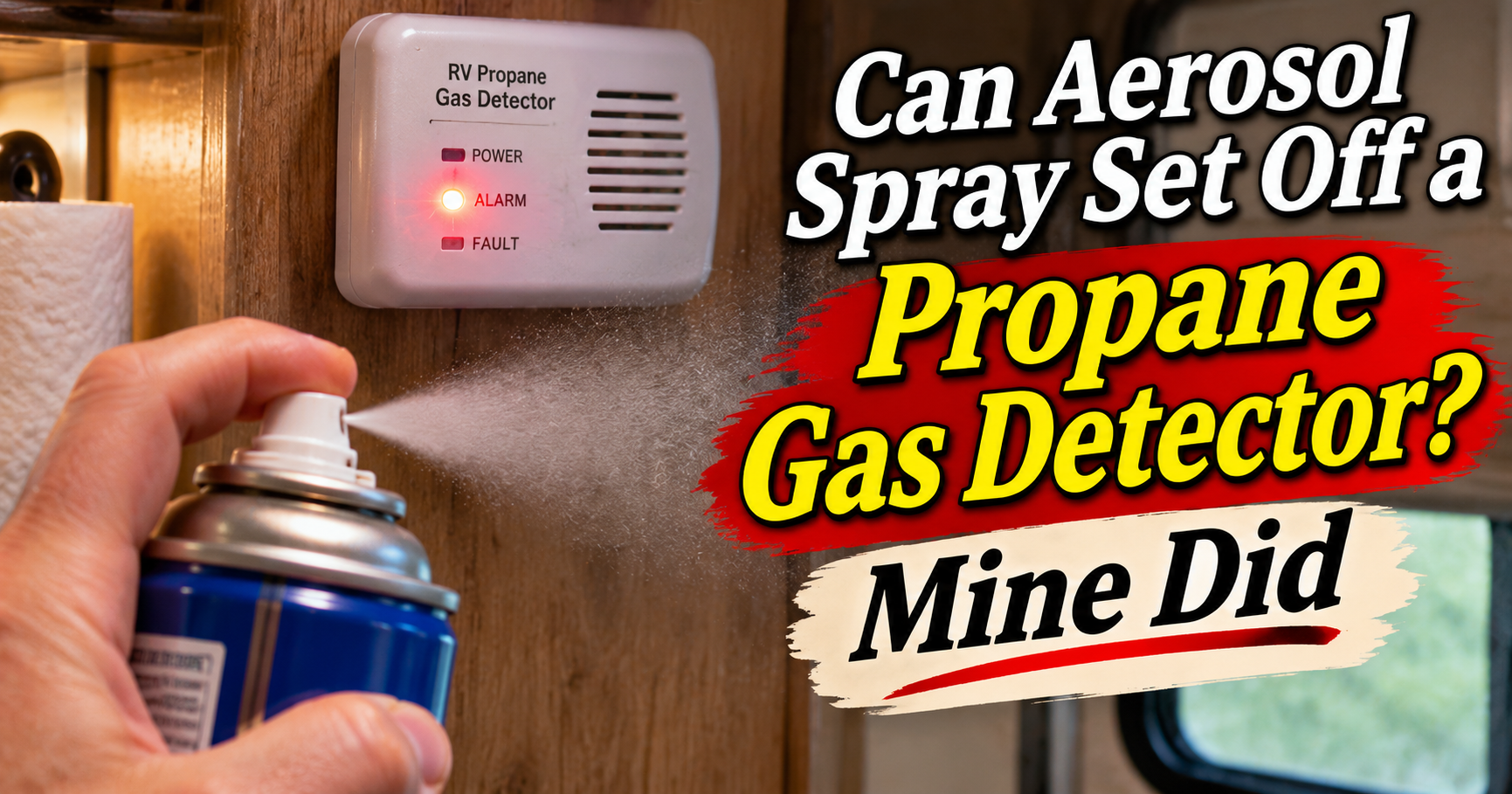
You can read what happened when aerosol spray triggered my propane gas detector if you have ever had an alarm go off after spraying cleaner, disinfectant, paint, air freshener, or another strong product.

A plug-in detector and a handheld detector do different jobs
I see these as two separate tools.
A plug-in detector stays in place and gives you an alarm if it senses combustible gas in the home.
A handheld detector helps you inspect specific fittings, lines, and appliances when you have a concern.
For a house with a propane furnace and an outdoor grill line, I would rather have both than rely on one thing.
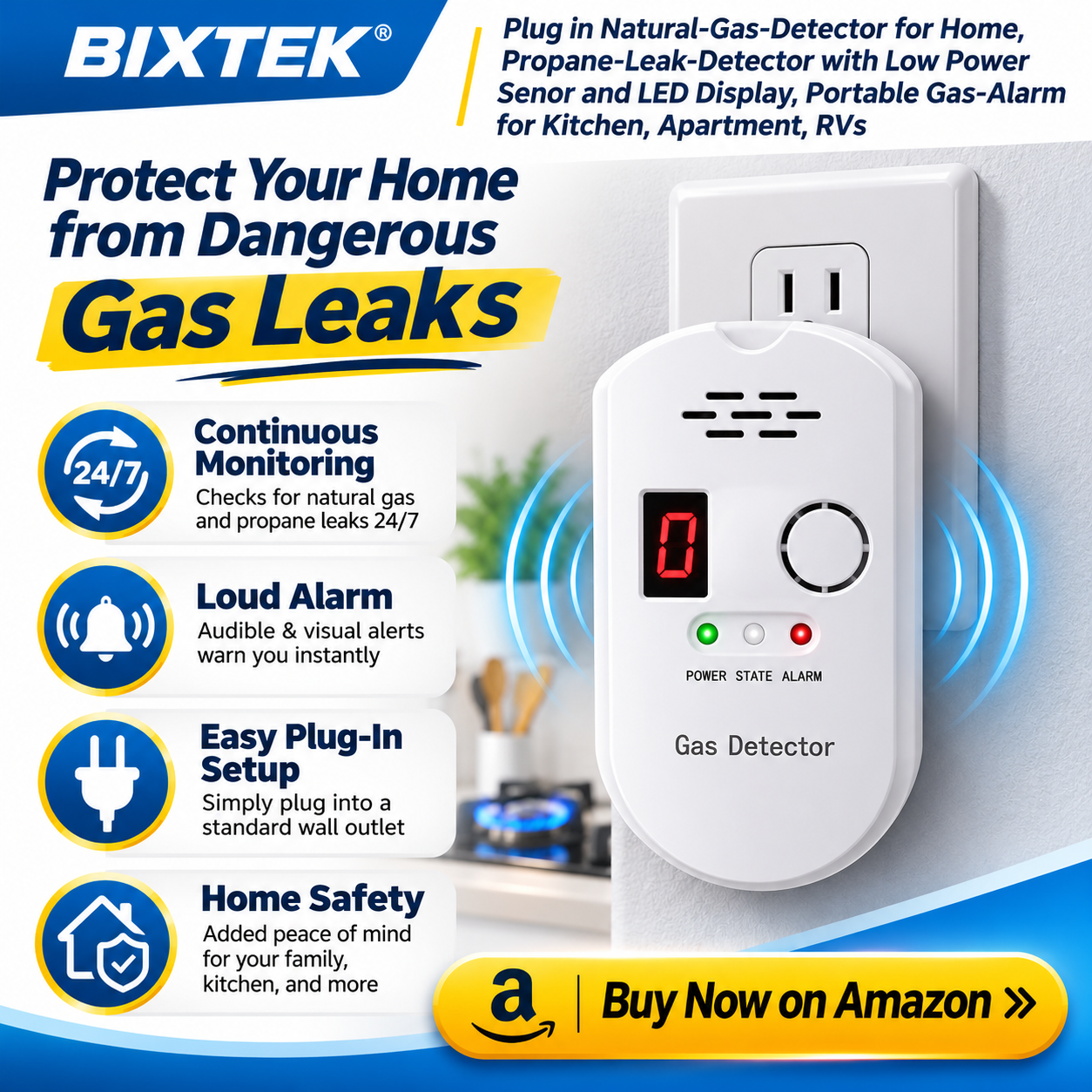
The plug-in propane and natural-gas detector with LED display is useful for ongoing indoor monitoring around propane appliances.
The handheld detector belongs with the grill tools, outdoor equipment, and seasonal maintenance supplies.
Neither replaces professional inspection when something seems wrong. They simply give you more warning and better information.
Do not forget the grill’s own instruction manual
A propane line that runs from the house does not automatically mean every grill can be connected to it.
Some grills are designed for a portable propane tank. Some can be converted to natural gas with a manufacturer-approved kit. Some are made specifically for a fixed propane or natural-gas line.
Using the wrong regulator, wrong conversion kit, wrong orifice, or wrong gas pressure can create a serious safety issue and damage the grill.
Before changing anything about your setup, use the manual for your exact grill model and make sure the grill is approved for the fuel and hookup arrangement you have.
Do not assume a grill works with a house propane line simply because it uses propane from a tank. Those systems are not always interchangeable.
When I would call a propane professional instead of messing with it
I would call for help if I see growing soap bubbles that do not stop after a simple connection check.
I would call if a hose is cracked, a quick-connect fitting is damaged, a valve is corroded, the detector repeatedly reacts around the same location, or I smell propane near the house line.
I would also call if the propane line is inside a wall, underground, under a deck where I cannot reach it safely, or connected to something I do not understand.
There is a big difference between checking a visible grill connection and repairing a pressurized propane line.
One is basic homeowner maintenance. The other can become a fire, explosion, or carbon monoxide problem if it is done wrong.
A simple seasonal propane-line routine
Before the first serious grilling weekend of the year, I would take ten minutes and do this:
- Look over the visible propane line, flexible hose, quick-connect, shutoff valve, and grill connection.
- Remove leaves, spider webs, dirt, and debris around the grill connection area.
- Make sure the grill is cold and every burner knob is off.
- Confirm any hose is not cracked, chewed, rubbing against an edge, or badly weathered.
- Test accessible connections with a soap-and-water solution.
- Use a handheld detector around key fittings if you have one.
- Close the gas supply and wait for any test solution to dry before lighting the grill.
- Keep the grill manual available so you know the proper gas type, connection, and shutoff procedure.
That little routine is a lot easier than dealing with a gas scare halfway through cooking burgers for everybody.
One last thing I learned from my propane-detector scare
The alarm that went off after I sprayed aerosol germ killer did not mean my propane line was leaking.
But it made me realize how quickly my mind jumped to the newer grill line, the propane furnace, and every other possible source.
That reaction was not overthinking. Propane is something worth taking seriously.
The useful lesson was not, “Gas detectors give false alarms.”
The useful lesson was, “Some household chemicals can trigger them, but I still need to know how to safely rule out the real possibilities.”