
If you smell propane, hear gas hissing, or a propane detector starts alarming, treat it like it could be real until you know otherwise. The safe move is not to stand there trying to solve the mystery. Get people and pets outside, avoid anything that could create a spark, and make the call from a safe distance.
I learned how quickly your brain can start doing laps when my own propane detector went off. I had a newer propane line running from the house out to the deck for the grill, plus a propane furnace downstairs, so my mind immediately went to every worst-case possibility at once. It later made sense that a heavy amount of aerosol germ-killer spray had likely set off the detector. Still, I am glad I took the alarm seriously first.
That is the part worth remembering. A false alarm can happen. A real propane leak can happen too. You do not want to bet your house on guessing correctly.
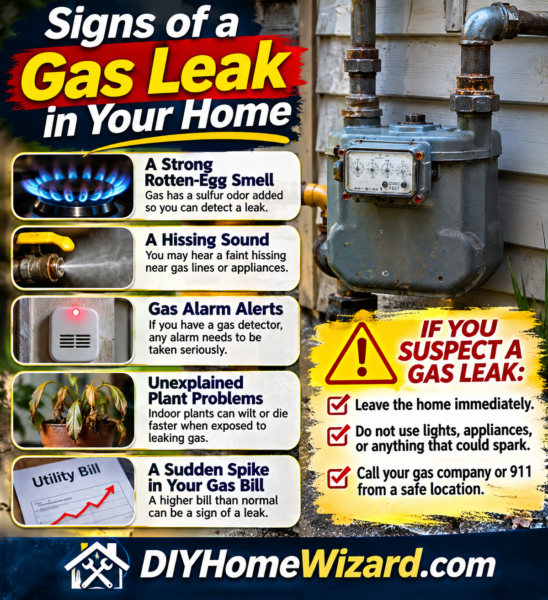
The Big Signs of a Propane Leak
Propane has an odor added to it so people can notice a leak. People often call it a rotten-egg smell, but to me it is more like a harsh, skunky, chemical smell that makes you stop mid-step and think, “That does not belong here.”
Do not wait for every sign to show up at once. One strong warning sign is enough to take action.
You Smell Something Like Rotten Eggs, Skunk, or Sulfur
A propane leak often has a strong unpleasant odor because odorant is added to otherwise odorless propane. If you catch that smell around a furnace, water heater, stove, propane tank, grill connection, basement, crawl space, or outdoor line, do not talk yourself out of it.
That smell may be faint at first. It may come and go. It may be stronger close to a propane appliance or low area of the home.
Propane is heavier than air, so it can settle lower in a room, basement, crawl space, or low spot around a deck. A leak does not have to hit you in the face at nose level to be there.
You Hear a Hiss Near a Tank, Line, Regulator, or Appliance
A hissing or whistling sound can mean gas is escaping under pressure. It might be loud and obvious, or it might sound like a tire slowly losing air.
Do not lean in closer to inspect it. Do not put your face near a fitting because you are trying to play detective. If you hear hissing around propane equipment, get away from the area and treat it as urgent.
A hiss near a portable grill tank, quick-connect fitting, regulator, flex line, or tank valve is especially concerning. A small connection problem can turn into a much bigger problem if gas keeps escaping around ignition sources.
Your Propane Detector Alarms
A propane detector is not something to ignore because you do not smell gas right away. It may pick up gas in an area where the odor has not reached you, or where you simply are not noticing it.
That said, detectors can react to certain airborne chemicals and vapors. My own experience with a heavy aerosol germ-killer spray was a perfect example. The alarm started going off about 20 minutes after I sprayed, and I had to slow down and work through what had changed in the house.
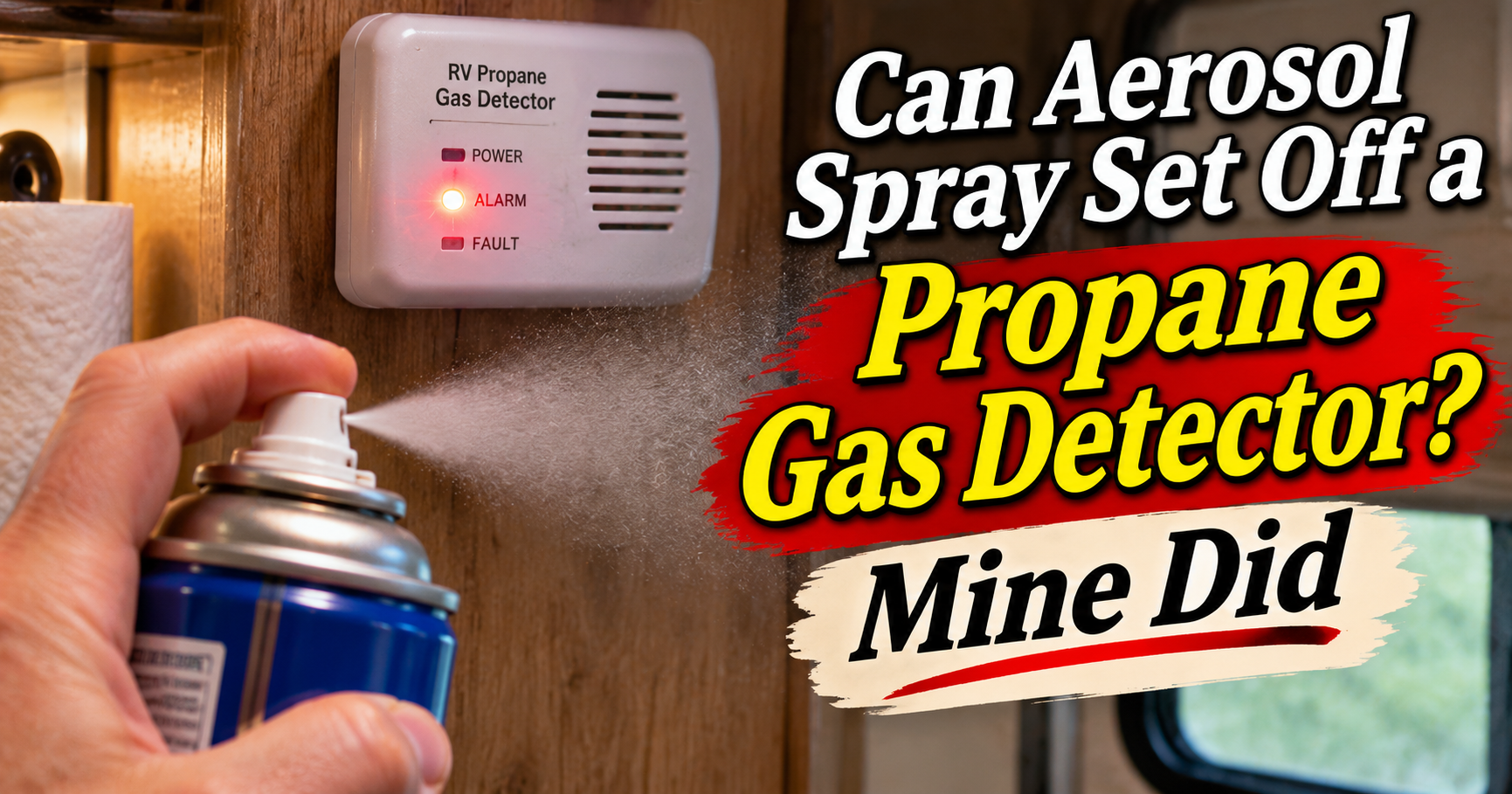
The key is the order of operations. First, get to fresh air and treat the alarm seriously. Later, after the immediate risk is handled, you can consider whether something like aerosol spray may have been a trigger. I explained exactly what happened in my home in my aerosol spray propane-detector scare.
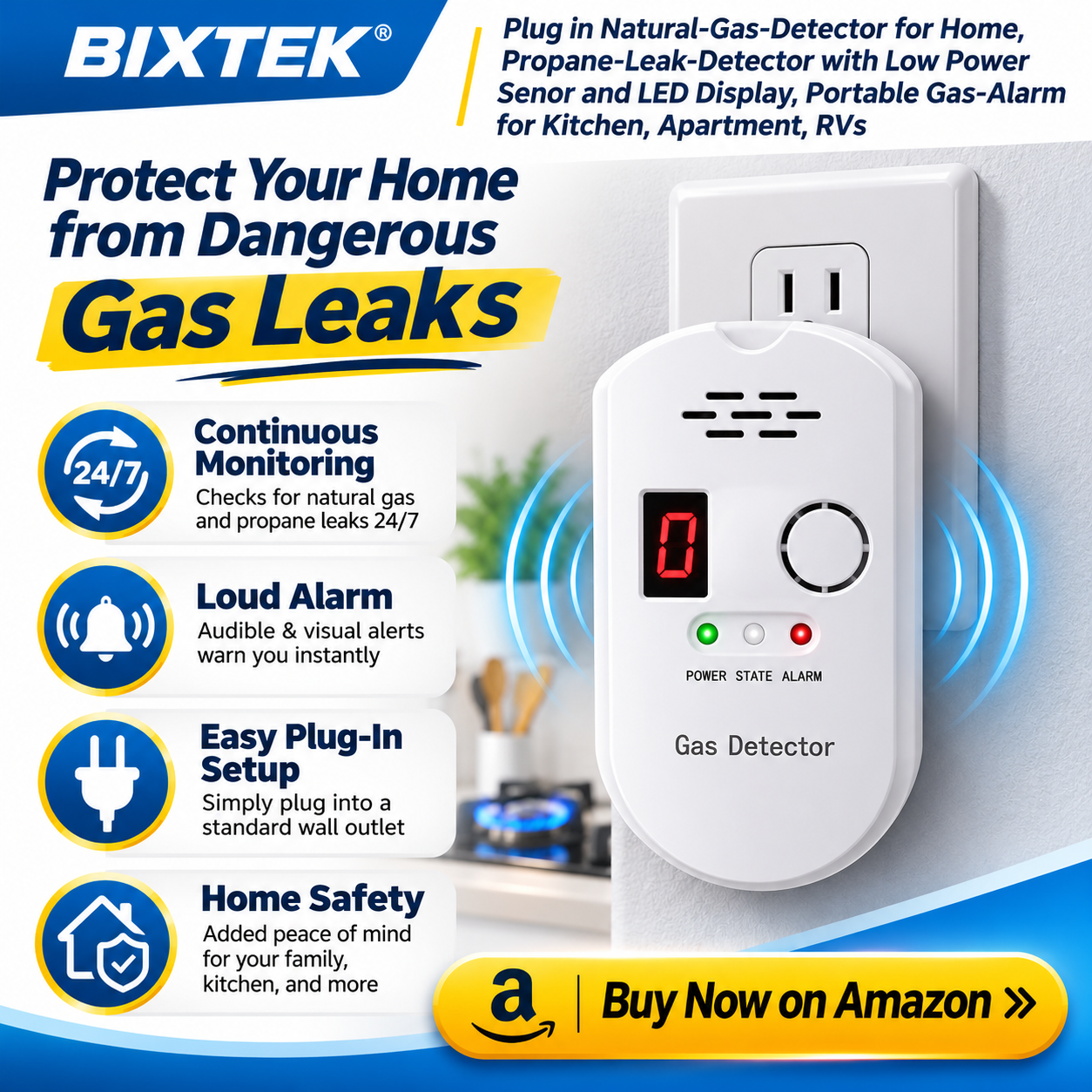
If you use propane heat, a plug-in propane detector for the areas that need an extra set of eyes can provide useful warning beyond smell alone. Just be sure to follow the manufacturer’s placement instructions for that exact detector.
You See a White Cloud, Frost, or Something Odd at the Tank
A visible cloud around a propane tank or connection can be a serious warning. Frost or ice around a valve, regulator, hose connection, or tank can also be a clue that gas is escaping and rapidly cooling the area.
Not every bit of frost means there is definitely a leak. Tanks can frost during heavy use. But frost paired with propane odor, hissing, or a detector alarm is not a wait-and-see situation.
Move away and let the propane supplier, fire department, or qualified technician decide what is happening.
Your Propane Usage Suddenly Makes No Sense
A surprise jump in propane use does not automatically mean a leak. Cold weather, a longer heating cycle, a guest staying over, or running a propane fireplace more often can all use more fuel.
But if your tank level is dropping way faster than normal and nothing has changed in how you use propane, a leak belongs on the list of possibilities. This is especially true if you also notice odor, hissing, or trouble with an appliance.
Think of unusual propane use as a clue, not proof. It is enough reason to call the propane company and ask for guidance.


What Makes a Propane Leak Serious Right Now
Any suspected propane leak deserves respect, but a few situations move it firmly into emergency territory.
A strong odor inside the house is serious. So is an alarm that keeps sounding, obvious hissing, a visible cloud, or gas odor near flames or electrical equipment. A leak near a furnace, water heater, dryer, range, fireplace, or generator needs immediate attention because those places can involve ignition sources.
A leak near a propane tank is also not something to repair with a wrench and confidence you found on the internet five minutes ago. Tank valves, regulators, and supply lines are not casual DIY projects.
If flames are present, you see a cloud of vapor, or you believe gas is accumulating indoors, leave immediately and call 911 or the fire department from outside and away from the suspected leak.


What to Do the Moment You Suspect a Propane Leak
The boring safety advice is boring because it works.
- Get everyone out of the house or away from the suspected area right away. That includes pets.
- Do not flip light switches on or off. Do not plug in a phone charger. Do not start a fan. Do not use a garage-door opener. Do not light a match, smoke, vape, or start the grill.
- Do not use your phone while standing in the suspected leak area. Walk away first.
- If you can safely shut off the propane supply without going toward the leak or putting yourself in danger, do so. If you are unsure, leave it alone and get help.
- Call your propane supplier, 911, or the fire department from a neighbor’s home or another safe location.
- Do not go back inside because the smell seems lighter after a few minutes. Wait until a qualified person says it is safe.
It can feel dramatic to leave the house over a smell or an alarm. It is supposed to feel a little dramatic. The cost of stepping outside for a false alarm is small. The cost of ignoring a real leak is not.
Do Not Rely on Smell Alone
Most people assume they will always smell propane if there is a leak. That is not a safe assumption.
A leak may be in a crawl space, basement, attic, or outside area where the odor does not drift toward you. Strong cooking smells, cleaners, smoke, musty odors, allergies, a cold, medication, age, and simple odor fatigue can also make it harder to notice.
That is why I like having more than one layer of warning. A carbon monoxide alarm is important, but it does not detect propane. A smoke detector is important, but it does not detect propane either.
For a propane home, a detector made specifically for combustible gas is a separate tool. This plug-in natural-gas and propane alarm is the kind of backup that can make sense near a propane appliance when used according to its instructions.

When a Handheld Gas Sniffer Makes Sense
A handheld detector can be useful for routine checking around accessible connections after you know there is no active emergency. It can help narrow down whether a hose connection, quick-connect fitting, appliance shutoff, or regulator area deserves a closer look from a professional.
It is not a reason to stay inside and investigate while you smell gas or while an alarm is going off. Get safe first. Test later, if it is appropriate.
For basic maintenance around a grill line or an outdoor connection, I would rather have a handheld propane leak sniffer that can help pinpoint a suspicious fitting than rely on my nose alone. It is especially handy when you have several fittings and want to check them without playing the “where is that smell coming from?” game.
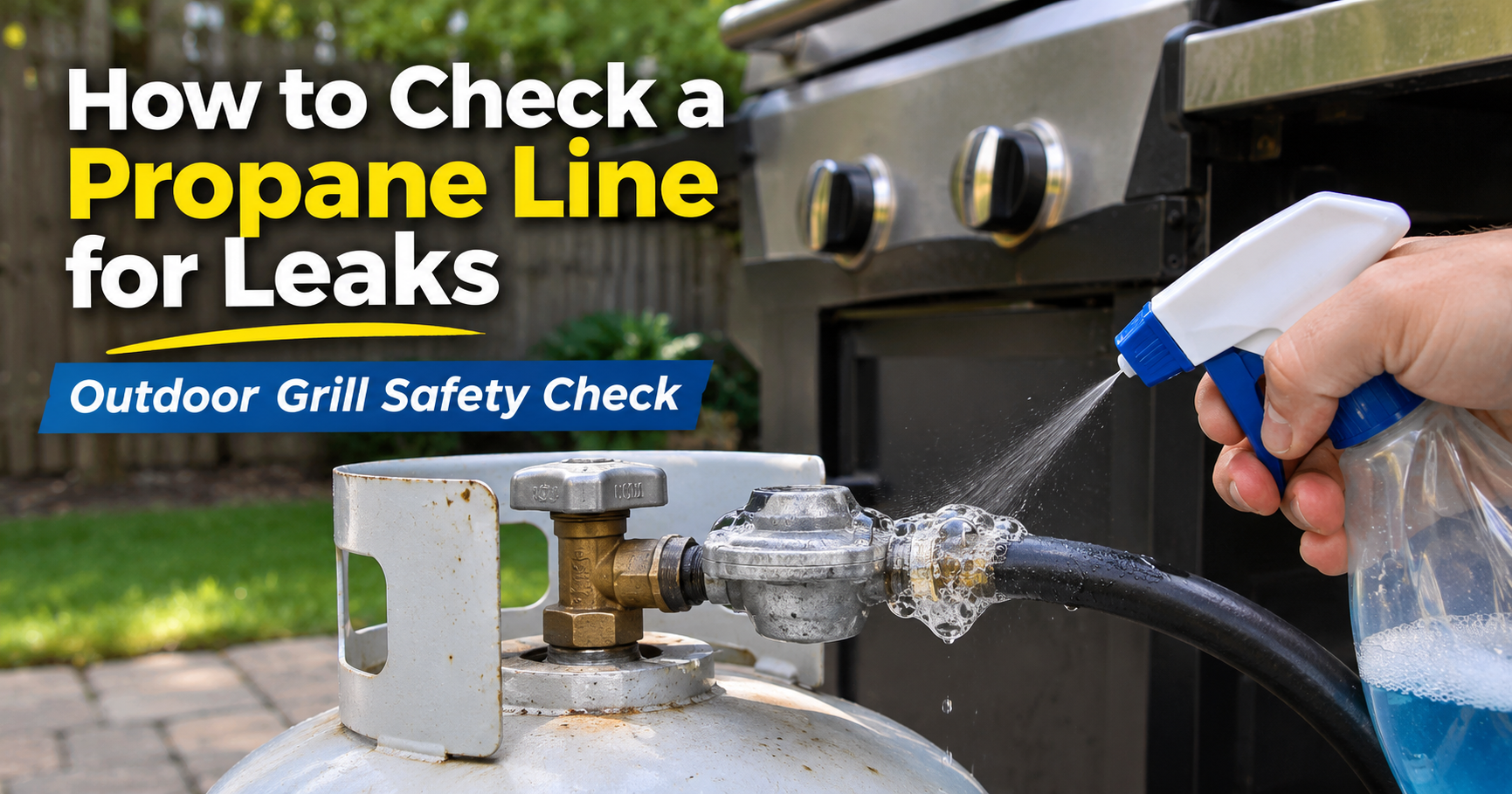
If you want the old-fashioned first check for an outdoor grill connection, I laid out the safe soap-and-water process in this guide to checking a propane line out to a deck grill.
A Propane Detector Alarm Does Not Mean You Should Panic, But It Does Mean You Should Move
There is a difference between panic and taking an alarm seriously.
When my detector went off, I felt dizzy and unsettled almost immediately. Some of that was likely stress because your mind starts filling in blanks fast when you think there might be gas in the house. The right answer was not to diagnose myself based on that feeling. The right answer was to get fresh air, crack the window, and take the concern seriously while figuring out what had changed.
If you have dizziness, nausea, headache, confusion, or feel physically unwell in a home with a suspected gas issue, get outside and seek emergency help. Do not assume it is anxiety, and do not assume it is definitely propane either. Carbon monoxide, another air-quality issue, or something unrelated could be involved. The important part is getting to fresh air and getting help.


How a Real Leak Differs From an Aerosol-Triggered Alarm
This gets tricky because cleaning sprays, paints, solvents, fuel vapors, and aerosol products can sometimes interfere with certain gas detectors. That does not make the detector useless. It means you need to understand what happened before deciding whether it was a false alarm.
Aerosol is more believable as the trigger when you sprayed a large amount shortly before the alarm, the odor does not resemble propane, the alarm stops after the area is aired out, and there are no other leak signs.
A real leak becomes more likely when you smell propane itself, hear hissing, see frost or vapor near a fitting, notice repeated alarms with no aerosol or chemical use, or have unusual propane usage.
Even then, a homeowner should not be expected to make the final call. That is what propane suppliers and qualified technicians are for.
Do Not Try to Repair These Propane Problems Yourself
A loose grill hose connection outdoors is one thing to identify and shut down. A leaking tank valve, regulator, buried line, indoor hard pipe, furnace gas valve, or appliance connection is not a DIY repair.
Avoid taking apart fittings, wrapping a leak in tape, tightening random components harder, or using a flame to “test” where gas is coming from. That last one should not need saying, but somebody has probably tried it somewhere.
The safer move is to shut down the system if it is safe, call the propane supplier, and let a qualified technician leak-test and repair the problem.


Pay Extra Attention After These Changes
A propane issue is more likely to show up after work has been done, even good work done by a professional. Keep an eye out after a new appliance installation, a furnace service visit, a tank refill, a regulator replacement, a new outdoor grill line, or reconnecting a portable cylinder.
My newer house-to-deck propane line was exactly why my detector alarm got my attention. Any time something gas-related has recently changed, it is reasonable to be extra alert. That does not mean the work was done wrong. It means a quick safety check is smart.
For outdoor connections, a periodic soap-and-water check and a close look at the hose, quick-connect, and fittings can catch problems before barbecue season gives you an unwanted surprise. A portable gas sniffer for checking accessible propane connections can add another layer for routine maintenance once you are certain there is no immediate danger.
Can a Small Propane Smell Be Ignored?
No. A small propane smell can still signal a real leak.
It may be a quick whiff from disconnecting a grill tank or from a momentary release at a connection, but you should never assume that is what it was. If the smell lingers, returns, gets stronger, or happens indoors, take action.
A propane smell is one of those things that deserves a little overreaction. You can always laugh later if it turns out to be nothing. That is a much better ending than finding out it was something.
Can a propane leak make you sick?
A suspected gas leak can be dangerous, especially in an enclosed space. Propane can displace oxygen, and propane-burning appliances that are not operating correctly can also create carbon monoxide risks. If anyone feels unwell, confused, dizzy, weak, or short of breath around a suspected leak, get outside immediately and call emergency services.
Can a propane leak explode?
Propane is flammable. If leaking gas collects and reaches an ignition source, it can ignite. That is why you should not touch switches, start equipment, smoke, or use open flames when you suspect a leak.
Should I turn off the propane tank if I smell gas?
Only do that if you can safely reach the valve without entering or moving closer to the suspected leak. If the leak may be at the tank itself, or you are not sure what is happening, get away and call the propane supplier, fire department, or 911.
Is a carbon monoxide detector enough for a propane home?
No. Carbon monoxide detectors and propane detectors do different jobs. A carbon monoxide alarm warns about carbon monoxide, while a propane detector is designed to sense combustible propane gas. Homes that use propane benefit from having the right detection for both hazards.