Brown marmorated stink bugs invade homes every fall looking for a warm place to overwinter — exactly like Asian lady beetles. They get in through the same gaps: window frame corners, worn weatherstripping, gaps around pipes and vents, and any crack in exterior caulk. Seal those entry points, deal with the ones already inside without crushing them, and you solve the problem. This article tells you exactly where to look and what to do.
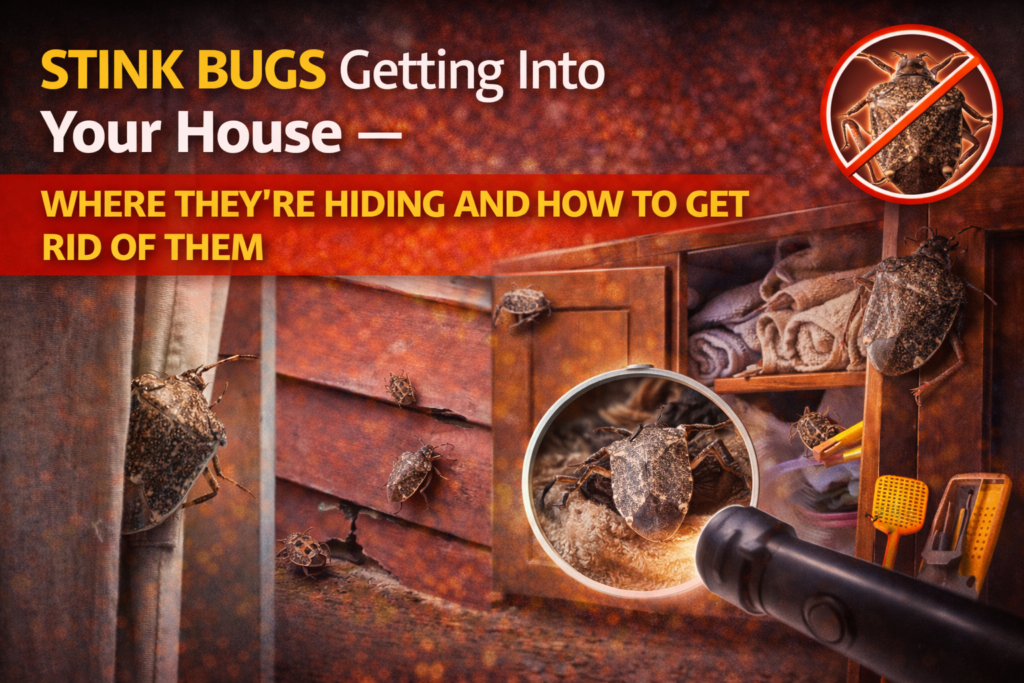
You walk into the living room one October evening and something catches your eye — a slow-moving, shield-shaped brown bug crawling up the curtain. You pick it up to toss it outside and immediately regret it. The smell hits you like a punch. Musty, sharp, deeply unpleasant. You’ve met the brown marmorated stink bug.
If you’ve had one, you’ve almost certainly had more. Stink bugs are intensely social overwintering insects — they release aggregation pheromones that attract other stink bugs to the same location, and once they’ve decided your house is a good winter shelter, they’ll keep coming back to it year after year unless you physically stop them. Some homeowners deal with dozens. Others — particularly those near agricultural areas or orchards — deal with hundreds crawling out of walls, emerging from behind curtains, and buzzing loudly when disturbed.
The biology is predictable, the entry points are identifiable, and the fix is something any homeowner can do with basic tools. Here’s everything you need to know.
What You’re Actually Dealing With
The brown marmorated stink bug — Halyomorpha halys — is not a native North American insect. It arrived in the United States from Asia in the mid-1990s, almost certainly as a stowaway in shipping containers, and it has spread to nearly every state in the country. It has no significant natural predators here, which is why populations exploded so dramatically.
During spring and summer, stink bugs feed voraciously on fruits, vegetables, and ornamental plants — they’re a major agricultural pest responsible for hundreds of millions of dollars in crop damage annually. Come fall, as temperatures drop, their instinct is to find a sheltered spot to spend the winter in a dormant state called diapause. Warm houses are ideal. The south- and west-facing walls get the most sun, heat up during the day, and act as a beacon.
The stink bug’s famous defense mechanism — that intensely unpleasant odor — is produced by glands on its abdomen and released when it feels threatened. The chemical compounds responsible, primarily trans-2-decenal and trans-2-octenal, are not dangerous to humans but they’re powerfully off-putting, they linger, and they can stain fabric and soft furnishings. This is why how you remove stink bugs from your home matters almost as much as stopping them from getting in.
How to Identify a Stink Bug
Brown marmorated stink bugs are easy to recognize once you know what you’re looking at. They’re roughly 3/4 of an inch long with a distinctive shield or heraldic crest shape when viewed from above. The body is a mottled brown and gray, with alternating light and dark banding on the edges of the abdomen. The antennae have alternating light and dark bands as well. They move slowly on flat surfaces but can fly, and in flight they make a surprisingly loud buzzing sound that often startles people.
They’re sometimes confused with native stink bug species, squash bugs, or even kissing bugs — but the shield shape and banded antennae make the brown marmorated stink bug fairly distinctive. If it’s shield-shaped, mottled brown, and smells terrible when disturbed, it’s almost certainly what you’re dealing with.



Why Stink Bugs Keep Getting Into the Same House
This is the question that frustrates homeowners most. You remove every stink bug you can find. You open windows and shoo them out. But they keep appearing. Why?
Two reasons. First, the aggregation pheromone. When stink bugs find a good overwintering site — your house — they release a chemical signal that tells other stink bugs the location is good. This signal persists long after the individual bug is gone. It’s embedded in surfaces, in wall cavities, in the spaces between your window frame and the wall. Even if you remove every bug you can see, the chemical signal is still there next fall, drawing a new wave of bugs to the exact same spots.
Second, stink bugs that get inside your walls don’t all make it into your living space immediately. Some overwinter in the wall cavity and emerge gradually over the winter and into spring as indoor temperatures fluctuate and light levels change. A sealed-up house can have stink bugs emerging from walls for months after the initial fall invasion.
The only real solution is to cut off the entry points before they get in — and to clean affected areas thoroughly to reduce the pheromone signal that draws them back the following year.
Where Stink Bugs Are Getting In
Stink bugs can exploit any gap in your home’s exterior, but certain entry points are far more common than others. Systematically checking and sealing these locations is how you stop the invasion.
Window Frames and Sash Gaps
Windows are the primary entry point for stink bugs for the same reasons they’re the primary entry point for Asian lady beetles — the frames expand and contract seasonally, the weatherstripping degrades over time, and the joints between frame components develop gaps that are invisible with the window closed but wide open to insects.
The most vulnerable spots on a typical window are the corners of the interior frame where vertical and horizontal members meet, the gap between the sash and the frame channel on the sides, the meeting rail in the middle of a double-hung window where the upper and lower sash overlap, and the bottom of the lower sash where it meets the sill.
We covered how to seal these areas in detail in our article on Asian lady beetles coming through windows — the same silicone caulk and foam weatherstrip approach works identically for stink bugs because they’re exploiting identical entry points.
Door Frames and Thresholds
Exterior doors are the second most common entry point. The gap between the door and the frame — the area weatherstripping is supposed to seal — is often larger than it looks, especially on older doors that have settled or warped slightly. Door sweeps at the bottom frequently wear out and leave a gap at the threshold that’s more than large enough for a stink bug to walk through.
Check every exterior door by closing it and looking for light around the perimeter. Any light you can see is a gap an insect can use. The top corners are particularly worth checking — they’re an area where weatherstripping frequently fails first.
For door gaps: The Door Draft Stopper Adjustable Door Sweep seals the gap at the bottom of exterior doors completely. It’s adjustable to fit doors up to 39 inches wide and blocks both insects and cold air drafts — two problems solved with one product.
Utility Penetrations
Every pipe, wire, cable, or duct that passes through your exterior wall is a potential stink bug entry point. Look for gaps around outdoor faucet connections, where the dryer vent exits the wall, where electrical service enters the house, around air conditioning lines, and anywhere else something passes through from outside to inside. These penetrations are often caulked during construction but that caulk cracks and fails over time, sometimes leaving significant gaps.
Go around the exterior of your house and press your finger against the caulk around every utility penetration. If it’s hard, crumbly, or pulling away from the pipe or siding, scrape it out and recaulk. Clear or paintable silicone is the right material here — it bonds to both the pipe material and the siding and stays flexible as both expand and contract.
Siding Gaps, Fascia, and Soffit Areas
Gaps in siding — particularly where different siding types meet, around corners, and where siding meets the foundation — are entry points that get overlooked because they don’t look like obvious openings from a distance. Get close and look carefully. Any gap wider than about 1/16 of an inch is usable by a stink bug.
The fascia and soffit area along the roofline is another hotspot. Where soffit panels meet, where the soffit meets the fascia board, and where fascia meets the exterior wall — all of these joints can develop gaps as wood moves over years of seasonal cycles. Stink bugs that enter through soffits make their way into attic spaces and from there into wall cavities, which is how you end up with bugs emerging from walls nowhere near any window.
Attic Vents and Gable Vents
If you have a significant infestation in your attic every winter, the entry point is almost certainly a vent. Gable vents — the triangular vents at each end of the attic — frequently have damaged or missing screens that let insects pour in. Soffit vents can have the same problem. Check the screens on every attic vent and replace any that are torn, missing, or have gaps at the frame. Fine mesh hardware cloth (1/16 inch or smaller) stapled over existing vents provides a barrier while still allowing airflow.
Our article on reasons bugs invade your home’s air vents covers this in more depth, and our piece on bugs coming through ceiling vents addresses what happens when attic bugs find their way into living spaces through ductwork gaps.


The Sealing Strategy: What to Use Where
Different gaps require different solutions. Here’s a clear breakdown of what material works best in each situation.
Clear Silicone Caulk — For Static Gaps
Use silicone caulk anywhere two surfaces meet and don’t move — window frame corners, the joint between the frame and the wall, gaps around utility penetrations, siding seams, and exterior trim joints. Silicone is the right choice over latex caulk because it stays permanently flexible, bonds to a wider range of materials including metal, glass, and vinyl, and doesn’t crack or shrink as seasonal temperatures change.
Caulk gun recommendation: The 2026 One Touch Drip Free Caulk Gun is worth using here — its anti-drip mechanism stops the caulk immediately when you release the trigger, which matters when you’re moving between gaps and don’t want caulk running out between placements.
Foam Weatherstrip Tape — For Moving Sash and Door Seams
Use self-adhesive foam weatherstrip tape anywhere two surfaces need to compress together when closed — the sash against the window frame, the door against the door stop, the meeting rail of a double-hung window. The foam compresses to fill the gap when closed and springs back when opened. Replace it every two to three years as foam permanently compresses over time.
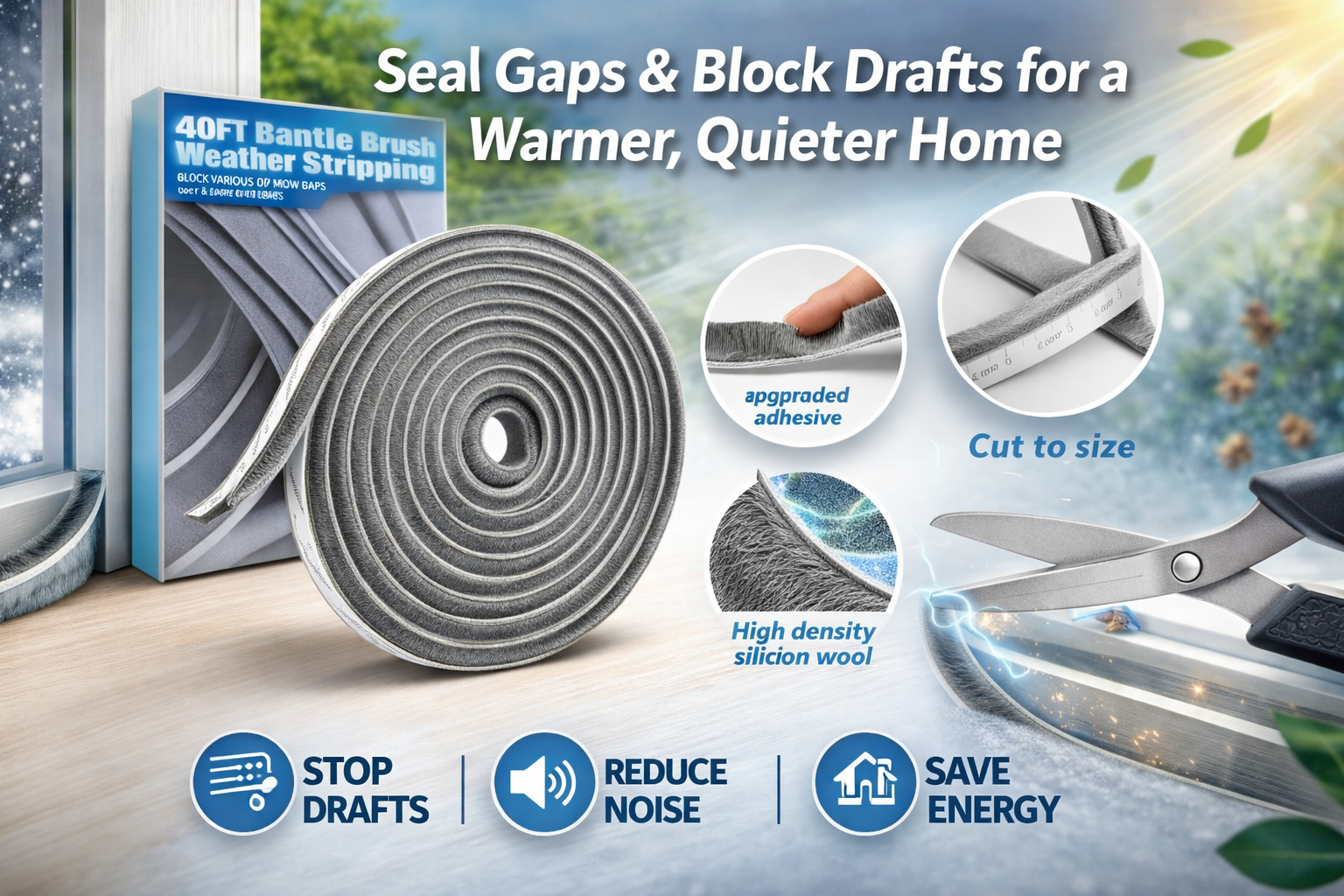
Weatherstrip recommendation: The 40FT Weather Stripping Window and Door Seal works well on both windows and doors and provides a continuous seal even on slightly uneven surfaces. Measure your windows before ordering so you know how much you need — a full perimeter of weatherstrip on a typical double-hung window uses about 12-14 feet.
Expandable Spray Foam — For Large Gaps Around Pipes and in Wall Penetrations
For larger gaps — anything more than about half an inch — caulk alone won’t bridge the space effectively. Expandable spray foam fills large voids around pipes, between framing members, and in wall penetrations. Use minimal-expanding foam for window and door applications to avoid distorting the frames. Standard expanding foam is fine for pipe penetrations and wall gaps where there’s no risk of frame distortion.
Hardware Cloth — For Vents and Large Openings
Fine mesh hardware cloth (1/16 inch opening) stapled or screwed over attic vents, crawl space vents, and any other large ventilation opening keeps stink bugs out while allowing airflow. Cut it slightly oversized, fold the edges, and fasten securely all the way around the perimeter so there are no gaps at the edges where bugs can squeeze in.


Dealing With Stink Bugs Already Inside
Even with perfect sealing, if stink bugs were already in your walls before you sealed up they’ll continue emerging into your living space for a while. Here’s how to handle them without triggering the smell.
Never Crush Them
This is the cardinal rule. Crushing a stink bug releases the full force of its defensive secretion onto whatever surface you crushed it on — and the smell lingers. On fabric it can be nearly impossible to fully eliminate. Always capture or vacuum stink bugs rather than squashing them.
Vacuum Them Up — With a Caveat
A vacuum is the most efficient tool for collecting stink bugs. Use a hose attachment so you’re not getting close to them, and collect them into the canister or bag. The caveat: if you use your regular household vacuum, it will smell like stink bug for a while. Some people keep an old dedicated shop vac for pest collection. Alternatively, drop a fabric softener sheet into the vacuum bag before collecting — it helps absorb the odor.
Empty the vacuum outside immediately and seal the collected bugs in a plastic bag before disposing of them.
The Soapy Water Trap
A simple and effective trap for stink bugs that are actively moving around: fill a wide, shallow container with soapy water and place it under a desk lamp or other light source in the room where bugs are most active. Leave it overnight. Stink bugs are attracted to the light, fall into the water, and the soap breaks the surface tension so they can’t escape. Empty and reset each morning. This works surprisingly well during peak emergence periods.
Seal the Interior Gaps They’re Emerging From
If bugs are coming out of specific interior locations — behind baseboards, around electrical outlets on exterior walls, from gaps in window trim — seal those interior gaps with caulk as well. This keeps the overwintering population confined to the wall cavity rather than allowing them into your living space. They’ll die off in the wall over winter without reproducing — stink bugs cannot breed indoors.
What About Bug Spray?
Residual insecticide sprays applied around the exterior perimeter of your home in early fall can reduce the number of stink bugs that make it inside. Applied to exterior walls, window frames, and entry points before the bugs start clustering — typically late August to mid-September depending on your region — they provide a barrier that kills or deters bugs on contact.
Interior sprays are less useful because they don’t address the bugs in the walls and they kill bugs in place, which can trigger the smell release if the bug isn’t removed quickly. If you want to use a spray as a supplemental measure our guide on stopping bugs before they take over walks through what actually works and how to apply it safely.
Timing matters more than product for sprays. An exterior barrier spray applied in mid-October when bugs are already clustering on your walls is far less effective than the same spray applied in early September before they start looking for winter shelter. If you want to use this approach, mark it in your calendar for late August next year.
Reducing the Pheromone Signal for Next Year
Because stink bugs leave behind aggregation pheromones that draw them back to the same location year after year, cleaning affected areas thoroughly after an infestation reduces next year’s problem even if you can’t eliminate it entirely.
Wipe down exterior window frames, sills, and siding in areas where bugs clustered with a solution of dish soap and water. Pay attention to corners and joints where bugs congregate and where the pheromone residue concentrates. You won’t eliminate the signal completely but you’ll reduce it.
For interior surfaces where bugs have been crawling — window sills, walls near entry points, curtains — washing with soapy water or a mild all-purpose cleaner removes surface residue. Fabric items that have absorbed the smell may need multiple washes on a warm cycle.

The Year-Round Prevention Calendar
Stink bugs are a fall and winter problem but prevention is a year-round effort. Here’s how to think about it across the seasons.
Late Summer (August)
This is your most important window. Inspect every exterior window, door, vent, and utility penetration. Caulk anything that needs it. Replace worn weatherstripping. Install door sweeps where gaps exist at thresholds. Check attic vent screens. Do this before the bugs start clustering and you dramatically reduce the scale of any invasion.
Early Fall (September)
Monitor south- and west-facing walls for the first clustering activity. If you see bugs gathering on exterior walls, they’ve found your house attractive. Check that your sealing work is complete and address any gaps you missed. Apply exterior perimeter spray if you’re using that as a supplemental measure.
Fall and Winter (October through February)
Deal with indoor bugs as they emerge using vacuuming and soapy water traps. Seal interior gaps where bugs are emerging into living spaces. Don’t crush them.
Spring (March through May)
Overwintering stink bugs become active again as temperatures rise and try to make their way back outside. You may see a second wave of activity indoors during warm spells. Continue vacuuming and trapping. Open windows on warm days to give bugs a way out — they’re trying to leave anyway.
Also inspect for any damage stink bugs may have caused to window screens over winter, and repair any torn screens before summer. Our article on letting fresh air in without letting bugs take over covers keeping screens in good shape for open-window season.


A Word on Professional Pest Control
For most homeowners, the physical sealing approach described in this article is sufficient to manage stink bug invasions to a tolerable level. Professional pest control is worth considering if you’re dealing with a truly severe infestation — hundreds of bugs emerging regularly from walls — because that level of infestation usually indicates a large overwintering population already established inside the wall cavities that sealing alone won’t quickly resolve.
A pest control professional can apply residual treatments inside wall voids through electrical outlets and other access points, which speeds up the elimination of an established overwintering population. But even professional treatment works best when combined with the physical sealing that prevents reinfestation the following year. One without the other is a temporary solution.
The Bottom Line
Stink bugs are a frustrating but manageable problem. They’re getting into your house through specific, findable gaps — window frame corners, worn weatherstripping, door threshold gaps, utility penetrations, and damaged vent screens. Seal those gaps with silicone caulk and foam weatherstrip tape, deal with the ones already inside by vacuuming rather than crushing, and set out soapy water traps near light sources to knock down the indoor population during active emergence periods.
The most important thing you can do for next year is get outside with a caulk gun in late August before they start clustering. Two or three hours of sealing work done before the invasion is worth ten times the same effort done after they’ve already found their way in. Add it to your late summer routine and stink bug season becomes a minor inconvenience rather than a full-scale home invasion.
About the Author — Mike Callahan
Mike Callahan has been a homeowner and hands-on DIYer for over 20 years. After buying his first house in his late twenties and quickly realizing that contractors charge a lot for things you can absolutely do yourself, he made it his mission to understand how homes actually work — plumbing, electrical, HVAC, pest issues, and everything in between. He started DIY Home Wizard to share real fixes based on real experience, not textbook theory. When he’s not writing or repairing something, he’s usually in the garage.
As an Amazon Associate we earn from qualifying purchases through some links in our articles.