
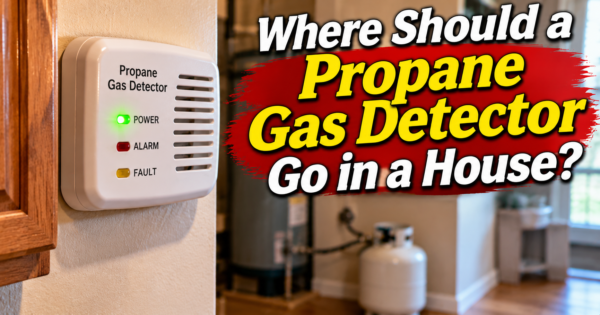
A propane gas detector belongs low on the wall near a possible propane leak source, not high near the ceiling like many people expect. Propane is heavier than air, so if it leaks, it can settle toward the floor or collect in low areas before you ever notice the smell.
The exact height and placement still depend on the detector’s instructions. That part matters more than a rule you saw on the internet, including this article. Some plug-in models are designed for a certain outlet height. Other detectors mount on the wall and give a specific distance from the floor. Follow the manual for the detector you actually buy.
But as a homeowner with propane heat and an outdoor grill line, I understand why this can feel confusing. You have smoke alarms. You have carbon monoxide alarms. Then you realize neither one is necessarily warning you about unburned propane gas. Now you are standing in the hallway wondering if you need a detector in every room like you are preparing for a moon landing.
You probably do not need one in every room. You do need to think about where propane is used, where a leak could travel, and where people would hear an alarm.
Why Propane Detectors Go Low Instead of High
This is the main thing to understand before picking a spot.
Propane is a liquid petroleum gas, often called LP gas. Once it leaks into the air, it tends to settle lower because it is heavier than air. That does not mean propane always sits perfectly still on the floor like fog in a haunted movie. Airflow, open doors, HVAC movement, fans, temperature, and the size of the leak can all move it around.
Still, the low part of the room is where you want a propane detector to have a fighting chance of catching gas early.
Natural gas is different. Natural gas is lighter than air, so many natural-gas detectors are mounted higher. Carbon monoxide is different too. CO mixes with air and detector placement follows different guidelines.
That is why you should never assume a smoke alarm, CO alarm, natural-gas detector, and propane detector all belong in the same spot. They are looking for different things.

The Best Place Near a Propane Furnace
If your home has a propane furnace, the furnace area is one of the first places I would think about.
My own propane furnace is downstairs, so when my gas detector started alarming, that was immediately on my mind. I also had a newer propane line running from the house to the deck for the grill. That made it easy for my brain to start connecting dots that may or may not have been related.
A detector near a furnace should be placed where it can sense gas if a leak develops, but not directly in front of a supply vent, return vent, door, or window. Strong airflow can dilute or blow gas away from the detector before it gets a good reading.
Avoid tucking it behind the furnace, behind storage totes, under hanging clothes, or anywhere a person cannot hear it. A propane detector hidden behind Christmas decorations is basically a very expensive wall ornament.
The lower wall near the furnace room entrance or near the appliance area can make sense if that placement matches the manufacturer’s instructions. Keep it out in the open where the alarm can be heard from the living area.
If your furnace is in a cramped utility room, remember that the detector cannot fix a poorly ventilated, cluttered space. Keep flammable storage away from the furnace and have propane equipment professionally serviced on schedule.


Basements and Low Utility Rooms Matter
A basement is worth extra thought because it is already lower than the rest of the house. If propane leaks indoors, gas can move toward low spaces, especially if the source is upstairs or near an opening that leads down.
That does not mean every basement needs a detector regardless of what is down there. But if the basement contains your propane furnace, water heater, fireplace equipment, or propane entry line, it is a logical place to protect.
I would focus on the room where propane enters or is used, rather than plugging a detector into a random outlet on the other side of a finished basement. The detector needs to be near enough to a possible source to be useful, while still being in a spot where it will not be blocked, soaked, kicked, or forgotten.
If you have a finished basement with bedrooms, a detector outside the sleeping area can also make sense when it aligns with the product instructions. The goal is early warning plus an alarm people can actually hear.
Do Not Put a Propane Detector Right Next to a Door or Window
It seems smart at first. You might think a detector near the door will catch gas as it travels through the house.
The problem is that doors, windows, and drafts can scatter or dilute gas. A detector mounted directly beside an exterior door or openable window may not respond the way you expect. The same goes for a detector right under a supply register, return vent, or ceiling fan.
You want a spot near the likely source, but not directly in the path of constant moving air.
That is also why garages, laundry rooms, and utility rooms can be tricky. They often have airflow, doors, chemicals, and stored items all competing for space. Slow down and look at the room before choosing the nearest outlet.
Ask yourself a few simple questions.
- Is this close enough to a propane appliance or propane line to be useful?
- Is it low enough for propane detection according to this model’s instructions?
- Will a vent, window, fan, or door draft interfere with it?
- Can people hear the alarm from the main living area or bedroom hallway?
- Will boxes, furniture, curtains, shoes, or a kid’s backpack block it?
That five-minute look can prevent a detector from getting installed in the one place it does the least good.

Should You Put One Near Your Propane Tank?
For an outdoor tank, the answer is usually not as simple as putting an indoor plug-in alarm near the closest wall outlet.
Outdoor propane equipment needs outdoor-rated solutions and proper service from the propane supplier or a qualified technician. A household plug-in detector may not be made to live outside through humidity, temperature swings, bugs, rain, and Missouri-style weather that cannot decide if it is winter or spring.
The area around a tank should stay clear and accessible. If you smell propane, hear hissing, see unusual frost, or notice vapor around the tank or regulator, do not walk over with a detector to investigate. Move away, keep ignition sources away, and call for help.
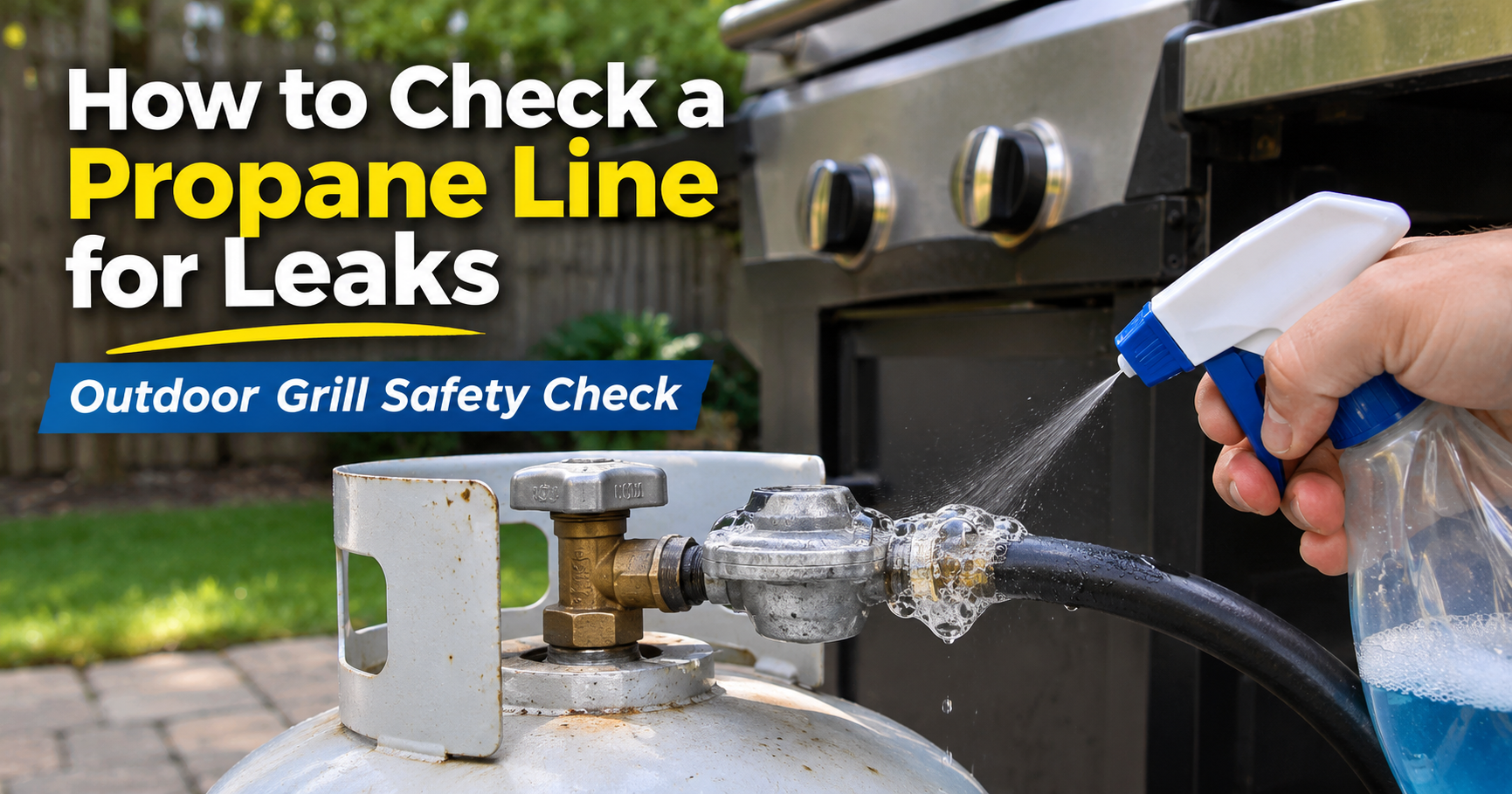
For a portable grill cylinder or an outdoor grill connection, routine checks are a different situation. When there is no active alarm or gas smell, a safe soap-and-water test can help find a problem at accessible fittings. I covered that process in my practical guide to checking a propane line to an outdoor grill.
A Plug-In Detector Can Be a Simple Starting Point
For a home with propane heat, a plug-in detector can be an easy way to add another layer of warning in the right indoor area.
The important thing is making sure the model is designed to detect propane. Some products are made for natural gas only. Others are designed for multiple combustible gases. Read the listing, read the instructions, and do not assume “gas detector” automatically means it senses propane.
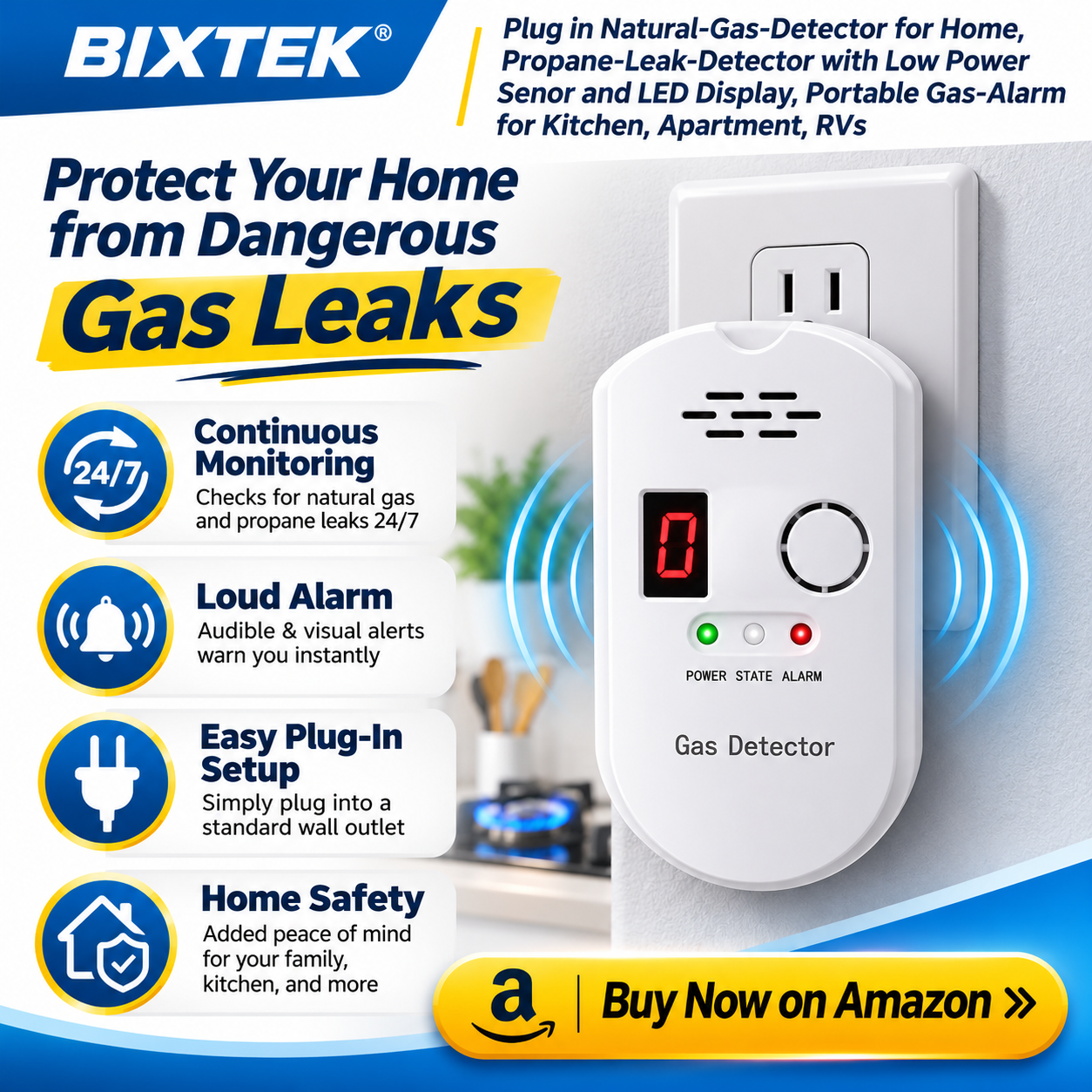
A plug-in propane and natural-gas detector for a utility-room outlet can be a practical option for homeowners who want a visible display and an audible alarm without adding another hardwired project to the weekend list.
Before ordering one, look at the outlet locations in the room. If every available outlet is high on a wall, behind the furnace, directly beside a vent, or hidden behind shelves, you may need a different detector style or a different location.
Do not buy first and figure out placement later. That is how useful safety gear ends up sitting unopened on the kitchen counter for six months. I have no proof any of us have ever done that. None at all.
Do You Need a Propane Detector in the Kitchen?
It depends on whether your kitchen actually uses propane and what the detector manufacturer recommends.
A propane range or oven creates a possible leak source, but a kitchen also has steam, grease, cooking vapors, cleaners, aerosol products, and lots of activity. That can make placement less straightforward than it sounds.
Do not mount a propane detector directly above the stove. Do not put it where it will get splattered with grease. Do not hide it behind the refrigerator or in a cabinet where the alarm will be muffled.
If your kitchen uses propane, check the detector instructions for the recommended distance from the appliance and whether the model is suitable for a kitchen environment. If you have an open floor plan, you may find the best placement is low on an adjacent wall rather than directly beside the stove.
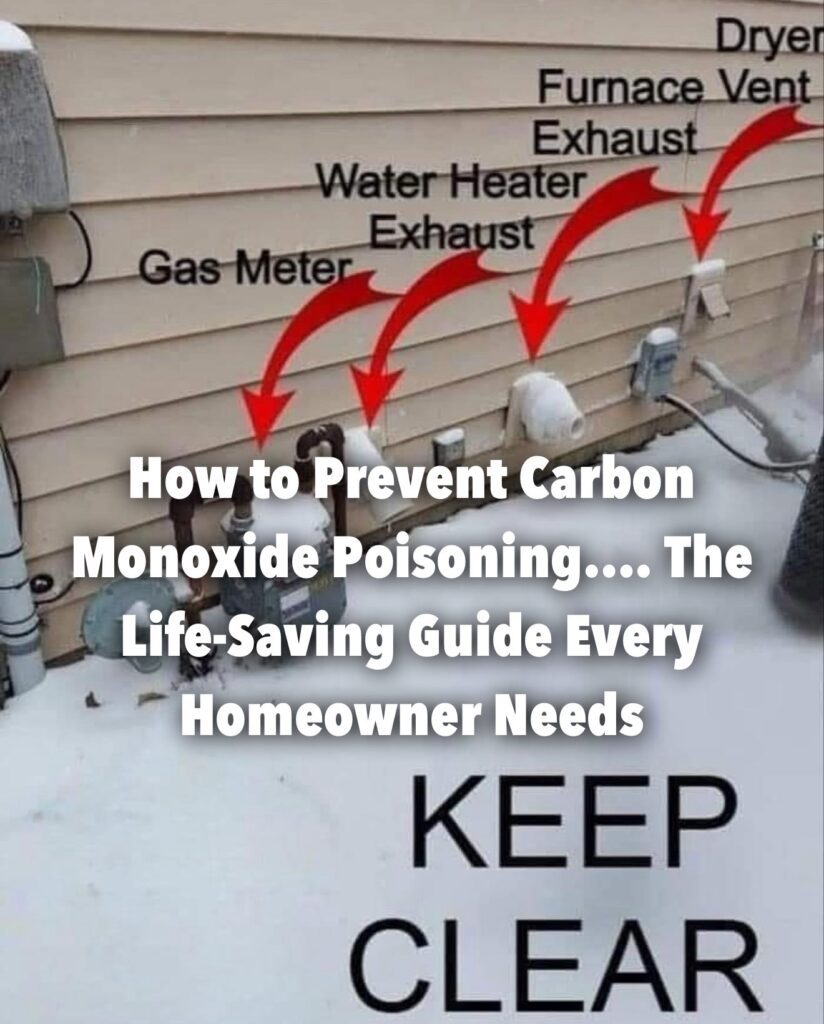
A propane detector is also not a substitute for a carbon monoxide alarm. A fuel-burning appliance that is not operating correctly can create carbon monoxide, and that is a different danger entirely. This carbon monoxide prevention guide for homeowners explains why both types of protection matter.
What About a Propane Detector Near Bedrooms?
You want people to hear an alarm, especially at night. That makes an area outside sleeping rooms worth considering when propane appliances or a propane line are nearby.
The exact room layout matters. A small one-story home with a propane furnace near the bedrooms is different from a two-story home with the furnace in a distant basement. A finished basement bedroom is different from a main-floor bedroom down the hall from the utility room.
Do not place a propane detector inside a bedroom just because it is the closest outlet. Bedrooms can have open windows, clothes, furniture, and other things that block airflow. The hallway outside a sleeping area may be a better place if it follows the manufacturer’s instructions and is close enough to the potential propane source.
You also want the alarm loud enough to wake someone. A detector in a closed utility room may sense gas but be harder to hear through two shut doors and a running furnace.

Do Not Confuse a Propane Alarm With a Carbon Monoxide Alarm
This is a big one.
A propane detector looks for unburned fuel gas. A carbon monoxide alarm looks for carbon monoxide, a poisonous gas created when fuels burn incompletely. A smoke alarm looks for smoke or combustion particles.
They are not interchangeable.
You can have a propane leak without a carbon monoxide alarm sounding. You can have dangerous carbon monoxide without a propane detector sounding. You can have smoke without either one giving you useful early warning.
That is why a home using propane should have the right protection for each risk. The exact combination depends on your appliances, home layout, local code, and the manufacturer’s instructions for each device.
When my detector alarm went off after I used a heavy amount of aerosol spray, it reminded me of another important point. A detector may react to chemicals or vapors, but that does not mean you should shrug off the alarm. Leave the area first. Think through possible triggers later.
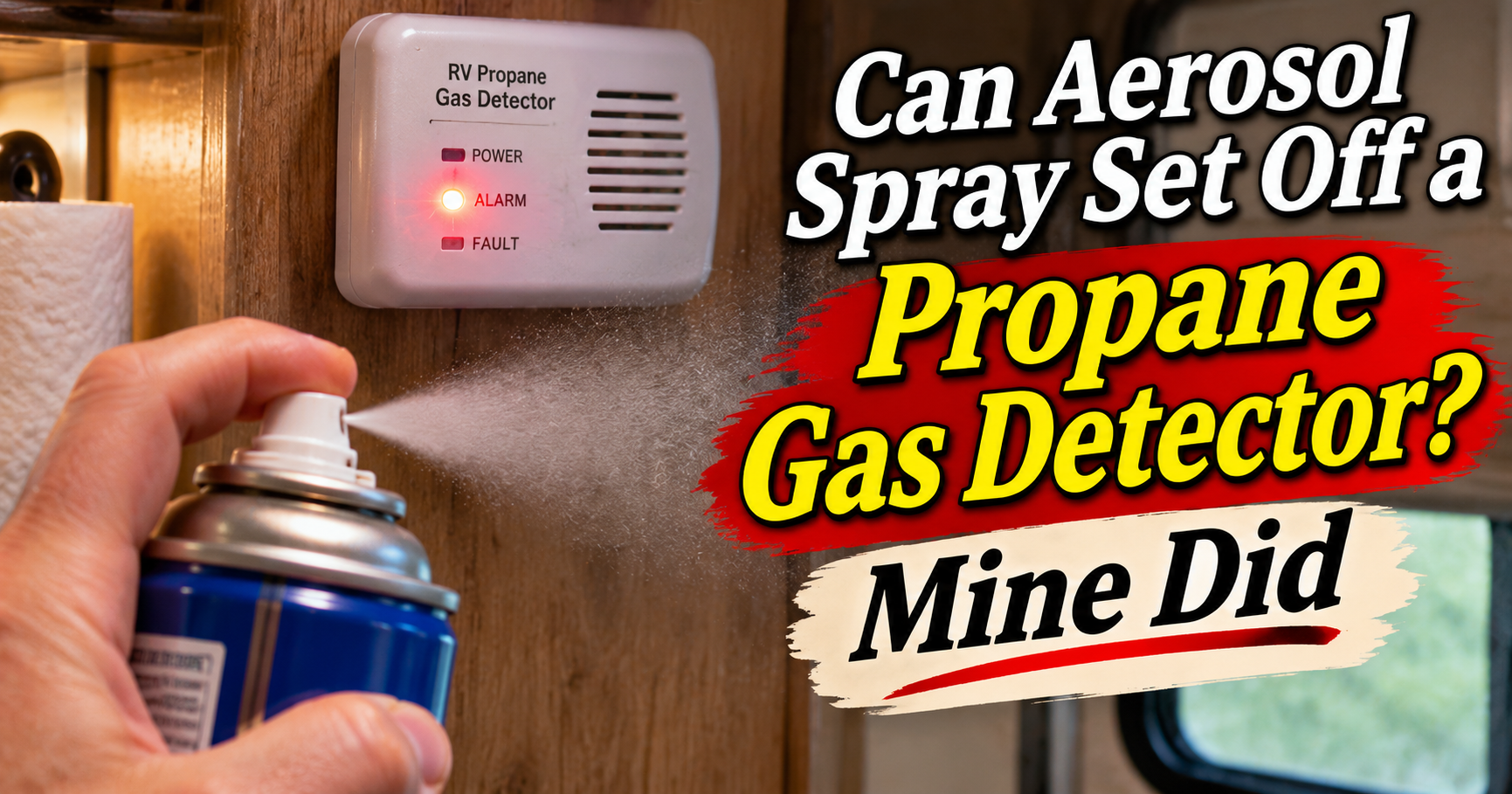
I wrote about how aerosol spray set off my propane detector because I know other homeowners can end up in that same confusing moment.
Where Not to Put a Propane Detector
A good detector location is just as much about what you avoid as what you choose.
Do not put it in a closet. Propane needs a path to reach the detector, and a closet door can keep that from happening.
Do not place it behind curtains, furniture, boxes, storage shelves, or appliances. Air has to move around the detector.
Do not mount it directly in front of HVAC vents, near open windows, or beside exterior doors where airflow may distort the reading.
Do not put it where it will get wet, greasy, dusty, sprayed with cleaners, or bumped constantly. A detector in the path of muddy boots, dog toys, laundry baskets, and vacuum cleaners is eventually going to lose that battle.
Do not use a detector with a damaged cord, expired sensor, dead battery, or ignored trouble chirp. If it is not working, it is not protecting anything.


A Handheld Gas Sniffer Is Helpful for Maintenance, Not an Emergency
A handheld gas sniffer can be a great tool for checking accessible propane fittings during routine maintenance. It can help you narrow down a suspicious grill hose, quick-connect fitting, regulator connection, or appliance connection when there is no active emergency.
I would use this handheld propane leak detector for a planned check around accessible fittings after making sure there is no immediate danger. It gives you a more focused way to inspect than standing there trying to decide whether you smell propane or yesterday’s grilled burgers.
But a handheld sniffer is not a reason to stay in a house when you smell gas, hear hissing, or have a propane alarm going off. Do not walk around searching for the leak when the safe move is to get outside and call the propane supplier, fire department, or 911.
That distinction matters. Routine maintenance is homeowner territory. A suspected active leak is emergency territory.
Test the Detector and Replace It When It Reaches Its Limit
Installing a propane detector once and forgetting it exists is not enough.
Read the manual for test instructions. Some detectors have a test button that checks the alarm and electronics. That does not always prove the sensor can still detect propane, so check the manufacturer’s guidance instead of improvising with fuel or chemicals.
Do not spray aerosol directly at a detector to test it. Do not use a lighter without flame. Do not create a gas release indoors just to see if it works. There are safer ways to confirm your device is functioning.
Also check the sensor’s replacement life. Gas detectors do not last forever. The date may be printed on the back, in the manual, or on the label. If it is past its recommended replacement date, replace it instead of hoping it has one more good year left.
Should a propane detector be near the floor?
Usually, yes. Propane is heavier than air, so propane detectors are commonly placed low on a wall. Follow the manufacturer’s instructions for the specific detector because recommended heights vary by model.
Can I use a natural-gas detector for propane?
Only if the manufacturer specifically says it detects propane. Natural gas and propane behave differently in air, and some detectors are designed for only one type of fuel gas.
Will a propane detector also detect carbon monoxide?
Not necessarily. Some combination units do both, but a propane detector by itself may not detect carbon monoxide. Check the product label and keep working CO alarms in the home.
What should I do if my propane detector goes off?
Treat it seriously. Get people and pets outside, avoid switches, flames, and electrical devices, then call the propane supplier, fire department, or 911 from a safe location. Do not investigate the source before getting to safety.