
Tiny black bugs in your bathroom are almost always drain flies, springtails, mold mites, or fungus gnats. Here’s how to identify which one you have and exactly how to eliminate each one for good.
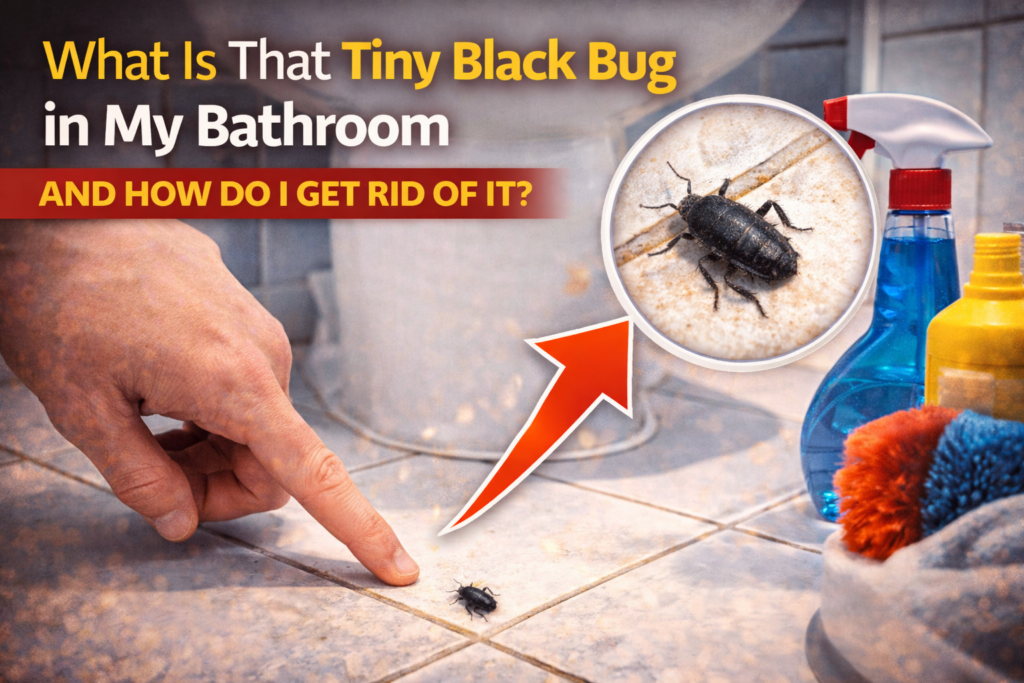
You flip on the bathroom light and something moves near the sink. Something small. Very small. Black or dark brown, maybe moving in a strange way — hopping, crawling, hovering. You lean in closer and see more of them. On the wall near the shower. Around the base of the toilet. Crawling near the drain.
Your first instinct is probably mild horror followed by the question every homeowner eventually types into a search engine at 11pm: what are these tiny black bugs in my bathroom?
The good news is that none of the most common culprits are dangerous to humans. The better news is that all of them are solvable with DIY methods once you know what you’re dealing with. The catch is that different bugs have different sources and different fixes — and treating for the wrong bug wastes time and doesn’t solve the problem.
Here’s how to figure out what you have and get rid of it for good.


The Four Most Common Tiny Black Bugs in Bathrooms
1. Drain Flies (Moth Flies)
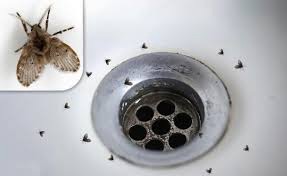
Drain flies are the most common bathroom bug complaint by a significant margin. They’re tiny — about 2mm — with a distinctively fuzzy or moth-like appearance caused by the fine hairs covering their wings and body. Under a magnifying glass they actually look like miniature moths, which is why they’re sometimes called moth flies. They’re dark gray to black and when they land they hold their wings flat over their body like a tent rather than folding them back.
The most telling behavior: drain flies don’t fly in straight lines. They hop and flutter erratically in very short bursts, barely moving from one spot before landing again. They’re weak fliers and tend to cluster near their breeding source rather than spreading throughout the house.
Their breeding source is almost always your drain. The organic slime that builds up inside drain pipes — a biofilm of bacteria, fungi, hair, soap residue, and decomposing material — is perfect drain fly habitat. They lay their eggs in it, larvae develop inside the pipe, and adults emerge from the drain into your bathroom. A single drain can support a persistent population that replenishes itself continuously as long as the biofilm is there.
If you’re seeing tiny dark fuzzy-winged bugs near your sink, shower, or floor drain, and especially if they seem to be coming from the drain itself, drain flies are almost certainly your answer.
The fix: Clean the drain thoroughly. This means physically removing the biofilm from inside the pipe — not just pouring something down it. Start with boiling water to loosen the buildup, follow with a baking soda and white vinegar flush to break up the organic material, and then use a drain brush or bottle brush to scrub the inside of the drain opening and as far into the pipe as you can reach. Do this every day for a week and the population collapses as the breeding habitat is eliminated.
For a more detailed breakdown of cleaning drains effectively — including what actually dissolves the buildup versus what just flushes past it — our article on how to clean and unclog drains covers the full approach.
For stubborn drain buildup: The Drain Auger 25 Ft Plumbing Snake with Drill Adapter reaches deep into the pipe where a brush can’t, physically breaking up and removing the biofilm that drain flies breed in. If your drain flies keep coming back despite surface cleaning, the breeding material is further down the pipe than you can reach manually.
After cleaning, cover the drain with clear tape overnight. If drain flies are your problem you’ll find adults stuck to the tape in the morning — they emerged from the drain and got caught. This confirms the source and tracks your progress as the population declines.
Once the drain is clean and the breeding source is gone, a perimeter spray along baseboards and around the drain area finishes off any remaining adults quickly.
For killing adults already in the bathroom:Ortho Home Defense Max Indoor Insect Barrier kills drain flies, gnats, and other small insects on contact and leaves a residual barrier along baseboards and around drains. Spray after you’ve cleaned the drain source — not instead of cleaning it. Killing adults without eliminating the breeding source just means new ones keep emerging.
2. Springtails
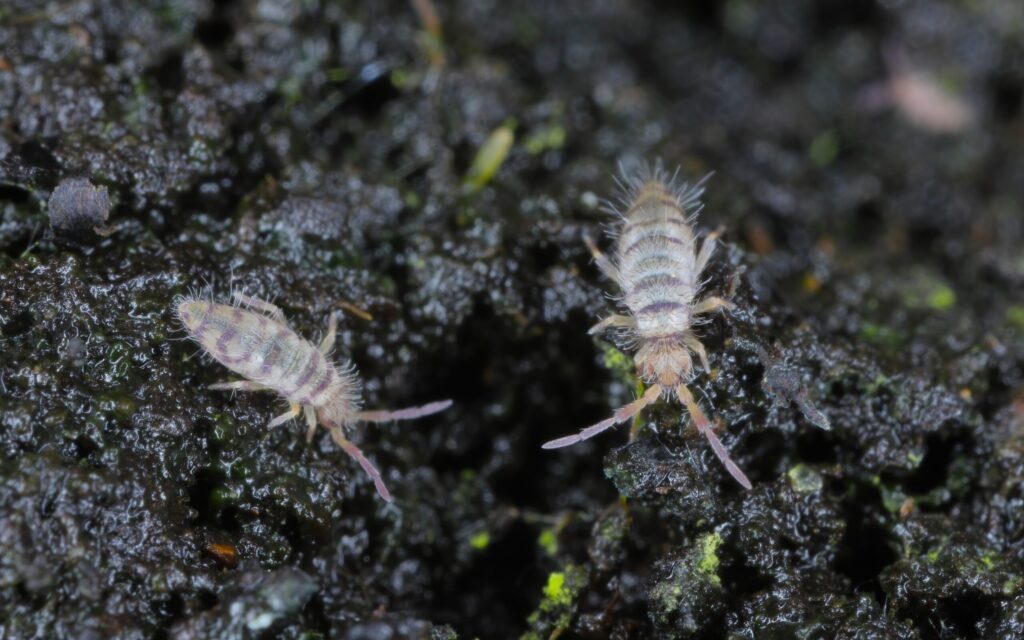
Springtails are truly tiny — often less than 2mm — and their defining characteristic is the way they move. They jump. Not like a flea’s powerful leap, but a sudden short hop powered by a forked appendage under their abdomen called a furcula that snaps against the ground and launches them into the air. If you disturb the bugs you’re seeing and they scatter by hopping in all directions, springtails are almost certainly what you have.
They’re typically dark gray, blue-gray, or black, and they don’t have wings — they can’t fly at all. You’ll find them in damp areas: around the base of the toilet, near the shower threshold, along the edge of the tub, on bathroom tile that stays wet. They’re also common in overwatered houseplants throughout the home, and in basements and crawl spaces with moisture issues.
Springtails feed on mold, algae, fungi, and decaying organic matter. They don’t bite, don’t carry disease, and don’t damage your home. They’re a nuisance indicator bug — their presence tells you there’s a moisture problem or mold issue somewhere nearby.
The fix: Reduce moisture. Springtails cannot survive in dry conditions. Run the bathroom exhaust fan during and for at least 20 minutes after every shower. Fix any slow drips under the sink or around the toilet base. Check the grout and caulk in the shower for areas that have failed and are allowing water to penetrate behind tile — this creates persistently damp conditions behind the wall that springtails can exploit.
For springtails already in the bathroom, a spray along baseboards, around the toilet base, and in the corners where they’re concentrated knocks the visible population down immediately while you work on the moisture source.
For killing springtails on contact:Ortho Home Defense Max Indoor Insect Barrier is effective on springtails along baseboards and damp floor areas. The residual barrier it leaves behind continues working for weeks. Pair it with fixing the moisture problem — spray alone won’t keep springtails away if the damp conditions remain.
Check the exhaust fan. A bathroom exhaust fan that’s blocked with dust or isn’t venting properly is one of the most common reasons bathrooms stay too humid. Pull the cover off and check the fan — if it’s caked with dust it’s barely moving air. Our article on the importance of regular HVAC maintenance covers keeping ventilation systems working properly.
3. Mold Mites
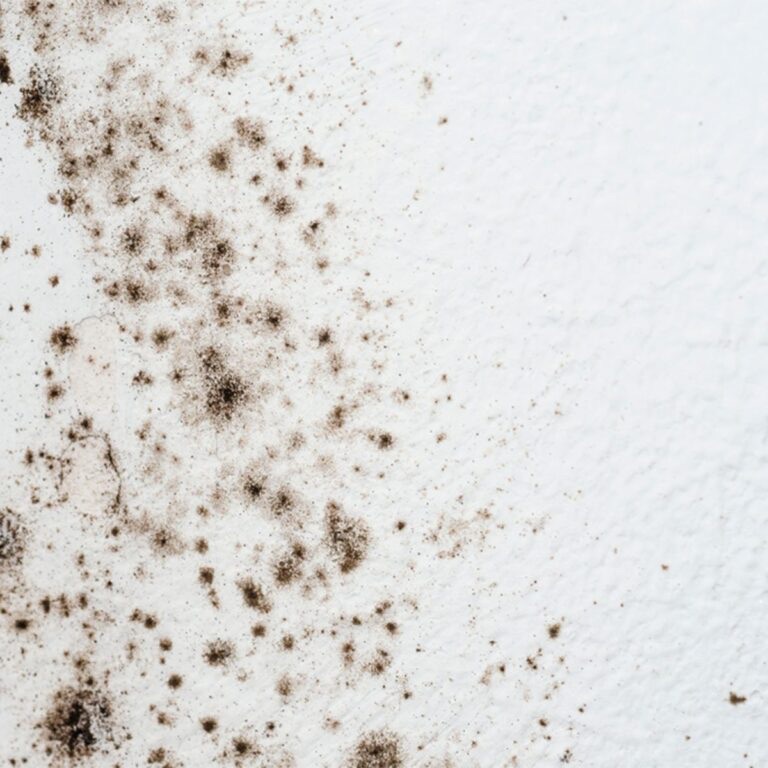
Mold mites are so small they’re at the edge of what’s visible to the naked eye — typically less than 1mm. If what you’re seeing looks less like individual bugs and more like a fine moving dust or a discoloration that shifts when you look at it from different angles, mold mites are a strong possibility.
They’re not actually black — mold mites are typically white or translucent, but their body hairs can give a mass of them a grayish or brownish appearance, and the mold they’re feeding on is often dark, which makes the overall area look black. If you look very closely or use a magnifying glass, you may be able to see individual mites moving.
Mold mites feed exclusively on mold. They don’t bite humans, they don’t damage structures, and they don’t transmit disease. But their presence is a reliable indicator of active mold growth somewhere nearby — because without mold, there’s nothing for them to eat.
The fix: Find and eliminate the mold. Mold mites in a bathroom are almost always associated with failed caulk or grout in the shower or tub surround, mold under a bath mat that stays damp, mold on the ceiling from inadequate ventilation, or mold inside the wall cavity from a slow leak.
Visible mold on tile, grout, and caulk can be treated with a mold and mildew cleaner. Recaulk any failed caulk joints in the tub and shower surround — failed caulk is one of the most common causes of hidden mold in bathrooms and it’s a straightforward DIY fix. After treating the mold, a residual insect barrier spray in the affected areas deals with any remaining mites.
For mold treatment: The RMR Brands Mold and Stain Remover Bundle kills existing mold and prevents regrowth on grout, tile, and bathroom surfaces. Clean with this first, then follow up with Ortho Home Defense Max along baseboards and affected areas to eliminate the mite population once their food source is gone.
4. Dark-Winged Fungus Gnats
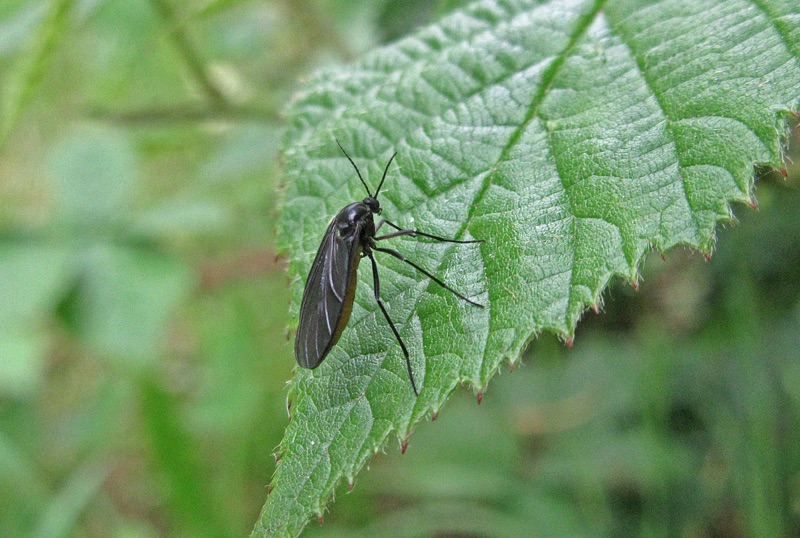
Fungus gnats are extremely common and frequently confused with fruit flies and drain flies. They’re about 2-3mm long, dark gray to black, with long delicate legs and long antennae relative to their body size. They fly in a weak, meandering pattern and are often seen near windows as well as near the source of their breeding.
In bathrooms specifically, fungus gnats are most often traced to a houseplant with damp soil sitting in or near the bathroom, or damp organic material under a rarely-moved object — a bath mat, a storage container, or furniture that’s been in a wet corner long enough for organic debris to accumulate and support fungal growth.
The fix for plant-associated fungus gnats: Let the soil dry out significantly between waterings. Fungus gnat larvae cannot survive in dry soil. Allowing the soil to dry almost completely before watering again breaks the breeding cycle within a few weeks. You can also apply a layer of sand or fine gravel to the top of the soil — it dries quickly after watering and creates an inhospitable surface layer for egg-laying females.
For non-plant sources, find and remove whatever damp organic material is supporting them. Pull everything out from under the sink, check for moisture and organic debris, and clean the floor along the baseboard. A baseboard spray after cleaning keeps any remaining adults from lingering.
For fungus gnats and all small flying insects:Ortho Home Defense Max Indoor Insect Barrier applied along baseboards and around the perimeter of the bathroom kills gnats on contact and leaves a residual barrier. Use it after addressing the breeding source for fastest results.



How to Tell Them Apart at a Glance
- They jump or hop when disturbed: Springtails. No wings, jump using the furcula appendage under their abdomen.
- They flutter erratically in short bursts near the drain: Drain flies. Fuzzy moth-like wings, weak fliers, almost never far from their drain source.
- They meander and fly near windows or plants: Fungus gnats. Long legs, long antennae, often near houseplants or damp soil.
- You can barely see them individually and they seem to move as a mass: Mold mites. Extremely small, often found directly on or adjacent to mold growth.
- They’re coming in through windows or vents: Could be an outdoor species working its way inside — see our article on letting fresh air in without letting bugs take over.
The Moisture Connection — Why Bathrooms Are Ground Zero
Every bug on this list shares one requirement: moisture. Drain flies need wet organic biofilm. Springtails need perpetually damp surfaces. Mold mites need mold which needs moisture. Fungus gnats need damp soil or damp organic debris. Remove the moisture and every one of these problems either resolves or becomes dramatically easier to control.
This is why the exhaust fan matters so much. A bathroom that doesn’t ventilate properly after showers stays humid for hours. That persistent humidity keeps surfaces damp, encourages mold growth in grout and caulk joints, keeps drain biofilm moist and active, and creates the conditions all four of these bugs find hospitable.
Check that your bathroom exhaust fan is actually venting to the outside rather than into the attic. Fans vented into the attic — which is incorrect installation but surprisingly common — dump moist air into the attic space, create mold problems in the attic insulation, and don’t actually reduce bathroom humidity effectively.


Cleaning the Bathroom to Eliminate Bug Habitat
The Drain
Whether or not drain flies are your current problem, cleaning the drain is worthwhile as a preventive measure. Pour boiling water down every drain in the bathroom monthly. Follow with a baking soda and vinegar flush. Use a drain brush on the shower and sink drains quarterly. This prevents the biofilm buildup that supports drain flies before it becomes a breeding ground — and it keeps drains flowing freely as a bonus.
Grout and Caulk
Failed grout and caulk in shower and tub surrounds lets water penetrate behind tile, creating hidden moisture and mold. Inspect the caulk around the tub perimeter and shower base every six months. Any caulk that’s cracking, pulling away from the surface, or showing mold staining through it needs to be removed and replaced. Fresh caulk takes about an hour to apply and cures overnight.
For shower glass and mineral staining: The Rain-X Xtreme Clean Shower Door Cleaner removes soap scum, hard water deposits, and calcium buildup — the same buildup that provides organic material for mold and drain fly populations to feed on. Regular use reduces the habitat available to bathroom bugs.
Under and Behind Fixtures
The area under the sink, behind the toilet, and in the corners near the floor collects damp debris that rarely gets cleaned and provides habitat for springtails and fungus gnats. Pull everything out from under the sink, wipe down the cabinet interior, check for any moisture from supply line connections or the drain trap, and clean the floor thoroughly. Do this twice a year and you eliminate a significant amount of bug habitat.
Bath Mats and Textile Items
Bath mats that stay damp between uses are habitat for springtails and can develop mold on their undersides. Hang your bath mat up after each use so it dries fully rather than sitting flat on a damp floor. Wash bath mats weekly on a warm cycle. If the floor under a bath mat shows any discoloration or the mat itself has an odor, the underside has mold or mildew and the mat needs replacing.

When to Call a Professional
Most bathroom bug problems are DIY-solvable, but a few situations warrant professional help.
If drain flies persist for more than three weeks despite thorough drain cleaning, the breeding source may be in a section of pipe you can’t reach — further down the drain line, in a P-trap with thick buildup, or in a floor drain connecting to a larger drain system. A plumber can use a drain camera to identify the location and a hydro-jet to clear it.
If mold mites are present but you can’t locate the mold source, and especially if there’s a persistent musty smell in the bathroom or adjacent areas, hidden mold inside a wall or under the floor is the likely culprit. Our article on repairing water damaged drywall covers what’s involved when moisture has gotten into wall cavities.
If springtails are present throughout the house — not just the bathroom — and especially if you’re seeing them in the basement or along foundation walls, there may be a broader moisture intrusion issue with the foundation or crawl space that’s beyond bathroom ventilation fixes.
Preventing Them From Coming Back
- Run the exhaust fan during every shower and for 20 minutes after. Set a timer if you forget.
- Flush drains with boiling water monthly and do a baking soda and vinegar treatment quarterly.
- Inspect caulk and grout twice a year and replace anything that’s failing.
- Never let standing water sit in the bathroom — wipe up puddles on the floor after showers.
- Keep houseplants out of the bathroom if fungus gnats are a recurring problem.
- Check under-sink plumbing connections twice a year for slow drips.
- Apply a fresh perimeter spray of Ortho Home Defense Max along bathroom baseboards every few months as a preventive barrier — takes two minutes and keeps small insects from establishing a foothold.
If you’re also dealing with bugs in other parts of the house — particularly around windows or coming from the attic — our guides on bugs coming through ceiling vents, stink bugs getting into the house, and cluster flies appearing every winter address those entry-point problems specifically.


The Bottom Line
Tiny black bugs in your bathroom are almost always one of four things — drain flies, springtails, mold mites, or fungus gnats — and every one of them is there because of moisture or damp organic material somewhere in the bathroom. Identify which bug you have based on how it moves and where it’s concentrated, eliminate the moisture or organic source it’s breeding in, and use a good indoor insect barrier to knock down the adult population while the source treatment takes effect.
Clean the drain, fix the ventilation, replace failed caulk, dry out the surfaces that are staying wet, and apply a perimeter spray. That’s the whole solution.
About the Author — Sandra Kowalski
Sandra Kowalski is a home maintenance writer with a background in residential property management. After spending a decade managing rental properties and dealing with every conceivable household problem on behalf of tenants and owners, she shifted to writing about the fixes she’d seen work — and the mistakes she’d watched people make repeatedly. She focuses on practical, accurate guidance that doesn’t talk down to homeowners or overcomplicate straightforward problems.
As an Amazon Associate we earn from qualifying purchases through some links in our articles.