
Asian lady beetles swarm homes every fall and even spring looking for a warm place to overwinter. They get in through gaps in window corners, worn frame seals, and any crack in the caulk or weatherstripping around your windows. Two fixes stop them: silicone caulk inside the window corners where you actually see them entering, and foam weatherstrip tape on the seam areas around the sash. Do both and you cut off their entry points completely.

If you’ve ever experienced a fall Asian lady beetle invasion, you know exactly how bad it can get. One warm afternoon in October you walk past a south-facing window and there are dozens of them — sometimes hundreds — crawling across the glass, clustering in the corners, piling up on the sill. You vacuum them up. More appear. You wonder if your house is somehow uniquely cursed.
It’s not. This happens to homeowners all over the eastern and midwestern United States every single fall, and the reason it happens is biological and predictable. Asian lady beetles — often mistaken for native ladybugs but actually a different and far more invasive species — spend the warm months feeding on aphids in gardens, orchards, and farm fields. When temperatures start dropping in autumn, they begin searching for a sheltered place to ride out the winter. They’re drawn to light-colored surfaces and warm south- and west-facing walls. And they find their way inside through gaps that most homeowners have never thought to seal because they’re so small.
The fix isn’t complicated. But it does require understanding exactly where they’re getting in, because caulking and sealing in the wrong places accomplishes nothing. This article walks you through everything — how they’re entering, where to look, and exactly how to seal your windows so they can’t get through anymore.

Asian Lady Beetles vs. Ladybugs — Why It Matters
Before getting into the fix it’s worth spending a moment on identification, because a lot of homeowners assume they’re dealing with native ladybugs and feel conflicted about getting rid of them. Asian lady beetles — scientific name Harmonia axyridis — are not native ladybugs. They were introduced to the United States intentionally in the mid-twentieth century as a form of agricultural pest control, and their populations exploded.
Here’s how to tell them apart. Asian lady beetles vary enormously in color — from pale yellow-orange to deep orange-red — and most have an M-shaped or W-shaped black marking on the white patch just behind their head. Native ladybugs are more consistently bright red, slightly rounder, and don’t have that distinctive marking. Asian lady beetles are also noticeably larger than most native species.
The other key difference: native ladybugs don’t swarm your house. If you have dozens or hundreds of spotted beetles clustering around your windows every fall, they are Asian lady beetles. And unlike native species, they can bite, they secrete a foul-smelling yellow fluid when disturbed, and they stain light-colored surfaces. Getting rid of them is not only reasonable — it’s the right call.
Don’t crush them indoors. When Asian lady beetles feel threatened they release a yellow defensive fluid that smells terrible and stains fabric, paint, and wood. Always vacuum them up rather than crushing them, and empty the vacuum outside immediately.
Why They’re Coming Through Your Windows Specifically
Asian lady beetles can technically enter a home through any crack or gap in the exterior — around pipes, vents, soffits, rooflines. But windows are almost always the primary entry point, and here’s why.
Windows are dynamic structures. They expand and contract with temperature changes, they get opened and closed thousands of times a year, and the caulk and weatherstripping around them degrades over time. Even a well-installed window develops small gaps at the corners of the frame where it meets the wall, around the sash where it sits in the frame, and along the edges of the trim where exterior caulk has cracked or pulled away.
Asian lady beetles are extraordinarily good at finding these gaps. They emit aggregation pheromones that attract other beetles to the same location — which is why you’ll see them clustering in the same window corners year after year. Once a few find a gap and get inside, the pheromone signal draws more. It compounds quickly.
South- and west-facing windows get the most sun exposure in fall and are therefore the warmest surfaces on your house. That warmth combined with the light color of most window frames makes them the primary landing zone. If your infestation seems concentrated on one side of the house, this is exactly why.
Where to Look: Finding the Actual Entry Points
This is the most important step and the one that makes the difference between a fix that works and one that doesn’t. You need to find where they’re actually entering, not just where they’re appearing inside.
Watch Them From Inside
The most effective method is simple observation. On a warm fall day when the beetles are active, sit near your worst-affected window and watch. Give it fifteen or twenty minutes. You’ll see them appear — and if you watch carefully you’ll see exactly where they’re coming from. The most common entry points are:
- The inner corners of the window frame — where the vertical and horizontal frame members meet. These joints often have small gaps that aren’t visible unless you look closely.
- The gap between the window sash and the frame — especially at the corners where the sash sits. Weatherstripping here compresses over time and loses its seal.
- Around the window trim on the interior side — where the trim meets the drywall. If there’s a gap between the trim and the wall surface, it connects to the wall cavity which connects to the outside.
- The meeting rail — on double-hung windows, the horizontal rail where the upper and lower sash meet in the middle. This area frequently has gaps.
Check With a Flashlight After Dark
At night, shine a flashlight along the interior perimeter of your window frame while someone stands outside. Any gap that lets light through is a gap that lets beetles through. This is a quick way to find entry points you might miss in daylight.
Look for the Yellow Staining
Asian lady beetles leave behind that foul-smelling yellow fluid as they enter, and over time it stains the surfaces around their entry points. If you see faint yellowish staining in a window corner or along a seam, that’s a reliable marker of where they’ve been getting in.
Fix One: Silicone Caulk on Interior Window Corners and Gaps
Once you’ve identified where they’re entering, this is your first and most targeted fix. Clear silicone caulk applied to the interior corners and gaps of your window frame seals the entry points directly — from the inside, where you can actually see and reach them.
Why silicone specifically? The same reason we recommend it for sealing ceiling vent boots — silicone adheres to both wood and painted surfaces, stays permanently flexible through the seasonal expansion and contraction of window frames, and doesn’t crack, peel, or shrink over time the way latex caulk does. And clear silicone is essentially invisible once applied, which matters when you’re working on interior trim that you can see every day.
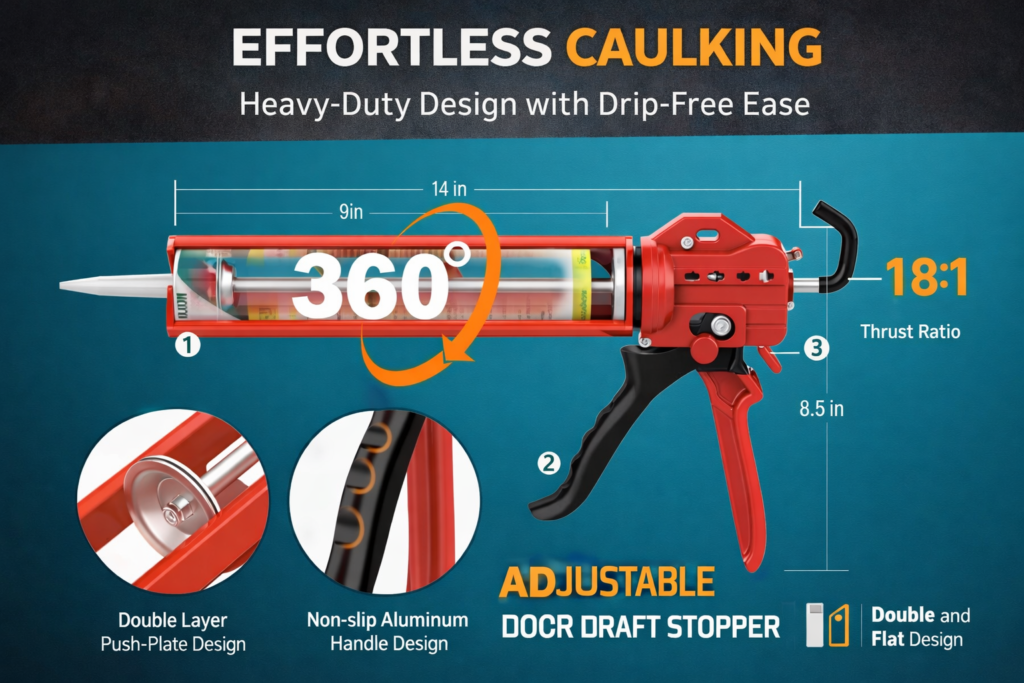
What to use: The 2026 One Touch Drip Free Caulk Gun gives you the control you need for detail work in tight window corners. The anti-drip mechanism means the caulk stops flowing when you release the trigger — critical when you’re working in small spaces and don’t want caulk going everywhere.
How to Apply the Silicone to Window Corners
Start by cleaning the area you’re going to caulk. Wipe down the corners and seams with a dry cloth to remove dust and any of the beetles’ residue. If there’s old caulk that’s cracked or pulling away, remove it first with a putty knife or caulk removal tool so the new bead has clean surfaces to adhere to.
Cut the caulk tube tip to a very small opening — smaller than you think you need. Window corner gaps are tight and you want precision, not a fat bead that looks sloppy and takes forever to cure. A 1/8 inch opening is about right for most window gaps.
Press the tip firmly into the corner or gap and apply a steady, slow bead as you move along the seam. The goal is to fill the gap completely, not just coat the surface. Work systematically — do all four interior corners of the frame, then run a bead along any seam between the trim and the drywall where you see gaps.
Smooth the bead with a wet finger immediately and wipe away any excess. Silicone skins over quickly so don’t wait — smooth it within a minute of application. Let it cure for at least an hour before handling.
Do the interior first, then the exterior. Interior sealing is often enough to stop the beetles from reaching your living space even if they’re still getting into the wall cavity. Exterior caulk is an additional layer that prevents them from getting into the wall cavity in the first place — we’ll cover that in a moment.
Checking and Resealing the Exterior Caulk
While you’re dealing with the interior, go outside and inspect the caulk around your window frames. Look at the seam where the window frame meets the exterior siding or brick. On most homes this joint is caulked, but that caulk cracks, shrinks, and pulls away over time — especially on older homes.
Run your finger along the seam. If the caulk is hard, crumbly, pulling away from one surface, or if you can see gaps anywhere, it needs to be replaced. Scrape out the old caulk, clean the surface, and apply a fresh bead of exterior-grade silicone or paintable siliconized latex caulk. This is one of the highest-value things you can do for your home’s energy efficiency and pest resistance simultaneously — it also stops drafts, which is something we cover in our guide on stopping drafts and bugs with weather stripping.



Fix Two: Foam Weatherstrip Tape on Sash Seams and Frame Gaps
Silicone caulk seals static gaps — places where the frame components meet and don’t move. But windows also have moving parts: the sash that slides up and down or swings open, and the meeting rail in the middle of a double-hung window. These areas can’t be caulked because they need to move. This is where foam weatherstrip tape comes in.
Foam weatherstrip tape is a self-adhesive compressed foam strip that you apply to the surfaces that come together when the window closes. When the window shuts, the foam compresses and creates a seal. When the window opens, the foam springs back. It’s inexpensive, easy to apply, and makes a dramatic difference in how well a window seals against insects and drafts.
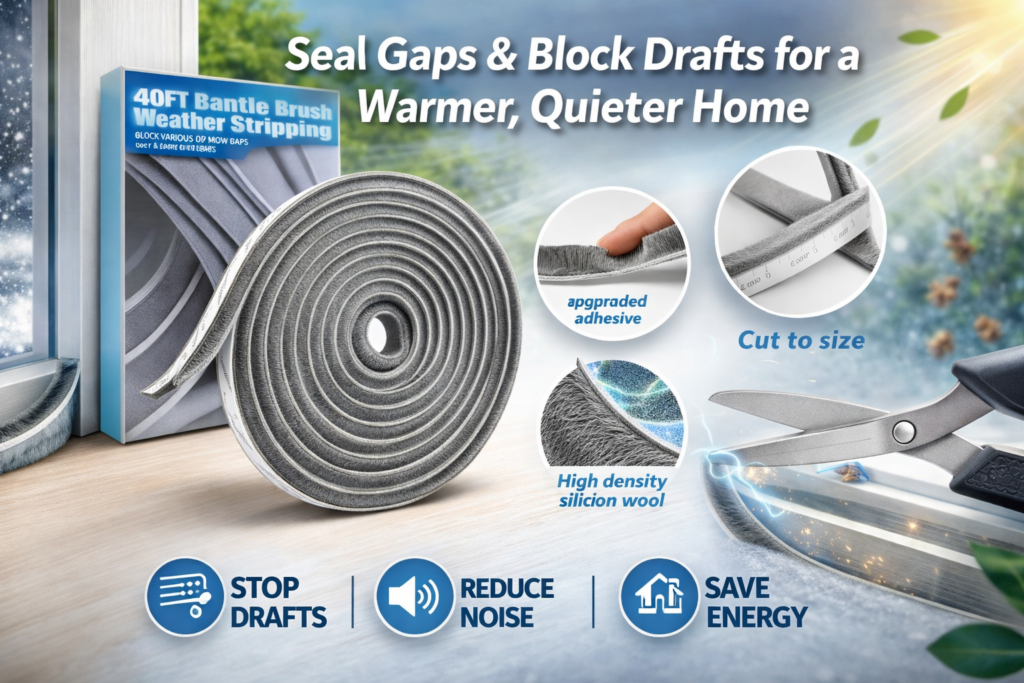
What to use: The 40FT Weather Stripping Door and Window Seal is a brush-style strip that works particularly well around window sashes and provides a continuous seal even on slightly uneven surfaces. For compression-fit gaps, a foam tape works better — pick the thickness based on the size of the gap you’re filling.
Where to Apply Weatherstrip Tape on Windows
The areas that benefit most from weatherstrip tape on a typical double-hung window are:
- The top of the lower sash — the horizontal surface that meets the upper sash when the window is closed. This is the meeting rail area and is frequently where insects find a path through.
- The bottom of the lower sash — where it sits on the windowsill when closed. Old weatherstripping here compresses flat over years of use and loses its sealing ability.
- The sides of the sash — where it slides within the frame channels. These channels often have enough gap for insects to squeeze through.
- The top of the upper sash — where it meets the top of the frame when both sashes are closed.
How to Apply It
First, clean the surface where the tape will go with a damp cloth and let it dry completely. Foam weatherstrip tape does not adhere well to dusty or greasy surfaces, and if it doesn’t stick properly it will peel away within a season.
Measure the length you need and cut the tape cleanly with scissors. Peel back a few inches of the backing, position the tape carefully — you only get one shot at placement since the adhesive is strong — and press it firmly into place as you peel the backing away gradually. Press down hard along the entire length to ensure full contact.
Close the window to check the compression. You should feel slight resistance as the foam compresses. If the tape is so thick the window won’t close properly, you’ve used too thick a foam — swap it for a thinner profile. If there’s no resistance at all and you can still see gaps, go up a size.
Check and replace weatherstrip tape every two or three years. Foam compresses permanently over time and loses its effectiveness — it’s inexpensive enough that regular replacement is worthwhile.
Fix Three: Check and Replace the Window Screen
If you like to keep windows open in fall — and fall is genuinely the best time of year for open windows — your screen is your last line of defense against Asian lady beetles. A screen with even a small hole or a gap at the frame edge is enough for beetles to squeeze through.
Pull each screen out and hold it up to the light. Look for holes, tears, or areas where the mesh has pulled away from the frame spline. Even a pinhole is worth patching if you’re dealing with an active infestation.
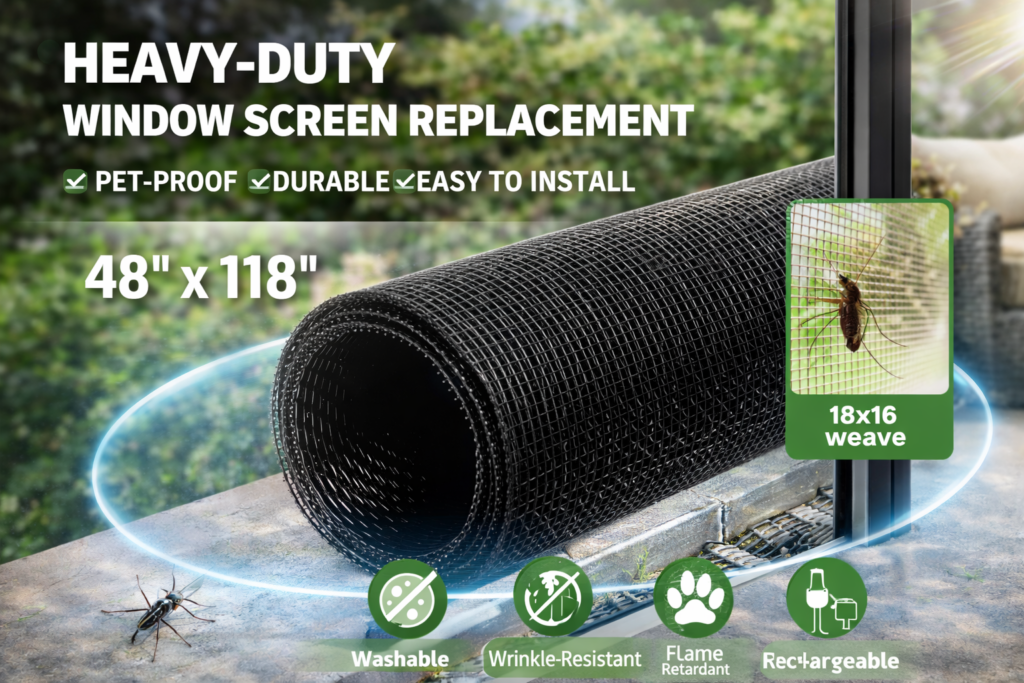
For torn screens: The King and Charles Window Screen Repair Kit comes with 48×118 inches of mesh, a roller tool, spline, and clips. Enough to re-screen several windows completely, and it’s pet-proof mesh which holds up far better than standard fiberglass. If your screens are more than a few years old and showing wear, re-screening is worth the hour it takes.

For open windows where bugs are still getting in despite intact screens, a magnetic mesh door screen actually works surprisingly well on casement-style windows and large openings. Our guide on letting fresh air in without letting bugs take over covers the options in detail.



Dealing With the Beetles Already Inside
Sealing the windows stops new beetles from getting in. But what about the ones already inside your walls and living space? This is where most homeowners get frustrated — they seal up and then wonder why beetles are still appearing.
Here’s what’s happening: Asian lady beetles that got in before you sealed up are now trapped between your walls. As the indoor temperatures stay warm and the outdoor temperatures drop, they work their way toward warmth and light — meaning they emerge from gaps in your interior trim, from electrical outlets on exterior walls, and from any interior crack that connects to the wall cavity.
This emergence can continue for weeks after you’ve sealed the windows. It’s frustrating but it’s temporary. The beetles already inside cannot reproduce indoors — they need to go back outside to do that. They will die off on their own as winter progresses.
Vacuum, Don’t Crush
The most effective way to deal with beetles already inside is a vacuum. Use a hose attachment to collect them from window sills, corners, and walls. Empty the vacuum bag or canister outside immediately after — the smell they release when stressed will linger in the vacuum otherwise.
A vacuum also works on any aggregations you find in attic spaces, inside window frames, or in other overwintering spots inside the house.
Seal Interior Gaps Where They’re Emerging
If beetles are coming out of specific spots — around electrical outlets on exterior walls, behind baseboards, through gaps in interior trim — you can apply caulk to those interior gaps as well. This traps the overwintering population inside the wall rather than letting them into your living space. It sounds counterintuitive but it works: they stay in the wall, they don’t reproduce there, and they die off over winter.
Foam backer rod stuffed into larger gaps before caulking gives you a better seal on bigger openings without using excessive amounts of caulk.
Light Traps
Asian lady beetles are attracted to light, which is why they cluster near windows. Light traps — devices that attract insects with UV light and then trap or kill them — can be effective for reducing the indoor population during an active invasion. They work best in the room where the beetles are concentrated, placed away from windows so the beetles move toward the trap rather than the glass.
What Doesn’t Work — And Why People Keep Trying It
A few approaches that homeowners commonly try that either don’t work or make things worse:
Pesticide Sprays Around Windows
Exterior perimeter sprays with residual insecticides can reduce the number of beetles that make it inside if applied early enough in the season — late September before the main invasion push. But they’re not very effective once beetles are already clustering on your home, and they have to be reapplied frequently. For most homeowners the physical sealing approach is more effective and longer-lasting.
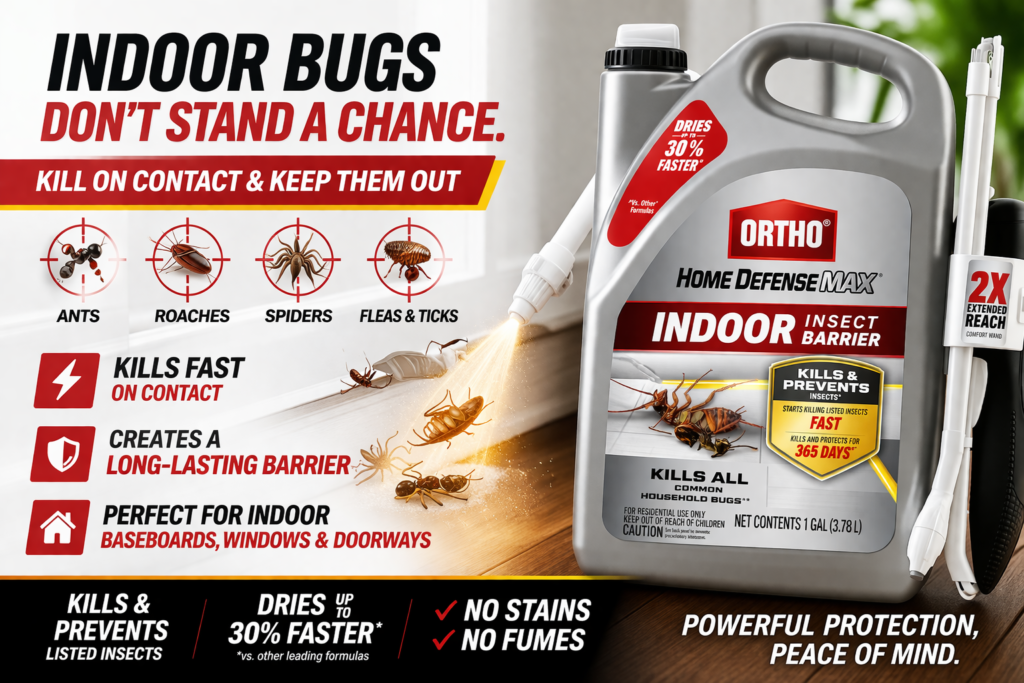
If you do want to use a spray as a supplemental measure, our article on stopping bugs before they take over your home covers what actually works and how to apply it correctly.
Trying to Relocate the Beetles Outside
Some people, knowing that lady beetles are beneficial in the garden, try to catch and release them rather than kill them. This is admirable but largely ineffective during a fall invasion — they’ll come right back to the same warm surfaces within hours. The aggregation pheromone they leave behind keeps drawing them to the same spots.
Sealing Only the Outside
A lot of homeowners caulk only the exterior and wonder why beetles still get in. The reason is that by the time you’re dealing with an active infestation, beetles have already found the gaps. Sealing exterior gaps is important for next year’s prevention, but for stopping this year’s invasion you need to also address the interior entry points where they’re emerging into your living space.



The Long-Term Prevention Plan
If Asian lady beetles are a recurring problem at your house — and once they’ve found a good overwintering site they will return to it year after year — a proactive sealing schedule makes a significant long-term difference.
Early Fall: Before They Start Clustering
The window for prevention is early fall — before temperatures drop and the beetles start looking for winter shelter. In most of the US this means late August through mid-September. Walk around your home’s exterior and inspect every window, door frame, soffit vent, pipe penetration, and gap in siding. Caulk anything that needs it. Replace weatherstripping that’s worn. Do it before the beetles arrive and you dramatically reduce the size of any infestation.
Check Your Attic Vents and Soffits
Beetles don’t only enter through windows. Attic vents, soffit vents, and gaps around roofline trim are also common entry points. If your attic is full of beetles every winter, the entry point is almost certainly a damaged or gap-ridden soffit or gable vent. These can be covered with fine mesh hardware cloth to keep insects out while still allowing airflow.

For more on how insects find their way into your home through vents and how to stop them, our article on reasons bugs might invade your home’s air vents and our piece on bugs coming through ceiling vents cover those entry points in depth.
Annual Weatherstrip Inspection
Add a weatherstrip check to your fall home maintenance routine. Every September, go through each window and door and press the weatherstripping with your finger. If it doesn’t spring back, it’s compressed and needs replacing. If it’s pulling away from the frame, clean the surface and reglue or replace it. Fresh weatherstripping on every window is cheap insurance against beetles, drafts, and higher energy bills.
The energy savings pay for the materials. Properly sealed windows with good weatherstripping reduce heating costs noticeably — estimates typically run to 10-15% of heating costs in older homes with worn seals. The weatherstrip tape and silicone caulk you buy to stop the beetles will pay for itself in the first heating season.
A Note on Smell and Staining
Even after you’ve sealed the entry points and dealt with the beetles inside, you may notice a lingering musty or unpleasant smell near windows where infestations were bad. This comes from the defensive secretion the beetles release, and it can persist for a while on painted surfaces, window sills, and fabric.
Clean affected surfaces with a solution of dish soap and warm water. For fabric window treatments — curtains, blinds with fabric components — washing on a warm cycle removes most of the odor. For painted surfaces that have absorbed the smell, a light sanding followed by a coat of primer and fresh paint is the most thorough fix, though most of the time soap and water is sufficient.

If the staining is significant on window sills or trim, our article on repainting rooms has useful guidance on prepping surfaces before painting over stains.
The Bottom Line
Asian lady beetles are a genuine nuisance and the invasions can be shocking in scale — but they’re a solvable problem. The beetles are not getting in through magic. They’re getting through specific, identifiable gaps in your window frames, sash seams, and trim. Find those gaps, seal them with clear silicone caulk on the static joints and foam weatherstrip tape on the moving sash seams, and you cut off their entry points completely.
Do the interior corners where you can actually see them entering. Do the sash weatherstripping where the moving parts meet. Check and replace any torn window screens. And for next year, get outside with a caulk gun in early September before they start clustering and seal up anything that needs it.
The fix is a few hours of work and maybe twenty dollars in materials. Compared to a winter of beetles on your windowsills and that persistent smell, it’s one of the best afternoons you’ll spend on your house.
About the Author — Mike Callahan
Mike Callahan has been a homeowner and hands-on DIYer for over 20 years. After buying his first house in his late twenties and quickly realizing that contractors charge a lot for things you can absolutely do yourself, he made it his mission to understand how homes actually work — plumbing, electrical, HVAC, pest issues, and everything in between. He started DIY Home Wizard to share real fixes based on real experience, not textbook theory. When he’s not writing or repairing something, he’s usually in the garage.