
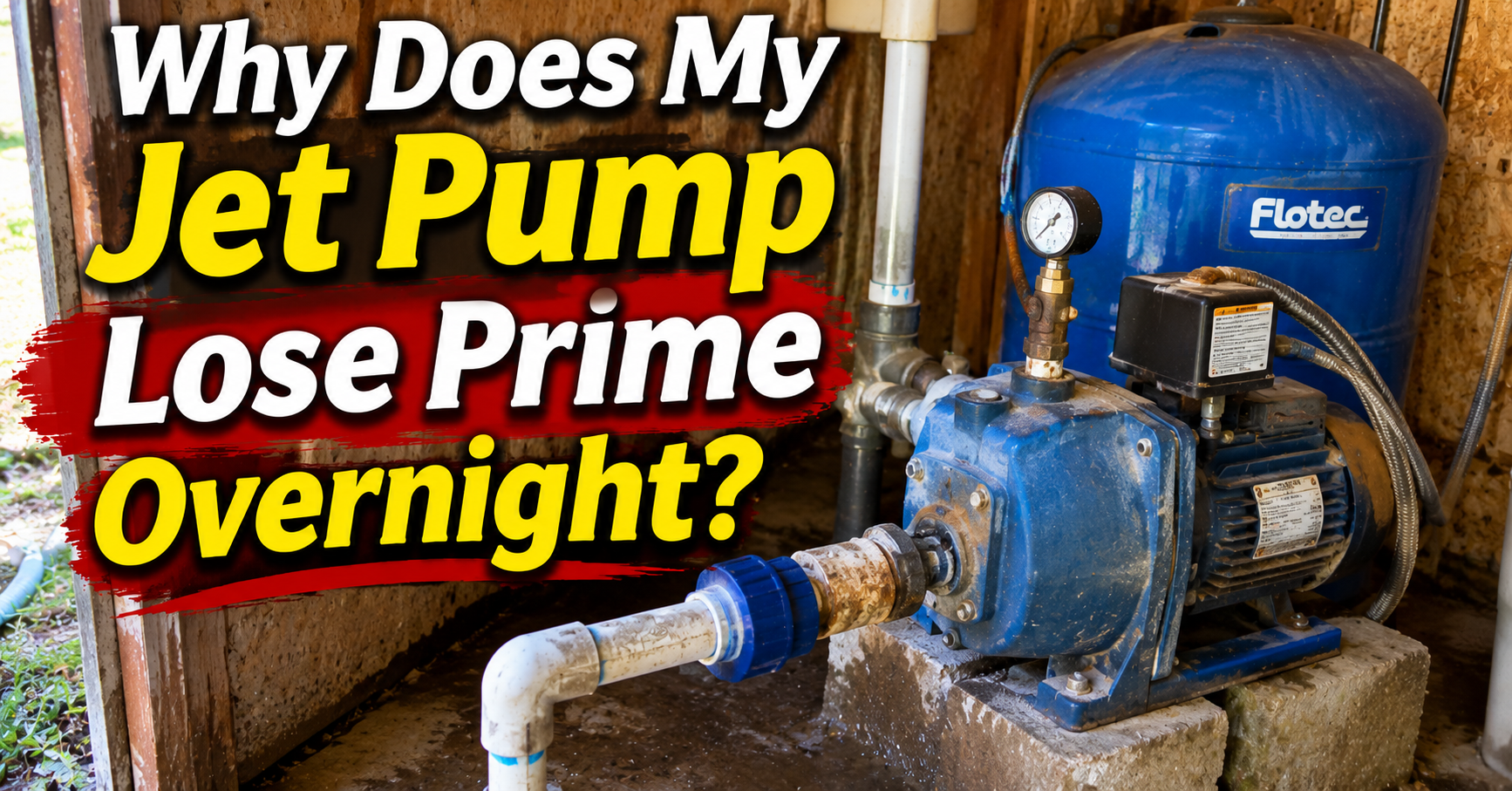
A jet pump that works fine in the afternoon but has no water again by breakfast is not being stubborn just for fun. Something is letting the water drain out of the pump or suction pipe while the system sits.
That is what “losing prime” means. A jet pump has to stay full of water so it can create suction and pull water from the well. Once air replaces that water, the pump can run all it wants and still deliver little or nothing.
The important thing is figuring out whether you truly have a jet-pump prime problem before chasing parts.
First, make sure your pump can actually lose prime
A jet pump is usually above ground. You may see it in a basement, crawlspace, well house, pump house, or small utility room. It has a motor, a pump body, and a suction pipe running toward the well.
A submersible pump is down inside the well under water. It does not normally lose prime because it is already surrounded by water.
That difference matters a lot.
If you have a submersible pump and it runs without bringing water to the house, this is not really a “prime it again” situation. A broken pipe, low water level, electrical problem, bad check valve, or worn pump may be involved. That is a different problem than an above-ground jet pump emptying itself overnight.



The usual reason: water is draining back toward the well
A jet pump needs a solid column of water in the suction line. When the pump shuts off, a foot valve or check valve is supposed to hold that water in place.
If that valve leaks, water slowly drains backward toward the well. By morning, the pump casing and suction line may be full of air instead of water. The pump then cannot pull water again until someone primes it.
That is why the classic sign of a bad foot valve is so specific:
You fill the pump, it works normally for hours, nobody touches anything, and then it is dead again the next day.
A foot valve is usually down at the bottom of the suction line in the well. Replacing it often means pulling pipe, which is where this turns from a simple homeowner problem into a job that can get heavy, awkward, and expensive in a hurry.

A small suction leak can do the same thing
The frustrating part about a suction-side leak is that it may not drip water where you can see it.
Instead, it can pull air inward while the pump runs or let air into the line as the system sits. A loose threaded fitting, worn seal, cracked pipe, bad union, loose priming plug, or tiny crack in the pump housing can all create trouble.
I would look closely at every visible connection between the pump and the well. Do not just glance at it from three feet away and call it good. Look for rust trails, crusty mineral buildup, damp spots, greenish corrosion around brass fittings, or a fitting that looks like it has been tightened and re-tightened for the last twenty years.
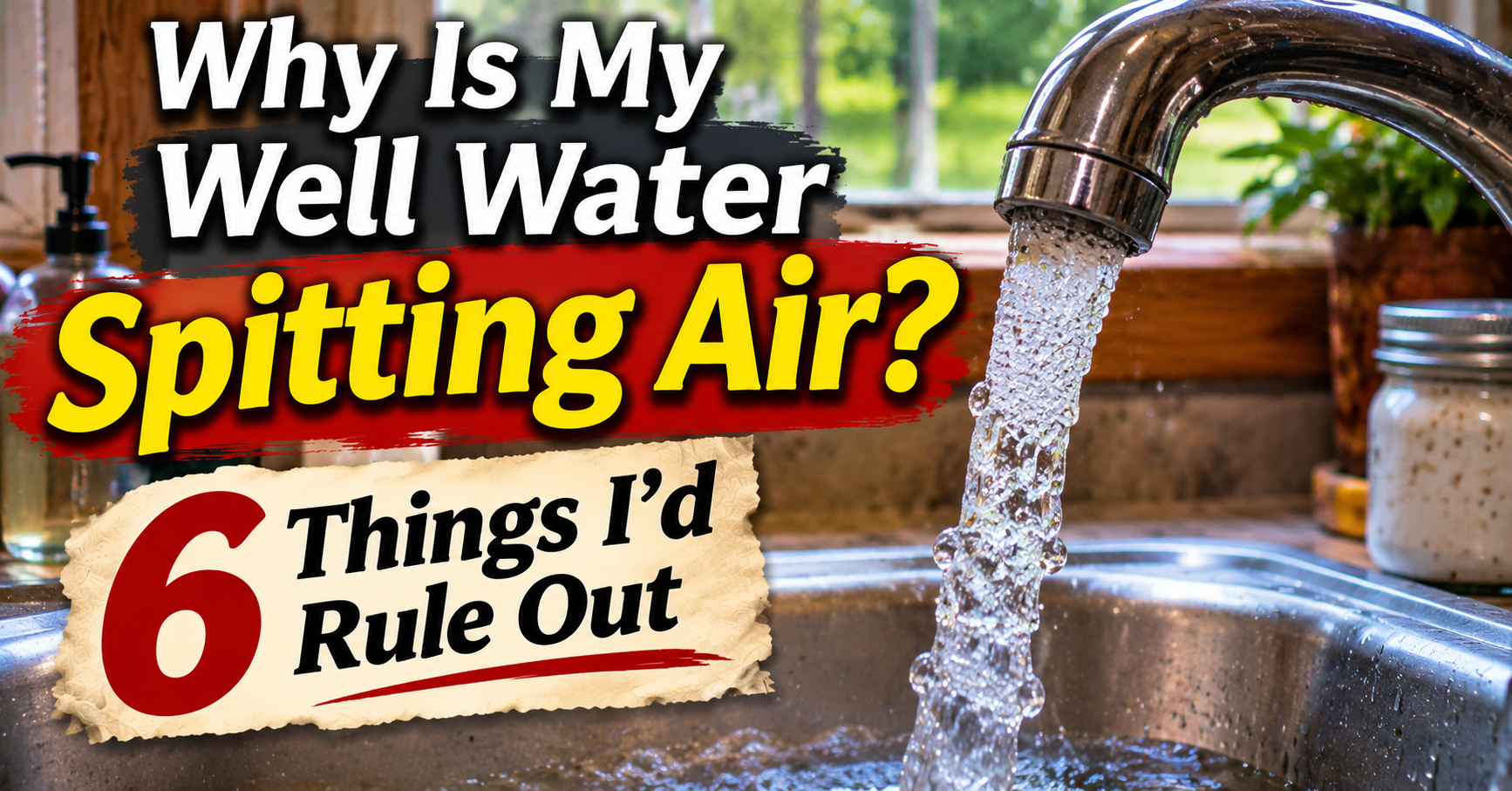
A suction leak can also explain why air starts spitting from a well-water faucet. The air at the sink may be coming from the pump side, not from the faucet itself.
A loose priming plug is an easy thing to miss
Most jet pumps have a priming plug on the pump housing. It is the opening used to fill the pump with water when you are restoring prime.
If that plug is loose, its gasket is damaged, or the threads are not sealed correctly, it can become the tiny air leak that keeps bringing the same problem back.
This is one of the first places I would inspect because it is visible and does not require digging, pulling pipe, or guessing at what is happening thirty feet down in a well.
Always shut off power at the breaker before removing a priming plug or opening the pump. Water and 240-volt electricity are an awful combination, and no amount of saved service-call money is worth learning that lesson firsthand.

It may be happening after the pump runs, not just overnight
“Overnight” is how people usually describe it, but the real clue is often that the pump loses prime after sitting unused for several hours.
Try noticing how long it takes.
Does the pump lose prime after twenty minutes? That points more strongly to a bigger leak or a valve that is not sealing at all.
Does it work through a busy day but fail the next morning? A slow foot-valve leak or small suction-side leak becomes more likely.
Does it only happen after doing laundry, watering outside, or several showers? The water level in the well may be dropping low enough that the pump begins drawing air.
That last one deserves attention. If the pump is pulling the well down faster than it can recover, repeatedly re-priming it will not solve the reason it lost prime.
A falling water level can fool you into thinking the pump is bad
During dry weather or periods of heavy household water use, the water level in a shallow well can drop below the suction pipe or foot valve.
The pump may work normally after the well rests, then lose prime after a high-use day. That can make it seem random when it is really tied to demand.
Watch for a pattern like this:
- Water pressure is normal early in the day.
- Someone runs the washer, takes showers, fills a stock tank, waters a garden, or uses a hose for a while.
- Faucets start sputtering or pressure fades.
- The pump eventually runs without delivering much water.
- Everything works better again after the system has rested.
If your faucets have been sputtering before the pump loses water, compare the symptoms with the things that can put air into well-water lines. A low water level, a suction leak, and a failing foot valve can all create that same aggravating air-and-water mix.


A pressure-tank problem can add confusion
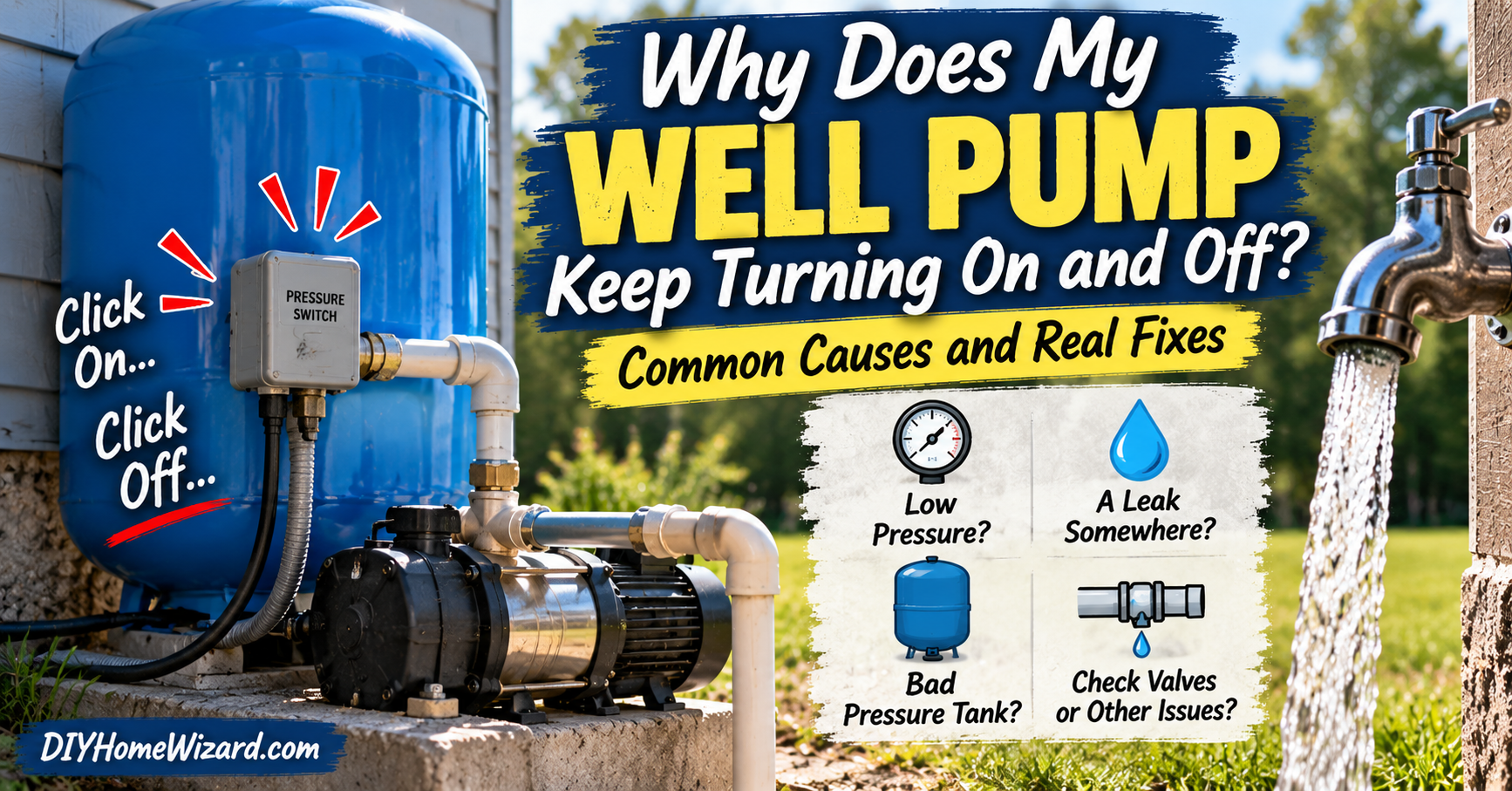
A bad pressure tank does not usually cause a jet pump to lose prime all by itself, but it can make the system cycle too often and turn a smaller problem into a bigger headache.
When the tank is waterlogged or its air charge is wrong, the pump may start and stop constantly. That extra cycling puts more wear on the pump, fittings, switch, and valves.
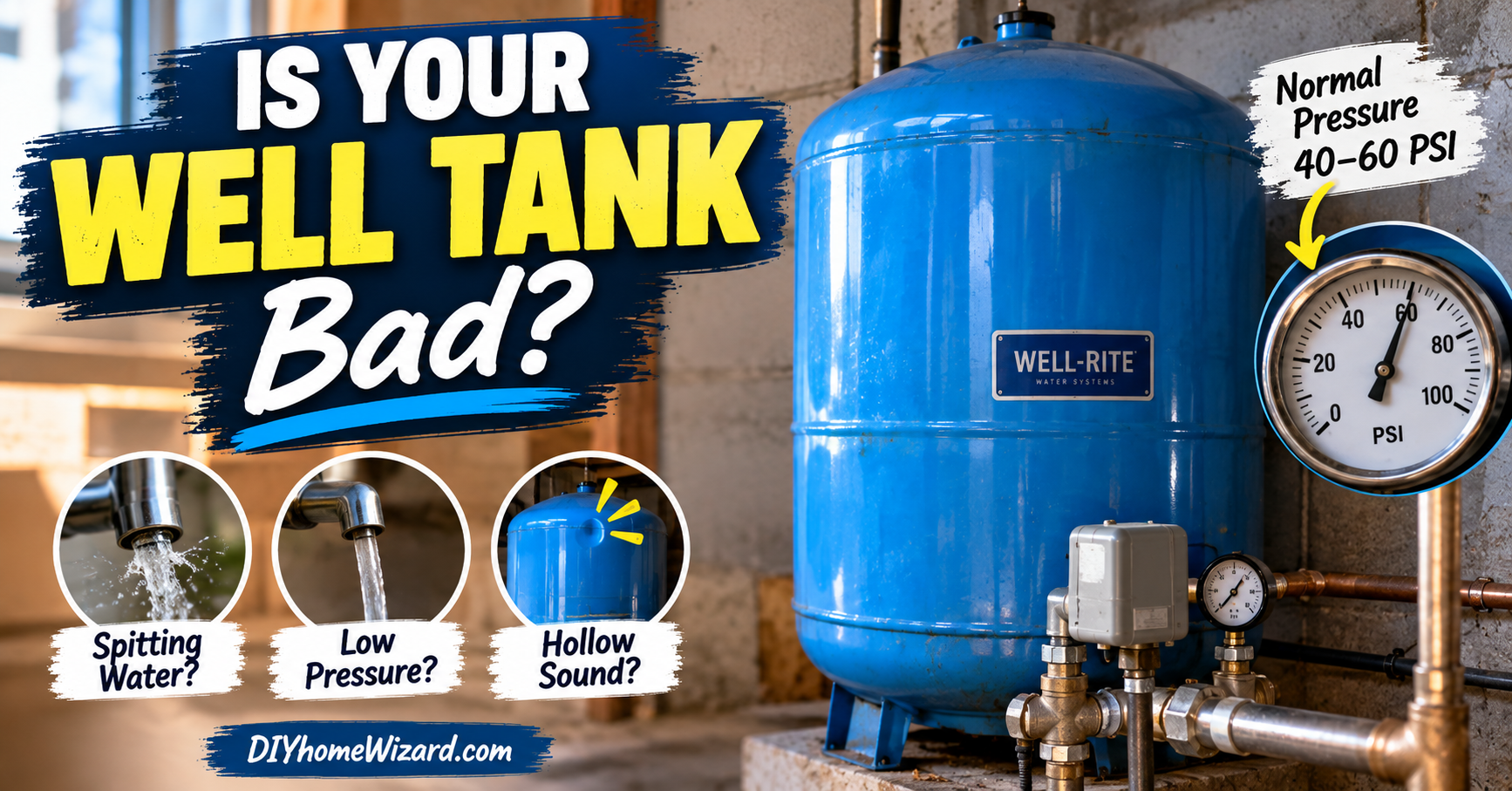
If your pump seems to turn on every time someone uses a tiny amount of water, take a minute to compare what you are seeing with the common signs of a failing well pressure tank.
The goal is not to replace the largest thing in the room because it looks suspicious. The goal is to make sure the tank is not helping create the problem.
How I would narrow down the cause
Before paying someone to pull pipe or replace a pump, I would gather a few simple clues.
- Turn off the pump breaker after the system has built normal pressure. Watch the pressure gauge for a few minutes. A steady fall can mean water is leaking back through a valve or out through a leak somewhere.
- Inspect the visible suction piping, priming plug, pump housing, and fittings for moisture, rust stains, or mineral crust.
- Notice whether water pressure falls while nobody in the house is using water. That can point toward water draining backward or a leak that needs attention.
- Pay attention to whether the problem only follows heavy water use. If it does, the well’s recovery rate may be part of the story.
- Listen to the pump when it starts. A loud rattling, grinding, squealing, or air-sucking sound is not something I would ignore.
- Check whether the pressure switch is cycling rapidly. A pump that starts and stops repeatedly may be dealing with a pressure-tank or switch issue on top of the lost-prime problem.
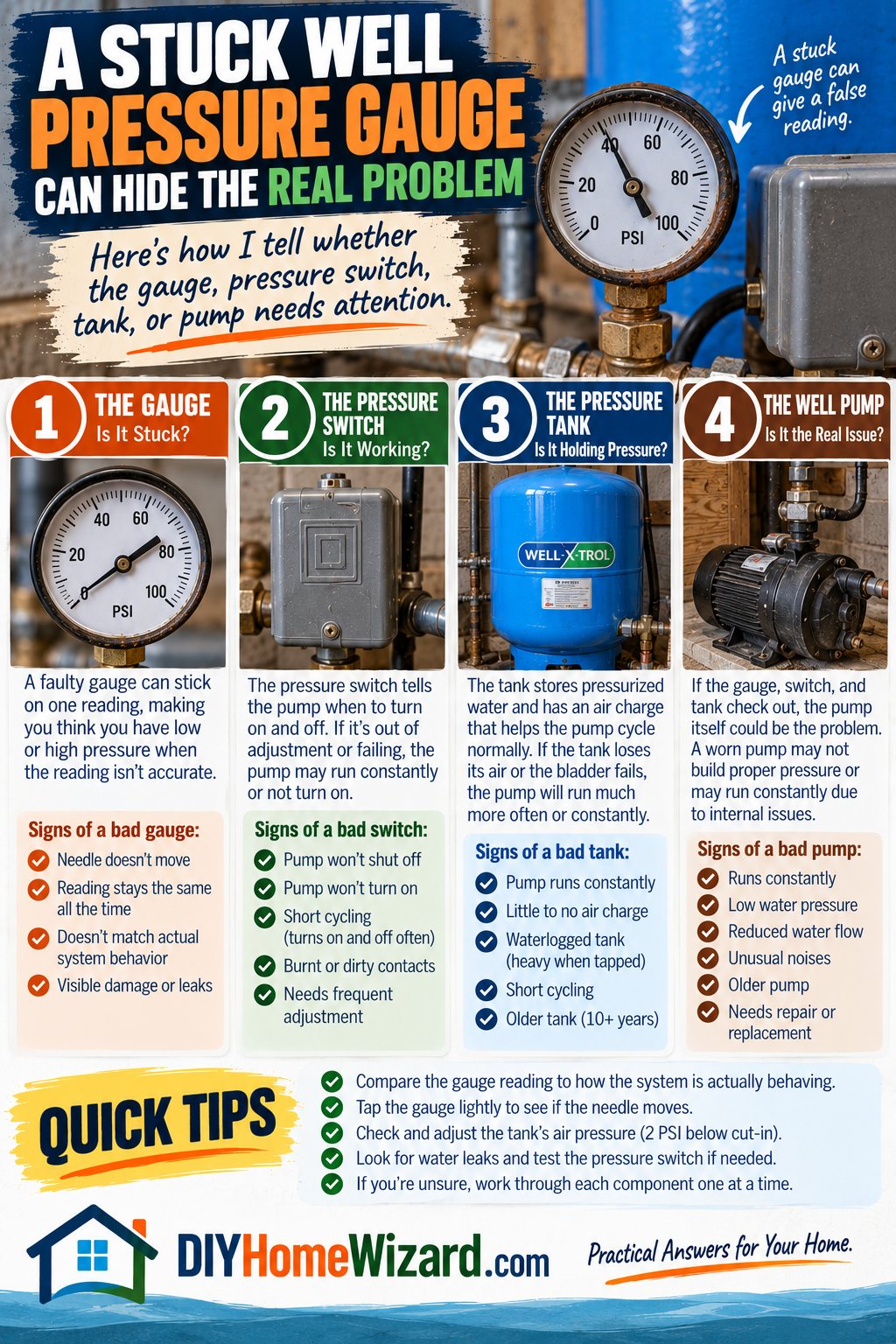
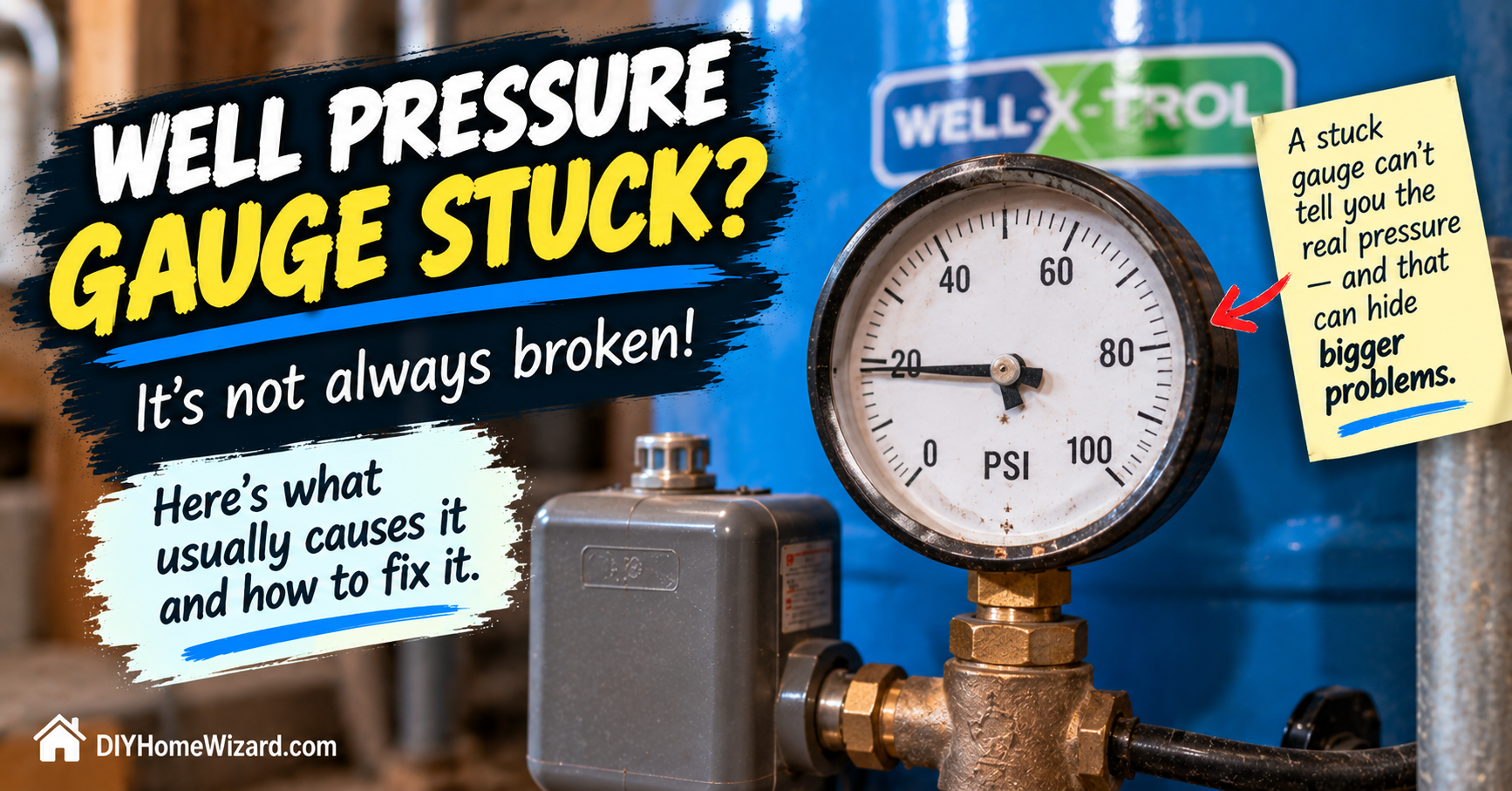
A pressure gauge is useful only if it is telling the truth. If the needle is stuck, fogged up, or has not moved in months, it is worth learning how to spot a bad well pressure gauge before basing your diagnosis on it.


Re-priming the pump is a temporary fix, not the answer
Re-priming can get water moving again, but it does not explain why the pump lost prime in the first place.
If you have to prime it once after a repair or a long shutdown, that may be normal. If you are hauling water to the pump every few days like it is a needy houseplant, there is still a problem hiding somewhere.
Follow the priming instructions for your exact pump model. Different pumps have different fill points, valve setups, and steps. The pump should be shut off before opening anything, and it should not be allowed to run dry for long while you hope it suddenly figures things out.
Repeated dry running can overheat the pump seal and internal parts. Then a foot-valve repair can turn into a foot-valve repair plus a pump replacement, which is about as fun as it sounds.
When I would call a well-pump professional
I would stop at the homeowner-level checks and call someone if the suction line needs to be pulled, the foot valve is likely bad, the pump housing is cracked, or the pump still will not stay primed after obvious fitting issues are corrected.
It is also time to get help if the pump runs but pressure never builds, water has sand in it, the breaker trips, or there is a burning smell from the motor.
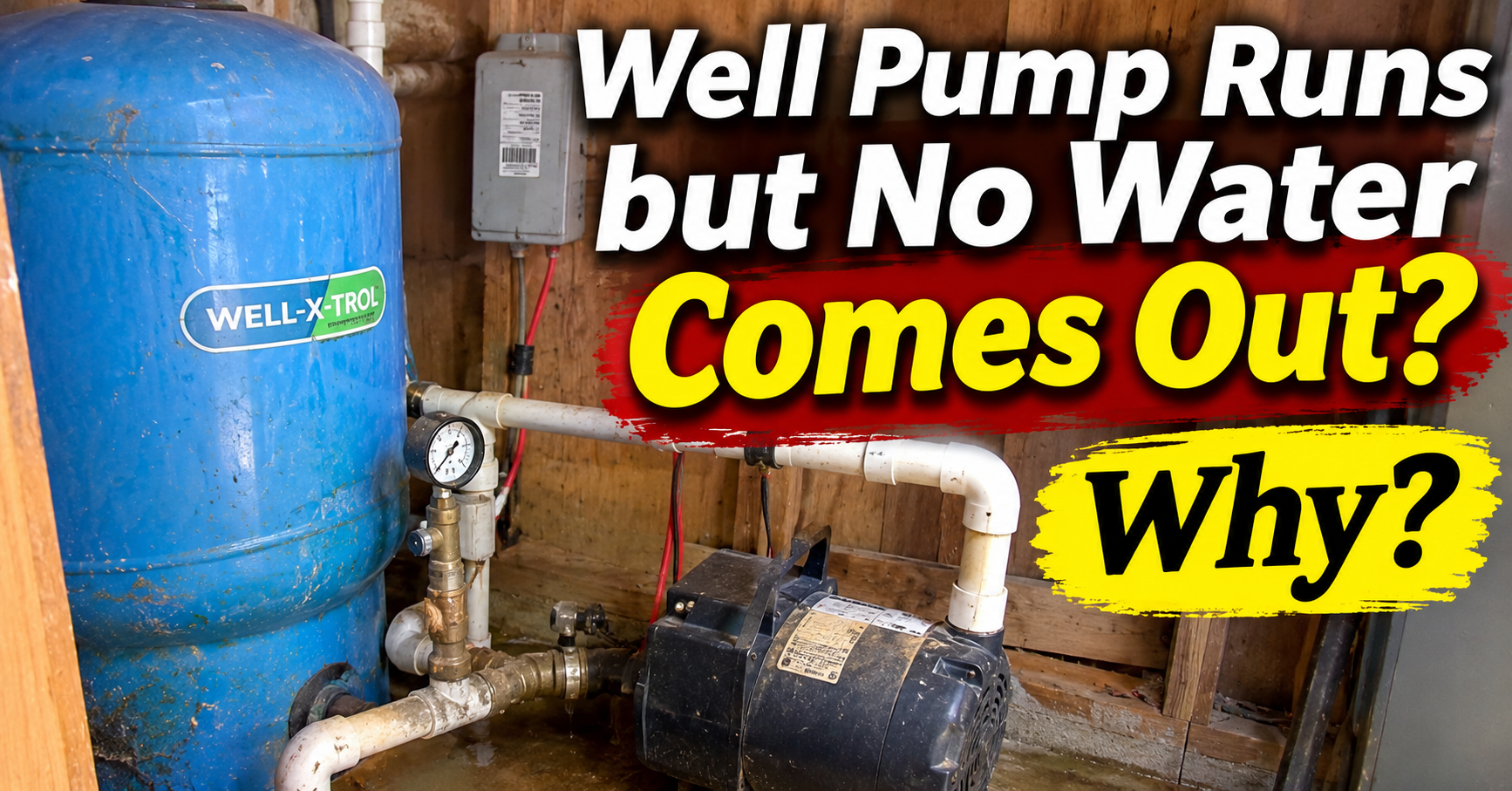
A pump that is running with no water is already in a bad spot. If that is what is happening at your house, this guide to a running pump with no water coming out can help separate a lost-prime jet-pump issue from the problems that affect submersible systems.