
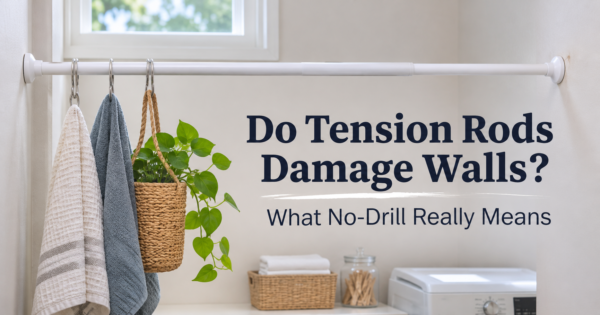
Tension rods can damage walls, even though they do not need screws or drilled holes. The ends press against the surface to hold the rod in place, and that pressure can leave marks, scuff paint, or dent softer drywall.
That does not mean a tension rod is a bad idea. It means “no drill” and “no damage” are not necessarily the same thing.
My wife recently used a curtain rod vertically between a shelf and the ceiling in our laundry room. It creates a side support for our paper towels, keeping the rolls from leaning across the open shelf. It is a simple idea that makes a space we already had much more useful.
Our setup also touches two surfaces that matter: the shelf below and the ceiling above. Whether a rod goes up and down like ours or across a shower opening, I think it is worth looking at what the ends press against before tightening it into place.
How Can a Tension Rod Damage a Wall?
A tension rod stays in place by pressing outward between two opposing surfaces. The end caps grip those surfaces while the rod holds its adjusted length.
That pressure is what makes the rod useful. It is also where damage can happen.
A rod may leave:
- A circular mark where an end cap pressed against paint.
- Scuffs from an end moving or slipping.
- Paint that lifts when the rod is removed.
- A dent in drywall or another soft surface.
- Marks from a damaged or missing end cap.
Not every tension rod will leave a mark. The result depends on the surface, the rod, how it is installed, the load, and whether it moves while in use.
The trouble is that you usually cannot see the contact spots while the rod is installed. A setup can look fine until it is time to take it down.


Can a Tension Rod Dent Drywall?
Yes. Drywall can dent if a rod applies too much pressure or if a small end cap concentrates pressure on a weak area.
A dent may be easier to create if the drywall is already damaged, soft from moisture, or not well supported at the contact point. Tightening a rod harder and harder because it keeps slipping can make the problem worse.
I would stop if the surface begins to flex, crack, or show an indentation. A rod that needs excessive force to stay up may not be the right rod or the right mounting method for that spot.
A sturdier surface can help, but even a solid wall with paint on it can still get scuffed or marked. There is no setup I would call completely risk-free.


Can a Tension Rod Peel Paint?
It can. An end cap may stick to paint, rub against it when the rod moves, or pull at a weak finish during removal.
Fresh paint deserves extra care. Paint can feel dry to the touch before it has fully cured. Follow the paint manufacturer’s guidance for curing and contact with objects before putting a rod against it.
Older paint can be vulnerable too, especially if it is already loose or peeling. Pressing a rod against an area with damaged paint is not going to make that paint stronger.
If you are concerned about a visible spot, inspect the surface and, when practical, test the setup in a discreet area first. A test cannot guarantee what will happen after months of pressure, but it may reveal an obvious problem with the surface or end pad.
What About Marks on a Ceiling or Shelf?
A vertical rod can leave marks just like a horizontal one.
In our laundry room, the curtain rod sits between the top shelf and the ceiling. The shelf holds the paper towel rolls, while the rod helps keep them from leaning sideways. It is an arrangement for lightweight rolls, not a post supporting a heavy shelf.
Before using a vertical tension-style rod, I would look at both contact points:
- The ceiling: Is it a solid surface, or is it a movable ceiling tile?
- The shelf: Is it secure and sturdy, or does it flex when pressure is applied?
- The finish: Is the paint, laminate, or wood surface already loose or damaged?
- The end caps: Are both pads clean, intact, and sitting flat?
- The stored items: Could they push the rod sideways or knock it loose?
A movable ceiling tile or a shelf that bends under pressure is not a good place to force a rod into position. If the rod cannot stay secure without stressing either surface, I would choose a different divider.
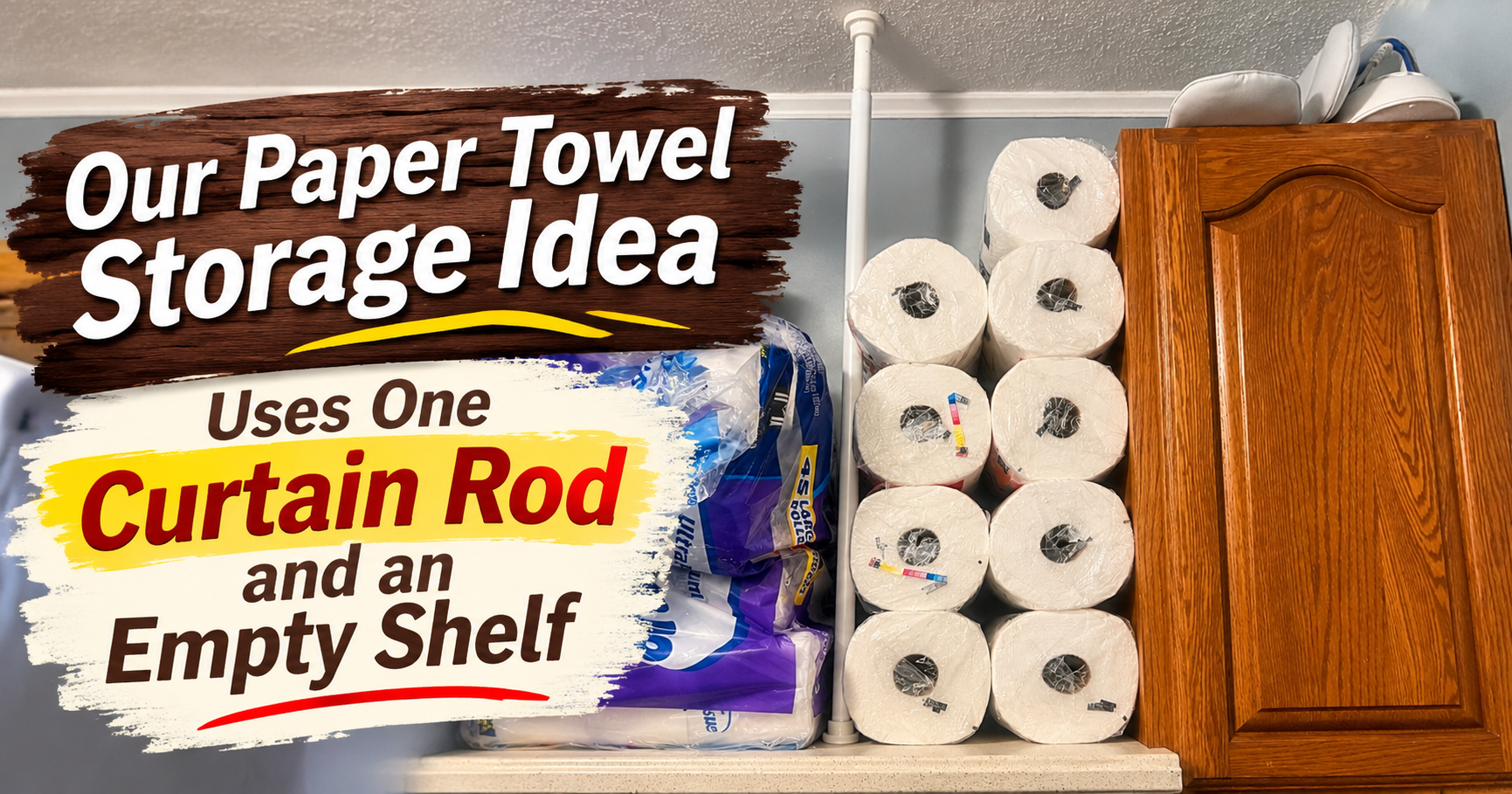
You can see the actual setup in our paper towel storage idea using a curtain rod.
How to Lower the Chance of Tension Rod Damage
You cannot promise that a tension rod will leave no trace, but there are several sensible things to check before putting one in place.
Measure the Opening First
Measure between the two surfaces at the exact height or location where the rod will sit. Then compare that measurement with the rod manufacturer’s stated adjustable range.
A rod that is too short may not maintain the intended tension. A rod forced into a space that is too small may put unnecessary pressure on the surfaces or bow.
Do not assume all curtain rods adjust the same way. Some use springs, some twist, and some have a separate locking mechanism. Follow the instructions for the one you have.
Check the End Caps
Look for a pad or cap at each end. It should be securely attached, clean, and free of cracks or obvious wear.
A missing or damaged cap can expose a harder edge that scratches the surface or concentrates pressure in a smaller spot. If the manufacturer offers a compatible replacement, that may solve the issue. Otherwise, replacing the rod may be the better choice.
Clean the Contact Spots
Dust, soap residue, grease, and grit can interfere with the rod’s grip. Grit trapped under an end cap can also contribute to scuffs if the rod moves.
Clean the surfaces with a product suitable for the finish, then allow them to dry. Wipe the end caps as well.
In a bathroom, soap film and moisture are worth checking. In a laundry room, dust and cleaning-product residue can build up in places you do not normally notice.
Use Firm Contact, Not Excessive Force
A rod needs to be secure enough for its intended use. It does not need to be tightened until the wall bends.
Follow the manufacturer’s installation instructions, and pay attention to the surfaces as you adjust it. If the shelf flexes, paint cracks, or drywall starts to indent, stop.
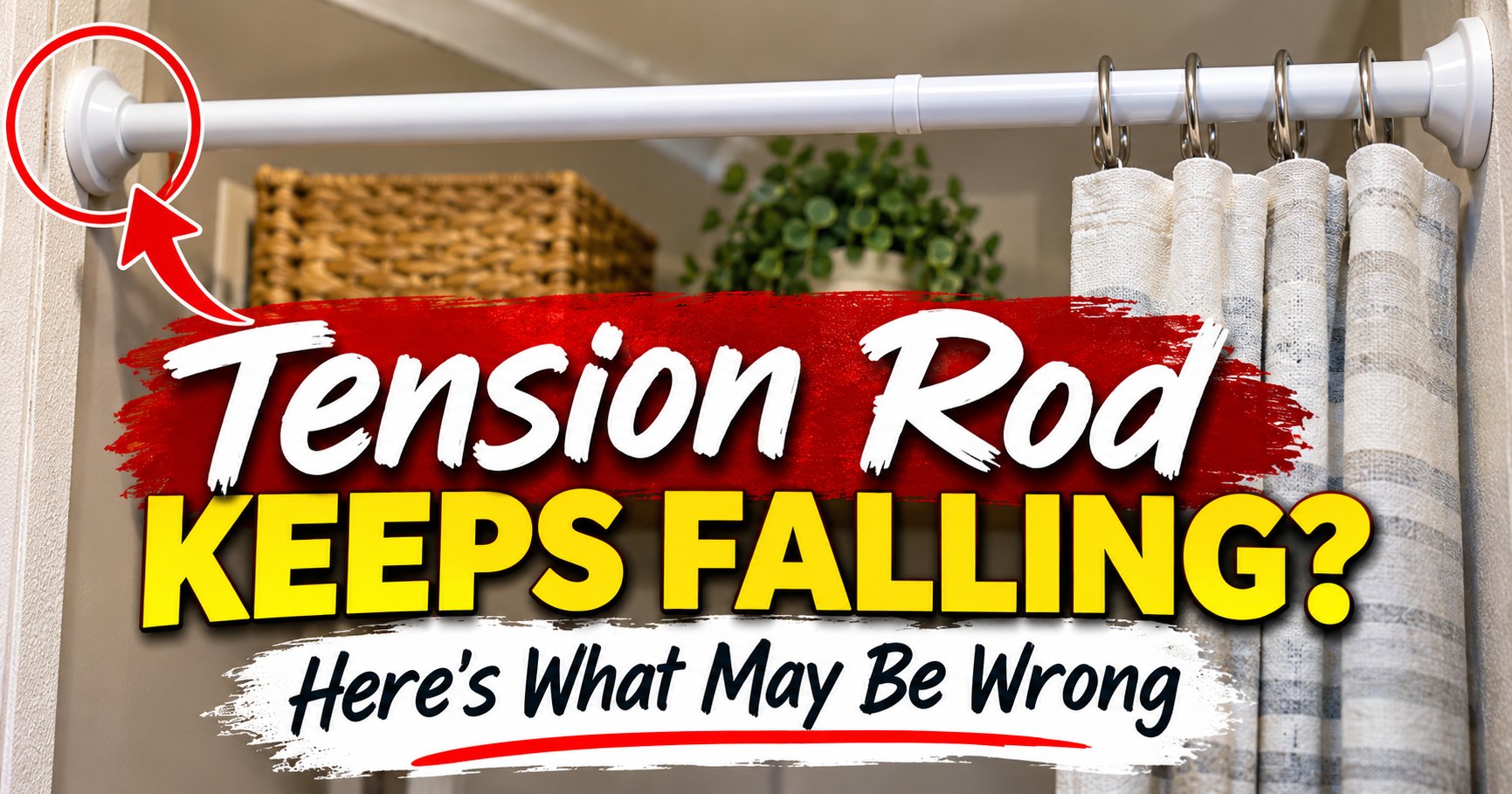
If the rod keeps slipping at the recommended setting, investigate the cause instead of forcing it tighter. Our guide to why a tension rod keeps falling walks through the fit, end caps, surfaces, and load.
Check It Occasionally
A tension rod is not something I would install and then assume will stay exactly the same forever.
When you clean the area or rearrange the shelf, check whether the rod has shifted. Look for movement, a tilted end, or visible marks around the contact point. Keep the area below clear while checking, in case the rod comes loose.
If you want to inspect the covered spots, first remove the load and release the rod according to its instructions. Reinstall it only if the surfaces and rod still look suitable.
Do You Need Pads Behind a Tension Rod?
Some rods are sold with protective end pads, and some manufacturers offer compatible accessories. If an accessory is recommended for your model and surface, follow its directions.
I would be careful about putting random felt, foam, tape, or adhesive behind the ends. A material that cushions the wall might also reduce grip or shift under pressure. Adhesive products can leave residue or pull paint when removed.
The important question is not just, “Will this pad protect the wall?” It is also, “Will the rod still stay securely in place?”
If you need an extra accessory to make the setup work, check that it is compatible with both the rod and the surface. Do not place a rod over a bed, crib, walkway, or another area where it could hurt someone if it falls.


Are Tension Rods Safe for Tile?
A tension rod may be suitable for a tiled shower when the manufacturer permits it and the ends can sit securely against the surface. Tile is generally hard, but that does not mean every part of a tiled wall is ideal for a rod.
Check for:
- Loose or cracked tile.
- A contact point that straddles an uneven grout line.
- Soap film or moisture under the end cap.
- A rod that shifts when the shower curtain moves.
- Damaged end caps or rough material trapped beneath them.
Clean and dry the contact points before installing the rod, and place the ends as directed by the manufacturer. Do not force a rod against loose or cracked tile.
If the curtain rings catch and pull on the rod every time the curtain moves, fix the catching problem instead of simply tightening the rod more.
Can a Tension Rod Damage Wallpaper or Wood Trim?
It can mark either surface.
Wallpaper may scuff, indent, or lift when a rod is removed. Wood trim may be sturdier than drywall, but painted or finished trim can still show pressure marks or scratches.
The condition of the finish matters. A rod pressing against loose wallpaper or chipped paint may make the problem worse.
For a valuable or delicate finish, I would not assume a rubber end cap will prevent all damage. Consider a different mounting location or an organizer that does not press against that surface.


How to Remove a Tension Rod Without Scraping the Wall
The most important part is to release the tension before pulling the rod away.
- Remove the curtain, paper towels, or anything else supported or contained by the rod.
- Keep a hand on the rod so it cannot drop unexpectedly.
- Release or shorten it according to the manufacturer’s instructions.
- Once the ends are free, lift the rod away without dragging the caps across the surface.
- Inspect both contact spots for marks or damage.
Do not force an end sideways while the rod is still pressing tightly against the wall. Dragging a cap can turn a faint mark into a more noticeable scrape.
If an end cap appears stuck to paint, avoid yanking it away. Gently release the rod’s pressure first and inspect the area. If the paint is already lifting, forcing it can remove more.
What Should You Do If a Tension Rod Leaves a Mark?
Start by figuring out what kind of mark you have.
A Surface Scuff
If it looks like dirt or residue on top of the finish, try a gentle cleaning method appropriate for that surface. Test in an inconspicuous area first and follow the paint or finish manufacturer’s recommendations.
Avoid aggressive scrubbing. A shiny patch in flat paint can end up being more noticeable than the original mark.
Peeled Paint
If paint has lifted, cleaning will not put it back. The area may need surface preparation, touch-up paint, or a larger repair depending on how much came away and whether the surrounding paint is sound.
If you rent, document the damage and check with the property owner before making a repair. Matching an older wall color can be trickier than touching up a tiny spot sounds.
A Dent or Crack
A dent in drywall may need filling and repainting. A crack, soft area, or damage around a wet bathroom wall deserves a closer look before reinstalling the rod.
Do not cover damaged drywall with a rod and hope it holds better the second time. Deal with the surface problem first, then reconsider whether a tension rod belongs there.

Is a Tension Rod a Good Choice for a Rental?
It can be a useful option because it typically does not require drilled holes. But it is not a promise that the wall, paint, wallpaper, or trim will look untouched when you remove it.
Before installing one, check the lease or ask the property owner if you are unsure what is allowed. Inspect the contact surfaces, choose a rod that fits, and avoid loading it beyond its intended use.
If the finish is delicate or the rod will not stay secure without excessive pressure, consider a freestanding organizer or another solution that fits the space.

For lightweight shelf storage, the right approach depends on the room. Our laundry room storage ideas for awkward spaces include options that do not all depend on a tension rod.
Common Questions About Tension Rods and Wall Damage
Do tension rods always leave marks?
No. Many are used without obvious damage, but marks are possible. The rod, contact surface, pressure, load, and length of time in place can all affect the result.
Can a tension rod damage a ceiling?
Yes. A vertical rod can leave a mark or dent where it presses against a ceiling, particularly if too much pressure is applied or the surface is weak. Do not brace a rod against a movable ceiling tile.
Is a rubber end cap enough to protect paint?
It may help, but it does not guarantee that paint will remain unmarked. An end cap can still press against, rub, or stick to a painted surface.
Can I loosen the rod to protect the wall?
The rod must still be installed securely according to its instructions. If reducing the pressure makes it slip, do not leave it loosely in place. Choose a better-fitting rod, a suitable location, or a different mounting method.
Are tension rods better than drilling holes?
They solve different problems. A tension rod can avoid screw holes, but it may leave pressure marks and has limits on how it can be used. A properly mounted rod requires holes but may be a better choice for certain loads or unsuitable tension-rod surfaces.
Can a tension rod hold heavy shelves?
Do not assume it can. Use only products designed and rated for that purpose, follow their installation instructions, and make sure the surrounding surfaces are suitable. A simple curtain rod used as a divider should not be treated as structural support.