
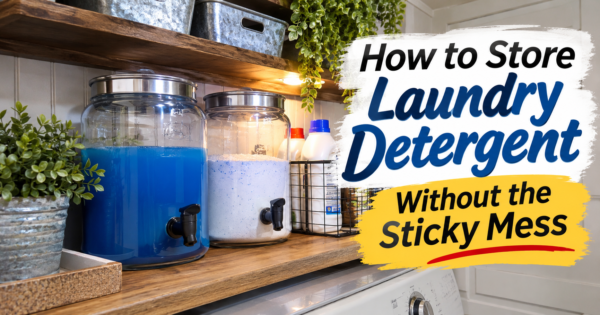
A laundry detergent bottle does not have to leak very much to make a surprisingly big mess. One little drip runs down the side, sticks to the shelf, and somehow leaves that shelf feeling tacky every time you touch it.
The best way to store laundry detergent is in its original, tightly closed container, on a stable surface that is easy for an adult to reach. In a home with children, keep it out of sight and reach, preferably in a locked cabinet. A washable tray underneath the bottle can help catch those little drips before they spread.
Our laundry room already has to work hard as a storage space. My wife recently found a simple way to keep our paper towels stacked on an upper shelf, and it reminded me that a small change can solve an everyday annoyance. Detergent deserves that same practical approach, with one extra consideration: unlike paper towels, it needs to be stored carefully around children and pets.
Start With the Original Container
I know the matching glass jars and drink-style dispensers in laundry room photos look nice. But I would leave detergent in the container it came in.
The original package tells you what the product is, how to use it, and what to do if someone is exposed. It may also have a child-resistant closure or other safety features that a decorative container does not.
The same goes for liquid detergent, powder, and laundry packets. A clear jar full of colorful pods can look like a container of candy to a child.
Poison Control recommends keeping laundry products in their original containers and storing them out of children’s sight and reach.
You can still make the area look organized. Put the original containers together in a sturdy cabinet or on a washable tray rather than pouring their contents into matching jars.


Put a Tray Under the Detergent Bottle
A small tray is one of the easiest ways to deal with a bottle that leaves the occasional drip.
Look for one with a raised edge and a flat bottom. It should be big enough for the bottle to sit securely without hanging over the side. Plastic, silicone, or another washable material is easier to clean than a fabric liner.
The tray is there to catch small drips, not to make a leaking bottle safe. If a bottle is cracked, the cap will not seal, or the spout keeps leaking, follow the product maker’s guidance for handling it.
Every so often, lift the bottle and check underneath it. A tray that catches detergent still needs to be cleaned, or it just becomes a smaller, portable sticky shelf.
What About a Drip Catcher Under the Spout?
Some large detergent containers have a tap or spout that leaves a drop behind after each use. A drip catcher or a measuring cup holder designed for that container may help.
The important part is keeping the bottle stable. Do not balance a large jug on a narrow stand that rocks every time someone presses the spout.
If you use a cup beneath the spout, empty and clean it regularly. Also make sure it cannot be reached by children or pets. A cup with detergent residue still needs to be treated like a cleaning product.


Choose a Spot You Can Reach Without Straining
There is a balance to find here.
Detergent needs to be stored securely away from children. At the same time, a heavy jug placed above your head can be awkward to lift and pour.
A sturdy cabinet with a child-resistant lock can be a good solution. Choose a shelf within the cabinet where the bottle sits flat and an adult can remove it comfortably. If the container is too heavy to manage safely, consider buying the product in a smaller original package.
I would avoid pulling a heavy jug to the very edge of a high shelf every time I do laundry. That is the kind of setup that works fine right up until the day it does not.
The American Academy of Pediatrics advises against storing laundry products on top of the washer or dryer. Those surfaces may vibrate, and products left there can be more accessible than expected.
Where Should Laundry Detergent Go in a Small Laundry Room?
A small room does not give you as many choices, but detergent does not necessarily need a shelf right beside the washing machine.
A locked cabinet nearby, a secure utility closet, or another appropriate storage space can work. Keep the product away from food, and follow the storage directions on its label.
I would look for a location with these qualities:
- The container can sit upright and flat.
- The shelf is sturdy enough for its weight.
- An adult can reach it without stretching or climbing on an appliance.
- Children and pets cannot get to it.
- The area stays reasonably dry and within the temperature conditions on the label.
- A small spill would be easy to notice and clean.
If the laundry room is also home to a furnace or water heater, keep products away from the equipment and observe its required clearances. Do not block vents, access panels, shutoff valves, or the path a technician needs for service.

For the rest of the room, I shared more ways to make the available space useful in our laundry room storage ideas for awkward small spaces.
How to Store Laundry Pods Safely
Laundry pods are convenient, but their small size can make them especially appealing to curious kids. They are concentrated cleaning products, not something to leave in an open dish next to the washer.
Keep pods in their original container. Close it fully after taking one out, and return it to a secure place immediately. Child-resistant packaging is helpful, but it is not a substitute for storage out of sight and reach.
A few habits are worth making part of the routine:
- Take out a pod only when you are ready to use it.
- Handle it with dry hands, following the package directions.
- Close the original package before starting the next task.
- Put it back in the locked cabinet or other secure location.
- Never let children handle or play with laundry packets.
That extra moment to put the container away is easy to forget when a washer is waiting and a kid needs something at the exact same time. A designated storage spot makes it easier to get into the habit.
What If a Child Gets Into Laundry Detergent?
Move the product away from the child and get help immediately. In the United States, call Poison Control at 1-800-222-1222 for individual guidance. If the person has collapsed, is having trouble breathing, has a seizure, or cannot be awakened, call 911.
Do not make the child vomit. Have the original product container available when you call so you can tell the specialist exactly what was involved.
How to Store Powder Laundry Detergent
Powder detergent needs a dry place and a securely closed original package. Moisture can cause it to clump, and an open box is easier to spill when you move something else on the shelf.
If the original box tends to shed powder, you can place the entire closed package inside a larger protective bin or tray. That gives you a little extra containment without removing the product label or transferring the detergent.
Choose a bin that lets the package sit upright and does not prevent it from closing. Store it securely away from children and pets, just as you would liquid detergent or pods.
Keep the measuring scoop with the correct product and follow the package directions. A scoop from one detergent is not necessarily the right measure for another.


How to Keep a Detergent Bottle From Dripping
A detergent bottle can leave residue for more than one reason. Sometimes liquid runs down the outside while pouring. Other times it collects around the cap, threads, or spout.
Try this simple routine:
- Check the cap or spout. Make sure it is closed and fitted correctly according to the bottle instructions.
- Pour slowly. Tipping a full jug too quickly makes it easier to spill around the opening.
- Wipe the outside. Clean detergent residue from the bottle and shelf using the product’s cleanup directions.
- Let the container sit securely. Do not leave it tilted or balanced near the edge.
- Check underneath. Look for a crack or a persistent leak rather than assuming every puddle came from pouring.
Wash your hands after handling detergent or cleaning up a spill. Keep children and pets away from the area until it is clean and dry.
If the bottle keeps leaking despite being closed properly, I would contact the manufacturer rather than transferring the detergent into an unlabeled drink bottle. That is a mix-up nobody needs.
Should You Pour Detergent Into a Glass Dispenser?
I would not. The neat appearance is not worth giving up the original label and closure.
Glass can break, and a drink-style dispenser can make a cleaning product look like something it is not. Even a clearly labeled decorative jar may be easy for a child to open.
If the original bottle is ugly or awkward, you can still organize around it. A cabinet door hides the packaging. A sturdy tray catches drips. A basket can group several closed original containers together, provided they remain upright and the labels are easy to read.
Good storage does not have to look like a store display. It has to work when somebody is doing laundry on a busy Tuesday.


Can Laundry Detergent Freeze in a Garage?
It depends on the product. Liquid detergents can change when exposed to extreme temperatures, and repeated freezing and thawing may affect their consistency or performance. Powder and packets have their own storage requirements.
Check the manufacturer’s label for the recommended conditions. If a laundry room gets very cold, hot, or damp, a more temperature-stable closet inside the house may be a better choice, as long as it is secure and away from food.
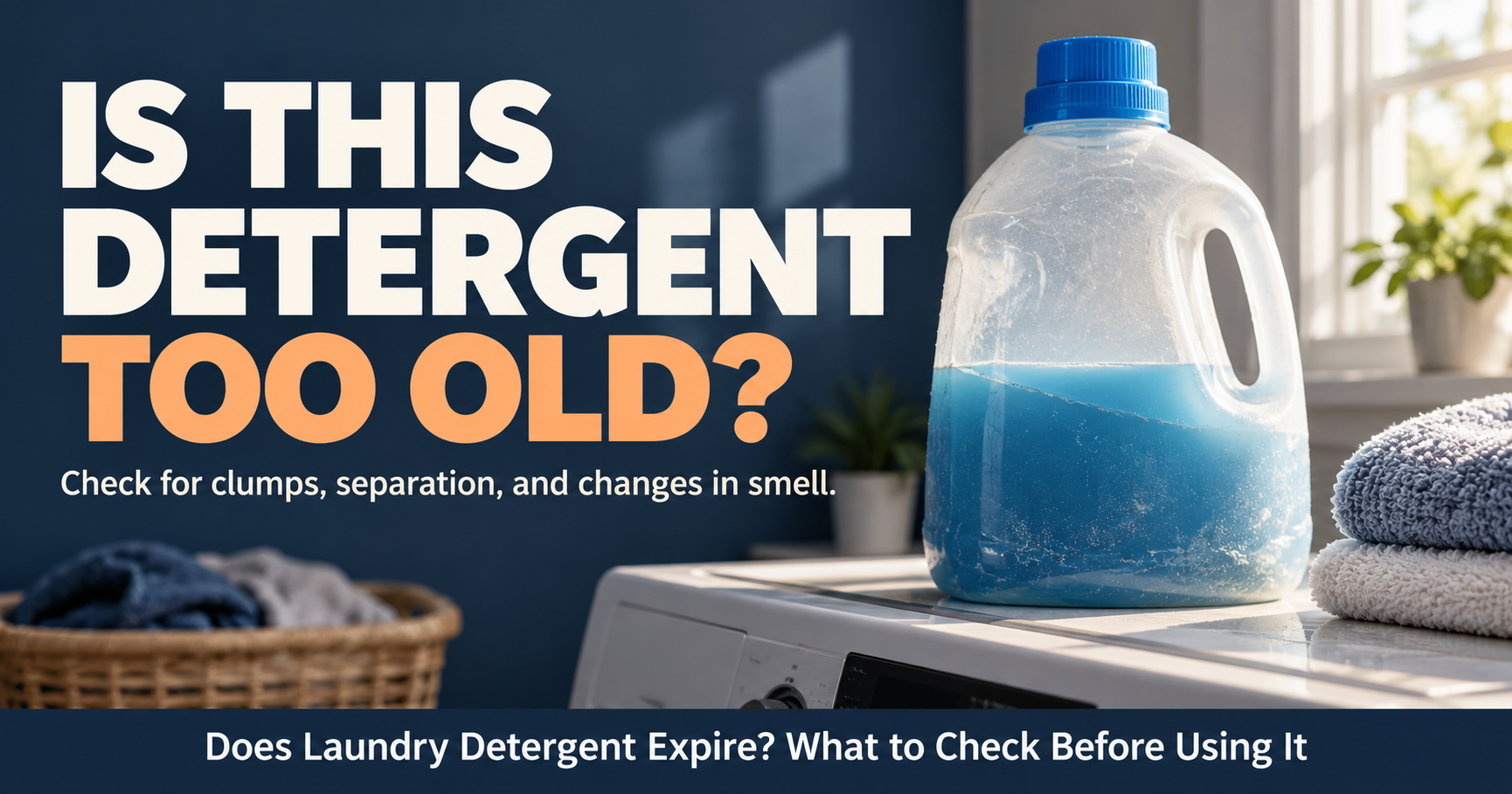
If detergent has been sitting around for a long time, look for changes in smell, texture, or separation and follow the manufacturer’s advice. I covered those signs in more detail in how to tell whether old laundry detergent is still usable.
Keep Backup Detergent Separate From Everyday Supplies
Buying a larger quantity can save trips to the store, but a backup bottle does not need to compete for the best spot in the cabinet.
Keep the bottle you are using in an accessible, secure location. Place unopened backups in another suitable locked cabinet or storage area, following the label’s directions. Leave them upright in their original packaging.
Before buying another bottle, it helps to know what you already have. That is one thing I like about giving supplies a designated spot. You can see what is there instead of discovering three half-used bottles after bringing another one home.
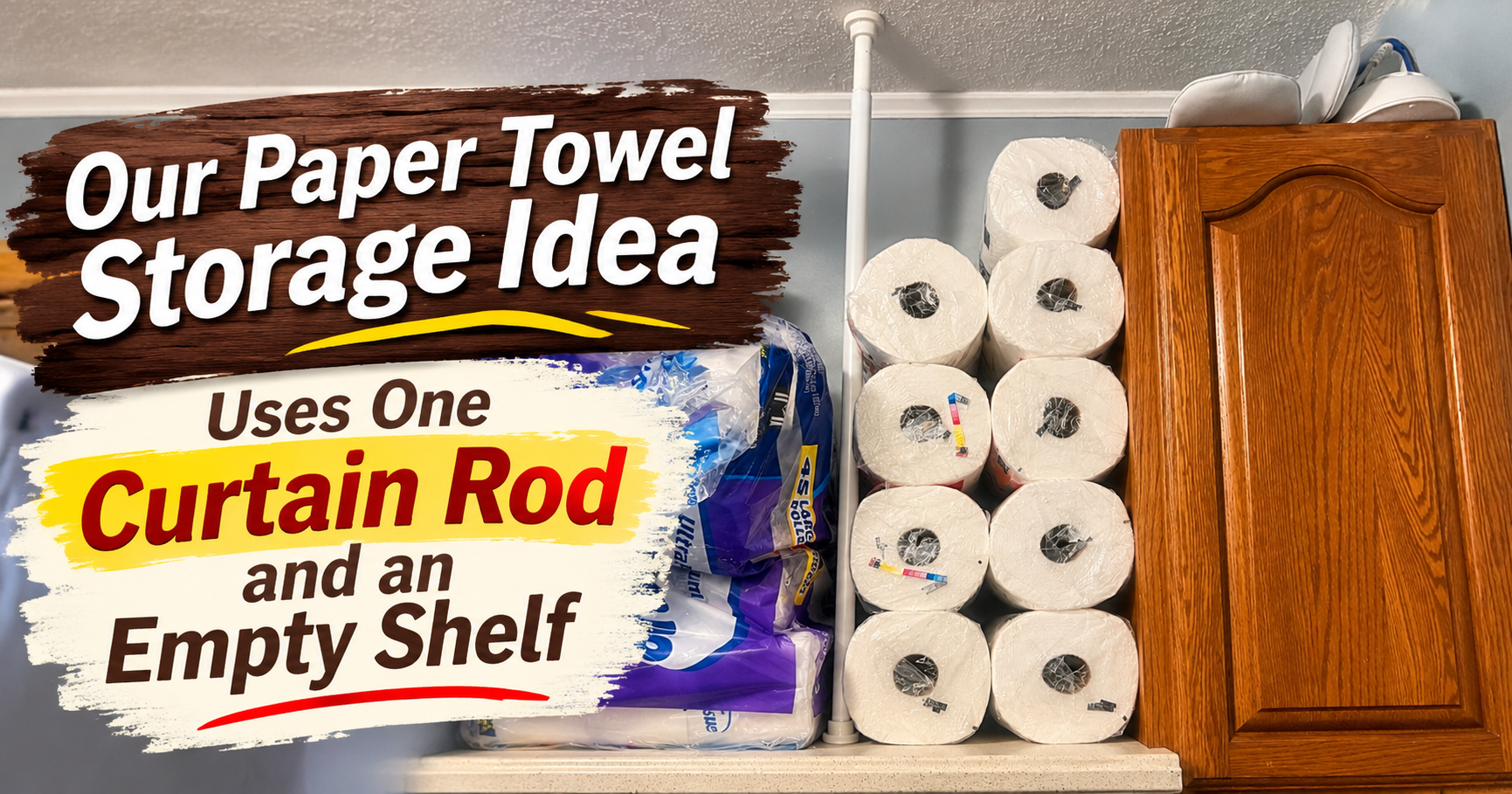
The same idea helped with our paper towels. My wife’s curtain rod shelf divider gave the rolls a defined space, making the shelf easier to use without buying a complicated organizer.


Mistakes That Make Detergent Storage More Difficult
A few small choices can turn a manageable laundry area into a sticky or unsafe one.
Storing a Heavy Jug Too High
A high shelf may be out of a child’s reach, but it should not require an adult to lift a heavy jug down from above their head. A locked cabinet and a smaller original container can provide a more manageable option.
Leaving the Cap Loose
A cap that is not fully closed can leak if the bottle tips. Close the container every time and wipe residue from the outside.
Keeping Pods in an Open Container
An open bowl or decorative jar makes pods easier to see and grab. Keep them in their original, closed package in secure storage.
Ignoring a Small Drip
A little detergent can spread across a shelf and make other bottles sticky. Check the source, clean it promptly, and use a tray to catch future drips.
Packing Supplies Around Appliances
Do not use every inch around a washer, dryer, furnace, or water heater just because something fits there. Appliances need their specified clearances and accessible connections.
Common Laundry Detergent Storage Questions
What is the best container for laundry detergent?
The original container is the best starting point. It keeps the product label and safety directions with the detergent and may include a child-resistant closure. Keep it closed and stored securely.
How do I keep liquid detergent from making a mess?
Make sure the cap or spout is closed properly, wipe residue off the container, and set the bottle on a stable, washable tray. If the container itself leaks, follow the manufacturer’s guidance.
Can laundry detergent be stored under a sink?
Only if the area is suitable according to the product label and the detergent can be kept securely away from children and pets. Watch for plumbing leaks, and do not pack containers so tightly that you cannot see or access the pipes.
Is it okay to store detergent on top of the washing machine?
It is better to choose a secure shelf or cabinet instead. The American Academy of Pediatrics advises against storing laundry products on top of washers and dryers, where they can be accessible to children or displaced.
Should laundry pods go in a clear jar?
Keep them in their original container instead. Close it completely after each use and store it out of sight and reach of children, preferably in a locked cabinet.
Can powder detergent be kept in a plastic storage bin?
You can place the closed original package inside a larger bin to help contain dust or spills. Keep the label visible or accessible, protect the package from moisture, and store it securely.