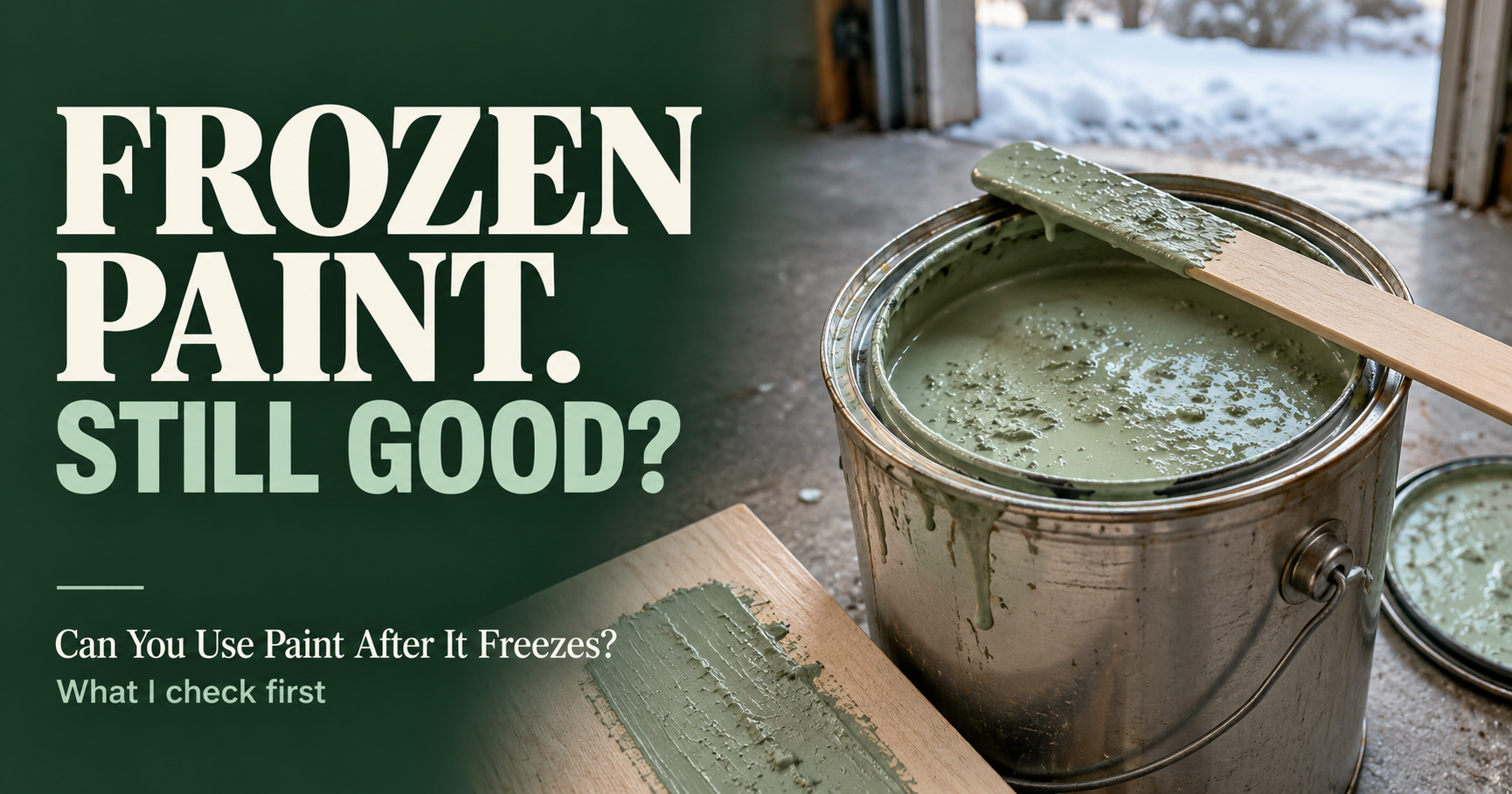
You might be able to use paint after it freezes, but I do not trust it just because the can thawed and the lid still fits.
Water-based paint can be permanently damaged by freezing. Sometimes it looks almost normal after thawing, then goes on gritty, leaves rough patches, or never covers the way it should. Other times, one look inside answers the question fast. If it resembles cottage cheese, it is not about to make your wall look better.
The good news is that checking it is easy. Before I put frozen paint anywhere near a room, cabinet, or piece of furniture, I let it thaw completely, mix it thoroughly, and test it on scrap material.
What freezing does to paint
Most interior latex and acrylic paints are water-based. When the water inside freezes, it can upset the balance of the paint’s ingredients.
The pigments, binders, and liquids that were blended together can separate. Once that happens, thawing does not always put them back where they belong.
That is why frozen paint can become lumpy, grainy, stringy, or watery. It may still spread on a wall, but it may not stick correctly or dry into an even finish.
Oil-based paint is generally less vulnerable to freezing because it does not rely on water in the same way. Still, I would inspect and test it after a hard freeze instead of assuming it is fine.
Spray paint is its own thing. The paint and propellant are sealed inside the can, but extreme cold can affect how well it sprays until it warms back up. I do not use a cold spray can until it reaches room temperature.

Can you still use latex paint after it freezes?
Maybe, but only if it passes a close inspection and a test.
Latex paint is the type I am most cautious about after freezing. It is the paint most likely to be ruined by a night in a freezing garage, shed, truck bed, or unheated basement.
I let the can thaw at room temperature for at least a full day. I do not put it beside a heater, set it on a stove, or try to rush it along with extreme heat. That can create a different problem and does not repair freeze damage anyway.
Once it has thawed fully, I open the can and look for a smooth, creamy texture. Then I stir it slowly but thoroughly from the very bottom of the can.
If the paint becomes smooth and uniform again, it may be usable. If it stays chunky, grainy, separated, or curdled, I do not use it.



How to tell if frozen paint is ruined
I use my eyes first, then I use a cheap brush and a scrap board or piece of cardboard.
Paint that is probably ruined may have:
- Lumps that will not stir out.
- A cottage-cheese or curdled appearance.
- A grainy, sandy texture.
- Watery liquid floating above thick clumps.
- A stringy or ropey consistency.
- A strong sour or rotten smell.
- Rubbery bits on the stir stick.
- A finish that looks rough or uneven after a test brush-out.
The important part is that I do not just stir for ten seconds and call it good. Paint settles even under normal conditions, and thawed paint needs time to show whether it will return to a usable texture.
If I have to convince myself that it looks okay, it probably does not.
The test I do before painting a whole wall
A little paint test can save a whole lot of regret.
After the paint is fully thawed and mixed, I brush a small area onto cardboard, scrap drywall, or a hidden part of the surface I plan to paint. I spread it as I normally would, then let it dry.
I check for a few things:
- Does it spread smoothly without grit or lumps?
- Does it level out instead of leaving a rough, dragged texture?
- Does it dry evenly?
- Does the color look normal?
- Does it stick firmly after it dries?
- Does it have the expected sheen?
If the test patch looks smooth and stays attached, the paint may still be usable. If it dries rough, patchy, or soft, I buy fresh paint.
That may sound picky, but paint is one of those projects where a questionable gallon can turn into a second weekend of work.



Can frozen paint be fixed?
Not really, if freezing has permanently separated the ingredients.
Stirring can help paint that merely settled while it was stored. It cannot reliably repair paint that has broken down from freezing.
I do not add water, paint thinner, dish soap, or any other home remedy to try to bring it back. That can make the paint too thin, affect coverage, or leave an unpredictable finish.
A paint store may be able to shake a can more thoroughly than I can by hand. That can help when the paint is simply separated from sitting. But a shaker cannot turn curdled, freeze-damaged latex paint back into fresh paint.
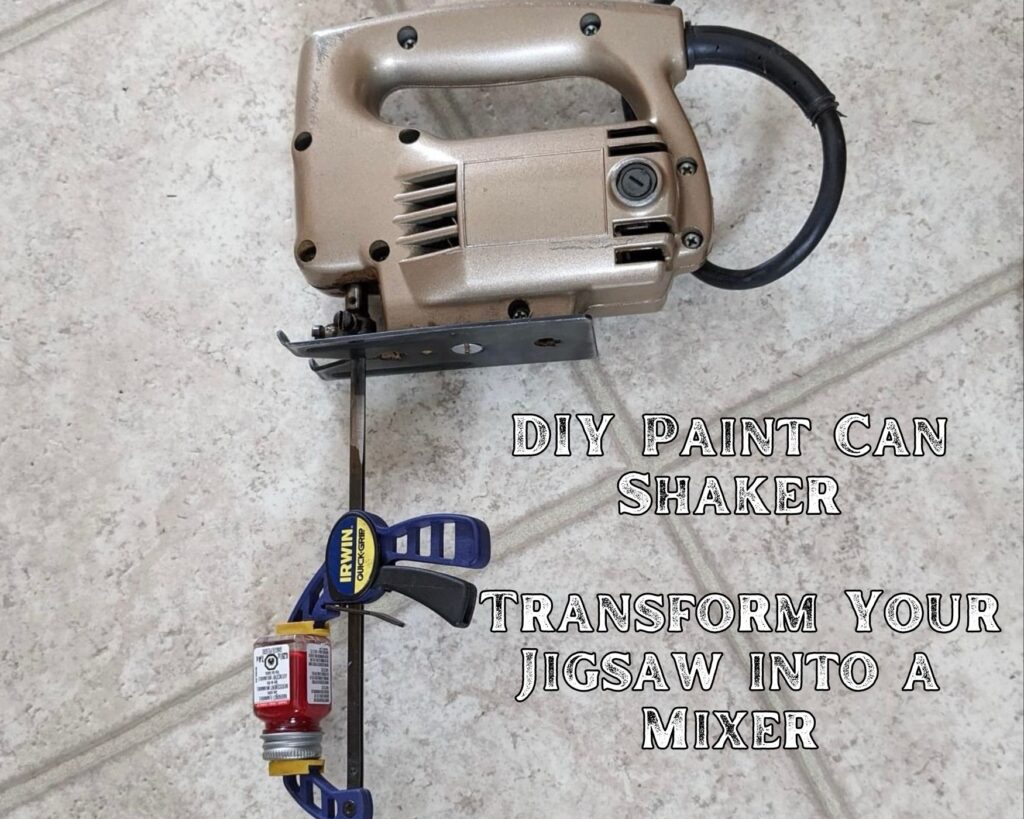
For paint that still looks promising, thorough mixing matters. A simple DIY paint-can shaker can help get settled paint moving again, but I still inspect the texture before I ever put it on a wall.
What if only the top layer froze?
Sometimes the paint near the top or edges gets hit hardest, especially if the can sat in an unheated space during a brief cold snap.
I do not scrape off the ugly part and assume the paint underneath is good. I let the entire can thaw completely, then stir all the way to the bottom.
If the paint becomes smooth after thorough mixing and passes a test patch, it may still be fine.
If chunks keep showing up after several minutes of stirring, I do not keep digging for the good part. The can is not trustworthy enough for a real project.


How long should frozen paint thaw before using it?
I give it at least 24 hours at room temperature. A large gallon can may need longer if it froze solid.
The entire can needs to thaw, not just the paint around the top. If the center is still cold and slushy, stirring will not tell me much.
I keep the lid on while it thaws so dust and debris do not get into the paint. Once the paint is fully thawed, I open it, inspect it, and stir it carefully.
I do not heat paint aggressively to speed things up. Placing it near a normal room-temperature area is enough. Paint does not need a spa treatment. It just needs time.
Can acrylic craft paint still be used after freezing?
Acrylic craft paint can be damaged by freezing just like wall paint.
Small bottles are especially easy to forget in a garage, shed, mailbox, or delivery box during cold weather. When acrylic paint freezes, it may separate, become lumpy, or lose its ability to cover smoothly.
I shake the bottle first, then squeeze out a small amount. If it is smooth and consistent, I test it on scrap material.
If there are rubbery chunks, watery separation, or a gritty texture, I replace it. Craft paint is not usually expensive enough to justify ruining a project or spending an hour trying to fix a bottle that is already done.


Can oil-based paint freeze?
Oil-based paint can tolerate cold better than latex paint in many cases, but cold storage still is not ideal.
Because it does not contain water in the same way, it is less likely to go through the freeze-and-separate problem that ruins water-based paint. Still, oil-based paint can thicken, settle, or develop other storage issues over time.
After a hard freeze, I let it warm to room temperature, stir it thoroughly, and test it before using it. If it is smooth and spreads normally, it may be fine.
The main lesson is not that oil-based paint is indestructible. It is simply less likely to suffer the exact damage that freezing causes in latex paint.
Can spray paint freeze?
Spray paint can get too cold to use properly, but a cold can is not automatically ruined.
The can needs to warm back to room temperature before I shake and spray it. Cold spray paint may sputter, spit, produce a weak fan pattern, or dry poorly.
I do not put a spray can directly on a heater or soak it in hot water. Aerosol cans are pressurized, and excessive heat is not something I experiment with.
Instead, I bring it indoors, let it warm naturally, shake it well, and spray a test pattern onto cardboard.
If the paint comes out in a smooth, even mist after warming, it may be fine. If it sputters, spits blobs, or has weak pressure, I stop and do not use it on the actual project.



What happens if you paint with frozen or ruined paint?
The paint may look bad right away, or it may look acceptable until it dries.
Freeze-damaged paint can cause:
- Rough, gritty walls or furniture.
- Streaks and uneven color.
- Poor coverage that needs extra coats.
- Flaking or peeling later.
- A finish that feels soft or chalky.
- Weak adhesion to the surface.
- A sheen that does not match the rest of the room.
The worst part is that you may not know how badly it failed until you have already painted a large area.
That is why I test an old or frozen can before starting. A small patch is easy to repaint. An entire ceiling is a different conversation.
Can paint freeze in the garage?
Yes, and it happens faster than people expect.
Garages, sheds, barns, crawl spaces, and unfinished basements can all drop below freezing overnight. Paint stored against an outside wall or directly on a concrete floor can get colder than paint on an interior shelf.
I have learned to move leftover latex paint inside before winter. A closet, utility room, conditioned basement, or interior storage cabinet is safer than a garage shelf.
If the paint is worth keeping, it is worth giving it a spot where it will not freeze.
How to store leftover paint so it does not freeze
I store leftover water-based paint in a place that stays above freezing and does not get excessively hot.
Before storing it, I make sure the lid is clean and sealed tightly. I tap the lid on evenly with a rubber mallet or block of wood instead of denting one side with a hammer.
I also label the can with:
- The room or project it came from.
- The paint color and sheen.
- The date it was opened.
- A small painted swatch on the lid if possible.
That sounds a little fussy until you have six mystery cans with different shades of beige. Then it starts looking like wisdom.
For a very small amount of leftover paint, I sometimes transfer it to a clean airtight container. I only use a container that is compatible with paint and label it clearly so nobody mistakes it for something else.
Can a paint store tell if frozen paint is bad?
A paint store can often help by shaking the can and checking the texture, especially if the paint was purchased there.
That said, the final test is still how it mixes, applies, dries, and sticks. If the paint has obvious lumps or a curdled texture, the store cannot make it fresh again.
If I am unsure about an expensive or nearly full can, I may bring it in and ask. If it is a half-empty can that has spent all winter in the garage and looks like spoiled pudding, I do not make the trip.
Is paint ruined if it freezes once?
Not always, but one hard freeze can be enough to ruin water-based paint.
The chance depends on how cold it got, how long it stayed frozen, and what type of paint it is. Brief exposure to near-freezing temperatures may not do much. A can that froze solid for several nights is much more likely to be damaged.
I do not rely on the number of times it froze. I inspect and test the paint itself.
If it is smooth after thawing, mixes evenly, and dries normally on a test patch, I may use it. If it looks questionable in any way, I replace it.
Does paint go bad from cold even if it does not freeze?
Very cold temperatures can make paint thicker and harder to work with even when it does not actually freeze.
That does not necessarily mean the paint is ruined. I bring it to room temperature, stir it, and let it sit before using it.
Cold paint can apply poorly and may not level correctly. Even good paint performs better when the paint, surface, and room are within the temperature range listed on the label.
For an interior project, I would rather wait for the room and paint to warm up than fight thick, sluggish paint all afternoon.
Can you paint outside if it freezes at night?
That depends on the paint and the forecast, but I am careful with it.
Even if the afternoon feels warm enough, the paint may not have enough time to cure before nighttime temperatures drop. Dew, frost, and cold surfaces can interfere with adhesion and leave the finish looking rough or uneven.
I check the label for the minimum application temperature and the recommended time the paint needs before it can handle colder weather.
If a freeze is expected soon after I paint, I wait. A good weather window is better than repainting a fence, door, or trim later because I tried to squeeze the project into one chilly afternoon.
When I throw frozen paint away
I stop trying to save paint when it has obvious lumps, permanent separation, grit, a rotten smell, or poor results on a test patch.
I also replace it when the paint is for a visible wall, trim, cabinet, or large project where a bad finish will cost me more time than a new gallon.
For disposal, I do not pour liquid paint into a drain. Small leftover amounts can often be dried out completely before disposal if local rules allow. Larger quantities should go through the local household hazardous-waste program or the disposal option recommended in your area.
Can you use latex paint after it freezes?
Sometimes, but only if it thaws completely, stirs back to a smooth consistency, and passes a test patch. If it is lumpy, grainy, stringy, or separated, it is usually ruined.
How do I know if paint froze in the garage?
The can may feel unusually cold, have a bulging lid, or contain lumpy and separated paint after thawing. If you are unsure whether it froze, let it warm fully and inspect the texture before using it.
Can you stir frozen paint back to normal?
Stirring can remix paint that settled, but it cannot reliably repair paint that was damaged by freezing. If lumps and grit remain after thorough mixing, replace the paint.
Can I use paint that froze in a sealed can?
You can inspect and test it, but a sealed can can still be damaged by freezing. The seal keeps out air, but it does not stop water-based paint from separating when it freezes.
Does spray paint go bad if it freezes?
A cold spray-paint can may work again once it warms to room temperature. Let it warm naturally, shake it well, and test the spray pattern on cardboard before using it on your project.
Should I store paint in the basement?
A basement is often a good place for paint if it stays dry and above freezing. Keep the cans off damp floors, seal the lids tightly, and label each can clearly.
Calder Voss writes about practical home fixes, garage projects, and the everyday household questions that usually show up five minutes before a project starts.