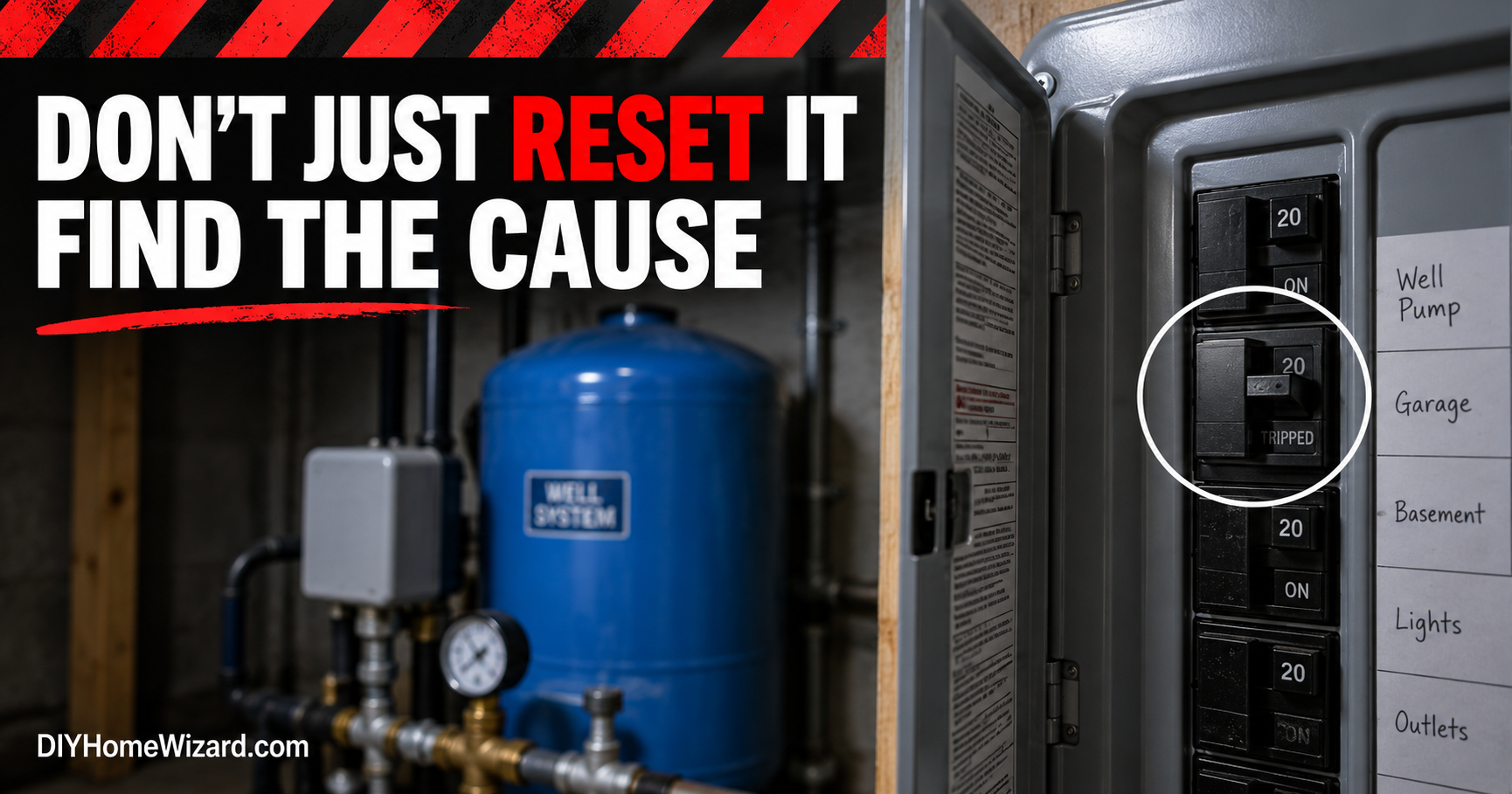
A well pump that trips the breaker is not a problem I keep resetting and hoping will somehow become friendlier. The breaker is doing its job. It is shutting power off because the circuit is pulling too much current, has a short, or has another electrical fault that needs attention.
Sometimes the cause is simple, such as a weak breaker, loose wire, or failing pressure switch. Other times, it points to a worn pump motor, damaged wiring down the well, a bad control box, or a pump that is jammed.
The timing of the breaker trip is the biggest clue. Does it trip the instant the pump tries to start? Does the pump run for a few seconds first? Does it happen only after a storm, after heavy water use, or when the pump has been running a long time?
Those details help separate a small electrical issue from a deeper well pump problem.
The Short Answer
A well pump commonly trips the breaker because of one of these problems:
- A short circuit or damaged wire
- A failing well pump motor
- A locked or jammed pump
- A bad control box or start capacitor
- A pressure switch with burned or damaged contacts
- Water getting into an electrical connection
- A worn out or incorrectly sized breaker
- A pump working too hard because of mechanical trouble
The safest first move is to leave the breaker off until you have a reason to turn it back on. Repeated resets can damage electrical components, overheat wiring, and turn a repairable issue into a much more expensive one.


Why the Breaker Trips in the First Place
A circuit breaker is not there to inconvenience you when the shower goes cold. It protects the wiring and equipment when something pulls more electrical current than the circuit should safely handle.
Your well pump is a serious electrical load. Many home well pumps operate on 240 volts, and the wiring may run from the electrical panel to a pressure switch, control box, well cap, and then hundreds of feet down the well.
A breaker can trip for several reasons:
- The motor pulls too much current when trying to start.
- A wire has damaged insulation and is shorting.
- Moisture has entered a connection.
- A component inside a control box has failed.
- The pump is mechanically stuck.
- The breaker itself has become weak.
The goal is not to outsmart the breaker. The goal is to find out why it is being asked to protect the circuit.



The Timing of the Trip Tells You a Lot
I pay close attention to exactly when the breaker trips.
It trips immediately when the pump tries to start
This often points toward a short circuit, damaged wiring, a failed start component, or a pump motor that cannot turn freely.
You may hear the pressure switch click, the lights may dim for a moment, and then the breaker trips before the pump ever really gets going.
A pump motor draws extra current during startup. If the motor is locked or a start component has failed, the current can spike high enough to trip the breaker quickly.
It runs for a few seconds and then trips
This can mean the pump starts but is working too hard. A failing motor, damaged wire, overloaded pump, low voltage, or mechanical restriction can cause that.
It can also happen when the pump is running dry or struggling to move water properly. The exact cause depends on the type of pump and system.
It trips only after running for a while
A breaker that trips after several minutes may be responding to overheating.
The pump may be running too long because it cannot build enough pressure. A leak, low well water level, clogged intake, worn pump, or faulty pressure switch can all keep it running longer than normal.
The breaker may also be weak, but I do not assume that until the pump and wiring have been checked.
It trips randomly
Random breaker trips often make people suspicious of the breaker itself. That is possible, but random trips can also come from loose wiring, moisture, damaged insulation, intermittent motor trouble, or a component that fails only once it gets warm.
Electrical problems are famous for behaving perfectly until somebody shows up to look at them.
Do Not Keep Resetting the Breaker
I know the temptation. You need water. The kids need baths. The washing machine is full. The breaker is right there, practically asking to be flipped back on.
Still, repeatedly resetting a breaker without diagnosing the cause is a bad habit.
If the breaker trips once after a known power outage or unusual event, one careful reset may be reasonable. If it trips again, stop.
A breaker that keeps tripping is telling you the problem is still present. Resetting it over and over can:
- Overheat damaged wires
- Damage the pump motor further
- Burn pressure switch contacts
- Destroy a failing control box
- Create an electrical fire risk
- Make diagnosis harder for the person repairing it
A well pump is not like a lamp that quit working. It is tied into water, pressure, buried wiring, and potentially high voltage. I treat repeated trips as a real warning.



Start With the Pressure Switch
The pressure switch is usually near the pressure tank, and it tells the pump when to start and stop.
When pressure drops low enough, the switch closes and sends power to the pump. When the system reaches the upper pressure setting, it opens and shuts the pump off.
If the pressure switch is damaged, corroded, wet, or has burned contacts, it can create electrical trouble.
I would not remove the cover or touch wiring with power on. The terminals can carry 240 volts, and this is not a place for a casual look around.
With the breaker off and the system safely deenergized, a professional may check for burned contacts, loose wires, heat damage, or moisture inside the switch.
A pressure switch can also fail mechanically. It may click but not send power correctly, stick in the on position, or react poorly because the small pressure sensing port beneath it is clogged.
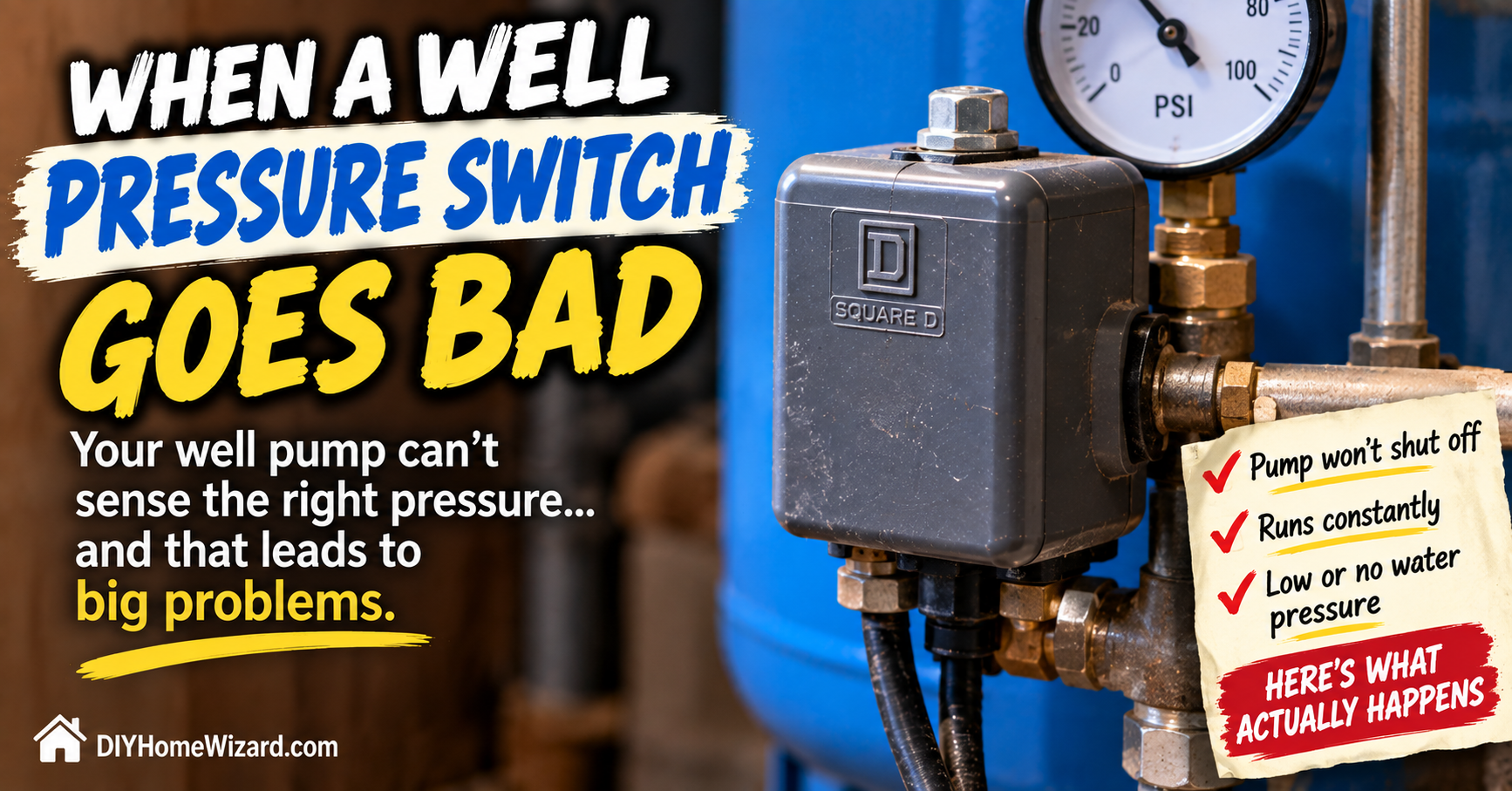
My article on what happens when a well pressure switch goes bad explains why the switch can create symptoms that look like a pump problem.
A Bad Pressure Switch Usually Does Not Trip the Breaker Alone
A failed pressure switch can absolutely cause water problems, but it is not the most common reason a breaker repeatedly trips.
The switch may be the place where you notice the issue. You hear it click, the pump tries to start, and the breaker trips. That does not necessarily mean the switch is the root cause.
The problem may be farther down the electrical path.
For example, the switch may be sending power exactly as it should, but the pump motor is locked. Or the wiring from the well cap to the pump may be damaged. Or a control box component may have failed.
The switch is often the messenger. The pump, motor, cable, or control box may be the part causing the overload.


A Failing Pump Motor Is a Major Suspect
A submersible pump sits deep in the well, which makes it easy to forget that it contains an electric motor working under demanding conditions.
That motor can wear out, overheat, develop internal electrical problems, or become mechanically damaged. When it struggles to start or turn, it can pull too much current and trip the breaker.
Some signs that point toward pump motor trouble include:
- The breaker trips as soon as the pump starts.
- The pump hums briefly before the breaker trips.
- Water pressure has been getting weaker over time.
- The pump has been running longer than it used to.
- The system has had sand, sediment, or low water issues.
- The breaker trip happens even after other above ground components have been checked.
A pump motor problem does not always mean the entire pump assembly is beyond repair, but it usually means the system needs professional electrical testing.
Nobody wants to hear “the pump may need pulled,” but that is better than letting it keep trying to start until something else gets damaged too.
A Jammed or Locked Pump Can Trip the Breaker
A pump motor needs to spin freely.
If sand, mineral buildup, worn internal parts, or mechanical damage locks the pump, the motor may draw a surge of current every time it tries to start. The breaker sees that overload and trips.
This can happen after sediment problems, an old pump wearing down, or a well that has produced sand.
A locked pump often creates a very specific pattern. The pressure switch clicks. You may hear a hum or brief electrical strain. Then the breaker trips.
The pump may never produce water pressure at all.
This is not a problem that improves with more breaker resets. If the pump cannot turn, every attempt just creates more heat and stress.


The Control Box Can Be the Problem on Some Well Systems
Not every well pump has a separate control box, but many three wire submersible pump systems do.
The control box commonly contains starting components that help the motor get moving. If a capacitor,