
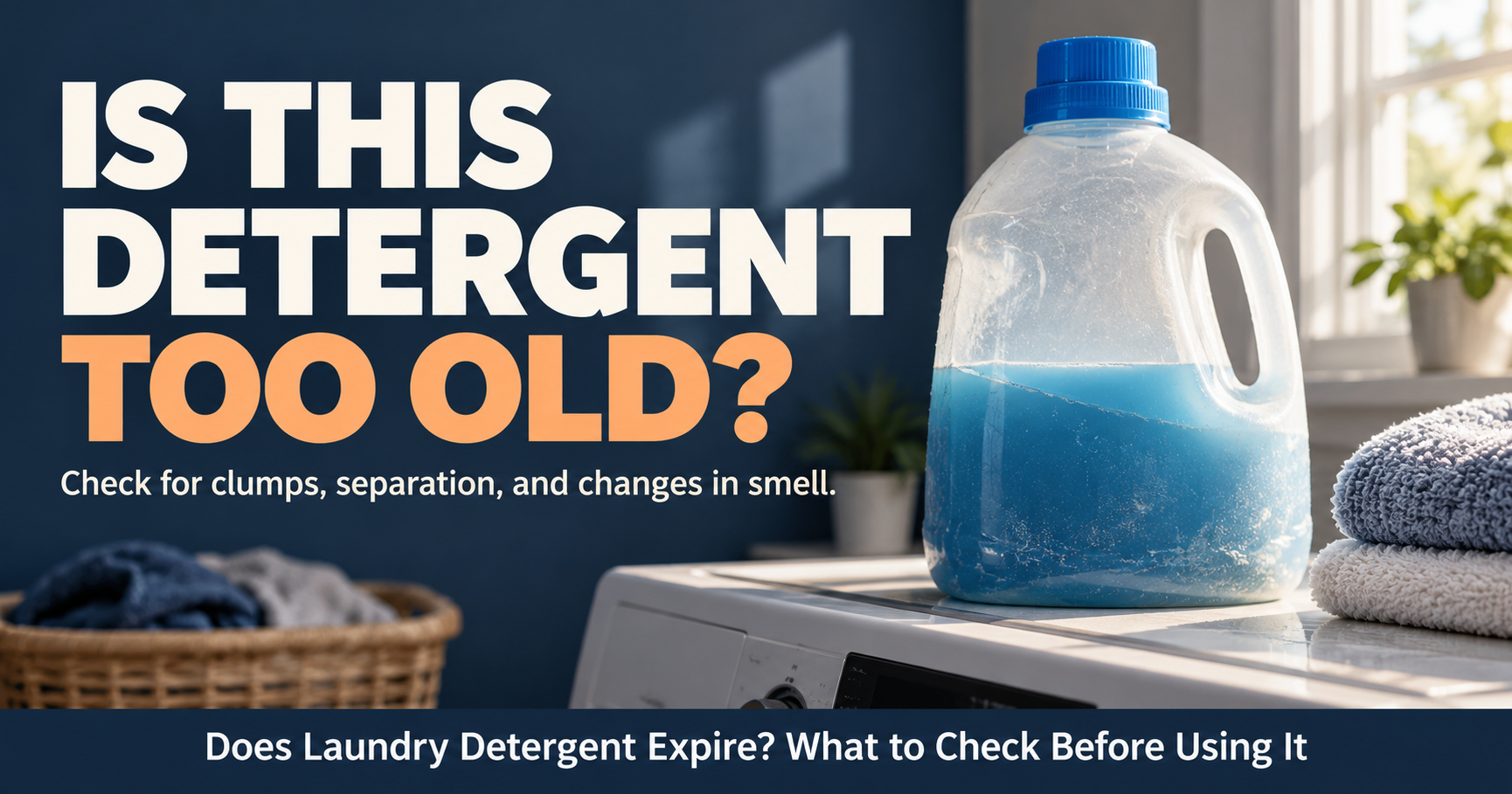
Laundry detergent does expire, although it usually does not suddenly become dangerous the day a date passes. What happens more often is that it slowly loses cleaning power, separates, clumps, dries out, leaks, or stops dissolving the way it should.
I have learned not to judge old detergent by the bottle alone. A jug can look perfectly normal from across the laundry room and still pour out watery, separated detergent that does not clean very well. On the other hand, a bottle that is past its printed date may still work fine if it was stored indoors, sealed tightly, and looks normal when opened.
The best question is not just, “Is this detergent expired?” It is, “Would I trust this stuff on a load of clothes I actually care about?”
The Short Answer
Most unopened laundry detergent can last a long time when stored in a cool, dry place. Once opened, it is more likely to slowly weaken, separate, thicken, spill, or dry out.
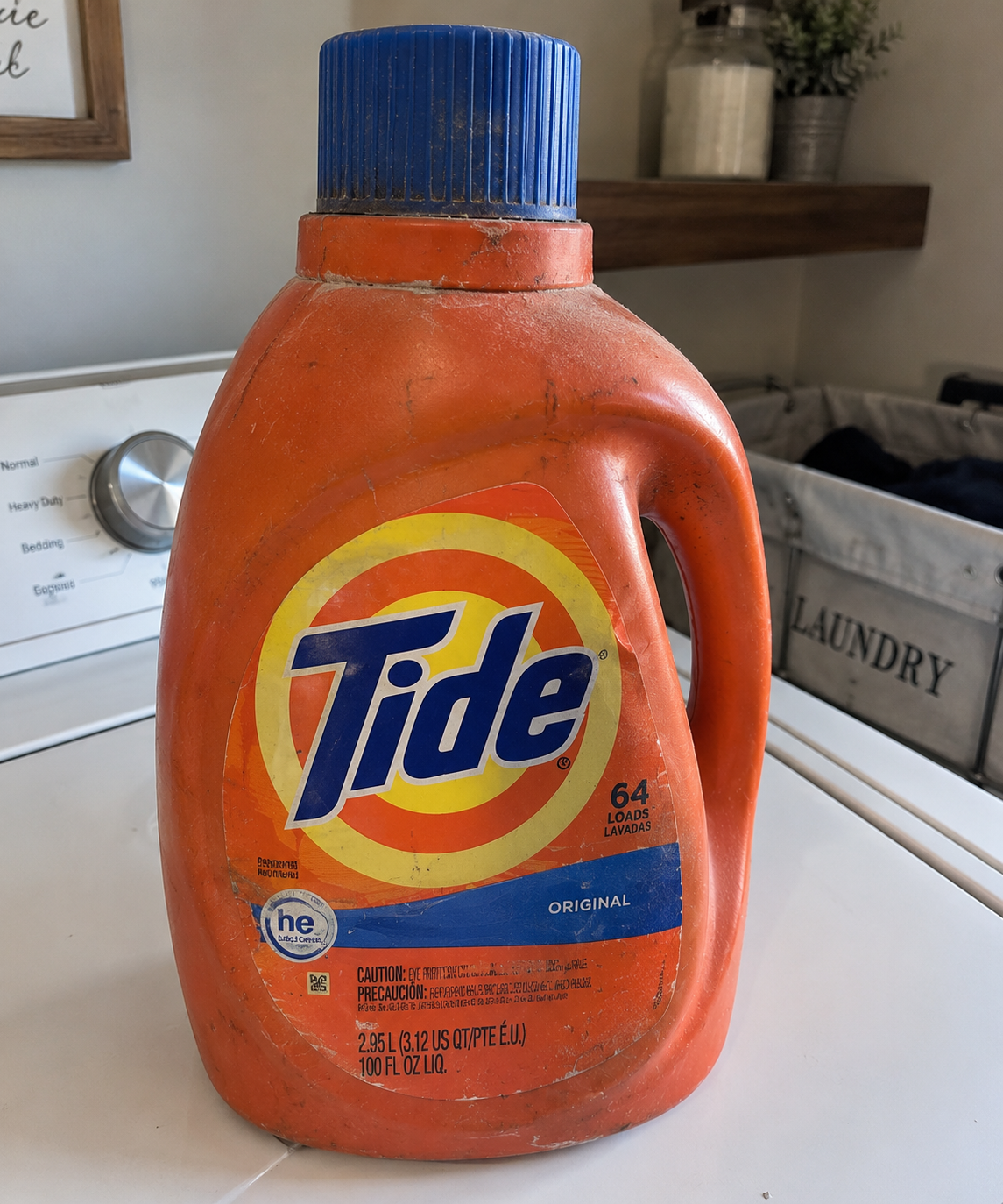
I usually use it if it still looks, smells, pours, and dissolves normally.
I replace it if it has thick chunks, a strange odor, a cracked or leaking container, hardened material, badly separated liquid that will not mix back together, or detergent pods that are stuck together and leaking.
Old detergent may not ruin every load. The bigger risk is wasting time, water, and electricity on laundry that comes out looking clean but still has body odor, greasy marks, or a strange stale smell hiding in the fabric.



Does Laundry Detergent Have an Expiration Date?
Some brands print a date, lot code, or manufacturer information on the bottle. Others do not make the answer nearly that simple.
That is because detergent does not behave like milk or meat. It does not usually become unsafe overnight.
Instead, its ingredients can become less stable over time. Enzymes that help break down stains can lose effectiveness. Fragrance may fade. Liquid ingredients can separate. Thickeners can turn lumpy. Some products may not rinse or dissolve as well after poor storage.
A bottle that is unopened and properly stored will usually last longer than one that has been opened, carried through a hot garage, stored in a freezing shed, or left with the cap loose.
I treat the printed date as a useful warning, not a courtroom verdict. The condition of the product matters too.


How Long Does Laundry Detergent Last?
There is no one answer for every brand and type of detergent, but the storage conditions make a huge difference.
An unopened container kept inside the house is usually in much better shape than one forgotten in an unheated garage.
Once opened, detergent is exposed to air, moisture, temperature swings, and sometimes a cap that gets replaced only halfway because somebody is trying to start the washer before the kids decide to wear every clean shirt in the house.
Here is the practical way I think about it:
- Unopened detergent usually has the best chance of lasting.
- Opened liquid detergent should be checked before use if it has been sitting for a long time.
- Powder detergent can last a very long time when kept dry.
- Laundry pods are especially sensitive to moisture and humidity.
- Homemade detergent may not have the same stability as commercially made products.
The date matters, but storage matters just as much.
What Happens When Liquid Laundry Detergent Gets Old?
Liquid detergent usually gives you clues when it is starting to go downhill.
The first thing I notice is separation. Some separation can be normal after a bottle sits for a while. If you shake it and it returns to a smooth, even consistency, it may still be fine.
The concern is when it stays watery on top, thick and sludgy on the bottom, or full of lumps that refuse to mix back together.
Old liquid detergent may also become:
- Thick and difficult to pour
- Thin and watery
- Gel like or stringy
- Full of flakes or chunks
- Dull in color compared with a fresh bottle
- Strange smelling, sour, rancid, or simply unlike the original scent
- Less effective at removing odor and stains
I do not want to find out after washing a full load of towels that the detergent had lost most of its cleaning power. If I am unsure, I test it on a small load of everyday clothes or cleaning rags first.
That little test is a lot cheaper than rewashing bedding, school clothes, or a favorite shirt with a mystery stain.



Can You Use Separated Laundry Detergent?
Sometimes, yes.
If liquid detergent has separated but mixes back together after a thorough shake, it may still be usable. Let the bottle sit upright for a few minutes afterward so you can see whether it stays blended.
If it immediately separates again, has hard chunks, or will not pour normally, I would not count on it.
The detergent may not distribute evenly through the wash. One load could get too much of one ingredient and not enough of another. That can leave residue, cause poor cleaning, or make the washer dispenser unhappy.
A mildly separated bottle that shakes smooth is worth a cautious test. A bottle that looks like gravy with a science project at the bottom is not where I gamble on laundry day.
Does Powder Laundry Detergent Expire?
Powder detergent can last a long time, especially when it stays dry.
Moisture is the biggest enemy. A box or tub stored in a humid laundry room, damp basement, or open container can absorb moisture from the air and harden into clumps.
A few small soft clumps are not always a disaster. You may be able to break them apart and use the detergent if it still dissolves normally.
Hard chunks are another story. They may not dissolve in cold water, especially in high efficiency machines that use less water. Undissolved powder can leave white residue on dark clothes, get trapped in a dispenser, or end up sitting in the bottom of the washer instead of cleaning anything.
I check powder detergent for:
- Dampness inside the box or container
- Hard clumps that will not break apart easily
- A musty smell
- Evidence of bugs or pantry pests
- Discoloration
- A cardboard box that has softened from moisture
If the powder is dry, loose, and normal smelling, it often remains useful much longer than liquid detergent.



Do Laundry Pods Expire?
Laundry pods can go bad too, and moisture is usually the reason.
Pods are convenient because the detergent is premeasured, but their outer film reacts badly to a damp environment. If the container is left open in a humid laundry room, pods can stick together, soften, leak, or fuse into one colorful detergent brick.
That is not a product I try to rescue.
A pod that has leaked, changed shape, become sticky, or stuck to another pod should be discarded carefully according to the product label. Do not try to pull apart damaged pods with bare wet hands. Their concentrated detergent can irritate skin and eyes.
I also keep pods in their original container with the lid closed tightly and away from children and pets. They can look like candy to a child, which is a terrible design feature for something nobody should ever eat.
A pod that is intact, dry, and separate from the others may still work fine even if it has been stored for a while. The condition matters more than whether it has been sitting in the cabinet since your last big warehouse store trip.
What About Laundry Detergent Sheets?
Laundry detergent sheets are newer than jugs of liquid or boxes of powder, but they have the same basic weakness as pods: moisture.
Sheets can absorb humidity, stick together, curl, become soft, or start breaking down before they ever reach the washer.
If they are dry, separate easily, and still smell normal, they may be fine. If they feel damp, stick together badly, or turn into a compressed paper like mass, I would replace them.
They may still contain detergent, but using a product that cannot dissolve correctly defeats the whole reason you bought a convenient sheet in the first place.



How Can You Tell if Laundry Detergent Has Gone Bad?
I use a simple check before pouring old detergent into a washer.
Check the container first
Look for leaks, cracks, a swollen bottle, a damaged cap, or crusty detergent around the opening.
A leaking bottle may have been exposed to air and contamination for a long time. It can also make a real mess when you pick it up, and laundry detergent somehow spreads farther than any liquid reasonably should.
Look at the product
Liquid detergent should look reasonably smooth after shaking. Powder should be dry and loose. Pods should be intact and separate.
If the product has changed dramatically in texture, do not assume the washer will fix it.
Smell it
Laundry detergent has a recognizable scent, even fragrance free versions. If it smells sour, moldy, rancid, or noticeably strange, I would not use it on clothes.
Try a small test
If the detergent looks mostly normal but is old, I test it with a small load of rags, work clothes, or towels.
I do not test questionable detergent on delicate clothing, expensive bedding, or something I need clean for an event the next morning.
Watch for washer residue
If detergent leaves blobs, streaks, white powder, or greasy feeling residue, stop using it.
A detergent that does not dissolve properly can make clothes feel stiff or itchy and may leave buildup in the dispenser or washer.
Is Expired Laundry Detergent Dangerous?
Old detergent is usually more of a cleaning quality problem than a sudden safety emergency.
However, damaged detergent should still be handled with common sense. Concentrated liquid detergent and pods can irritate eyes and skin. A leaking or swollen container should be kept away from children and pets.
If the detergent is moldy, leaking, badly discolored, or smells foul, I would not use it.
I also would not pour an entire bottle of questionable detergent down the drain just to get rid of it. Follow the label and your local waste guidance if you have a large amount to dispose of.
For a nearly empty bottle that has clearly gone bad, I usually use up the safest possible option only if the product still appears normal. If it does not, I replace it instead of trying to save a few dollars and creating a bigger mess in the washer.

Does Old Detergent Still Clean Clothes?
Sometimes it does. Sometimes it cleans lightly soiled clothes but struggles with sweat, food, grease, pet bedding, work clothes, or towels.
The loss of cleaning power can be hard to notice at first. Clothes may come out smelling strongly of fragrance but still hold onto body odor after they warm up or get damp again.
That is one reason I do not let scent fool me. Perfume can cover a problem better than it solves one.
If laundry keeps coming out with a stale smell, residue, or stains that normally wash out, old detergent is one thing worth checking. The washer itself, water temperature, overloaded loads, fabric softener buildup, and dirty washer parts can also be involved, but old detergent is an easy possibility to rule out.
Can You Use Laundry Detergent After It Freezes?
Freezing can change liquid detergent.
A bottle left in an unheated garage, shed, car, or porch through a hard winter may separate or become unstable. Once it thaws, it may look watery, chunky, or uneven.
I would not assume frozen detergent is ruined immediately. I let it thaw fully at room temperature, then shake it well and inspect it.
If it becomes smooth and normal again, I would test it on a small load before using it on anything important.
If it remains lumpy, separated, thick, oddly colored, or difficult to pour, I would replace it.
Do not heat a sealed detergent bottle aggressively to thaw it faster. A container and hot water situation can turn into a messy chemistry lesson nobody asked for. Slow thawing at room temperature is the safer move.
Can Laundry Detergent Go Bad in the Heat?
Heat can shorten the useful life of liquid detergent and can damage pods or sheets.
A hot garage, attic, shed, vehicle, or utility room can cause ingredients to separate more quickly. Heat can also make containers swell, leak, or become brittle over time.
Laundry detergent is better stored inside the home where temperatures remain fairly steady.
That does not mean it needs a fancy climate controlled shelf. A dry laundry cabinet, closet, pantry, or interior utility area is usually plenty good.
The goal is simple: keep it away from extreme heat, freezing temperatures, and dampness.
The Best Way to Store Laundry Detergent
I try to make detergent storage boring. Boring is good when you are trying to avoid surprise leaks and clumpy laundry products.
Keep liquid detergent tightly sealed in its original bottle.
Store powder detergent in a dry container with a secure lid.
Keep pods and sheets in their original child resistant packaging, with the lid or zipper fully closed.
Avoid storing any type of detergent directly on a cold concrete garage floor if you can help it. Temperature swings and moisture tend to find their way into places where you least want them.
A shelf inside the house is usually better than a hot garage or freezing shed. If you buy detergent in bulk, use the older container first instead of opening three at once and creating a small detergent retirement community in the laundry room.
Can You Mix Old Laundry Detergent With New Detergent?
I would not mix questionable detergent with a fresh bottle just to avoid throwing it away.
If the old detergent has separated badly, smells off, or has changed texture, mixing it into a new bottle does not improve it. It only gives you a bigger bottle of uncertain detergent.
If the old detergent is still smooth, smells normal, and simply has an older date, using it first on ordinary loads is more sensible.
For the same reason, I avoid pouring different formulas together unless the label clearly supports it. Laundry products can contain different ingredients, fragrances, and concentrations. They do not need to become a science fair project in the dispenser.
What if the Detergent Is Thick but Not Expired?
A thick bottle does not always mean the detergent is bad.
Cold temperatures can make liquid detergent thicker. So can normal settling in some products. Let the bottle warm to room temperature and shake it thoroughly.
If it pours and mixes normally afterward, it may be fine.
If it stays gelatinous, contains firm chunks, or will not pass through the cap or washer dispenser, I would not use it.
Forcing thick detergent through a dispenser can create buildup. Then you are left cleaning the washer instead of washing clothes, which feels like the household version of being assigned homework after finishing homework.
What if the Detergent Smells Different?
A noticeably different smell is worth taking seriously.
Some fragrance can fade over time. That alone does not always mean the detergent is bad.
But a sour, musty, rancid, chemical, or moldy smell is different. It may indicate ingredient breakdown, contamination, or a product that has been stored badly.
I do not use detergent that smells genuinely off. Laundry is supposed to come out cleaner, not carry a mystery smell around all day.
Why Your Clothes May Still Smell Dirty After Washing
Old detergent is one possible reason, but it is not the only one.
If clothes come out smelling bad after a wash, I also consider:
- Using too much detergent
- Using too little detergent
- Overloading the washer
- Washing in water that is too cool for the soil level
- Leaving wet laundry in the washer too long
- A dirty washer drum or dispenser
- Towels or athletic clothes holding old odor buildup
- A washing machine drain problem
- Fabric softener residue
Still, detergent is easy to check. If the bottle is old, lumpy, separated, or questionable, replacing it is often simpler than spending another week wondering why clean laundry smells like it lost a fight with a gym bag.
Do Homemade Laundry Detergents Expire Faster?
They can.
Homemade recipes vary widely. Some use dry ingredients and may last well when kept dry. Others include water, soap, fragrance oils, or ingredients that can separate, thicken, or develop problems over time.
A homemade liquid mixture may not have the preservatives and testing behind a commercial detergent. If it changes smell, color, texture, or appearance, I would not use it.
I also label homemade products with the date I made them. That saves the future version of me from trying to remember whether a jar has been on the shelf for two months or since the previous administration.
Frequently Asked Questions
Can I use laundry detergent after the expiration date?
Usually, yes, if it still looks, smells, pours, and dissolves normally.
A date is a reason to inspect it carefully, not an automatic reason to throw it away. If the detergent is separated, clumpy, leaking, or smells strange, replace it.
Does unopened laundry detergent go bad?
It can eventually lose quality, but unopened detergent stored indoors usually lasts longer than opened detergent.
Heat, freezing temperatures, moisture, and damaged packaging can shorten its useful life.
How long does opened liquid laundry detergent last?
It depends on the brand and storage conditions.
Opened detergent kept sealed and indoors may remain usable for a long time. I check it before using if it has been sitting for many months or longer, especially if it was stored in a garage, basement, shed, or laundry area with major temperature swings.
Can old laundry detergent make clothes smell bad?
It can contribute to poor cleaning, which may allow odor to remain in fabric.
However, washer buildup, too much detergent, overloading, damp clothes left too long, and dirty towels can also cause laundry odors.
What happens if you use bad laundry detergent?
The most common result is poor cleaning. Clothes may come out with lingering odor, stains, residue, or a stiff feeling.
Badly clumped powder or thick liquid can also leave buildup in the washer dispenser or on clothes.
Can you use clumpy powder detergent?
Small dry clumps that break apart may still be usable.
Hard, damp chunks are more likely to dissolve poorly and leave residue. I replace powder that has become heavily compacted or smells musty.
Do laundry pods expire if they are unopened?
They can lose quality over time, especially if stored in heat or humidity.
If unopened pods are dry, intact, and separate, they may still work. If they are leaking, sticky, soft, or fused together, discard them according to the label.
Can you use laundry detergent that froze?
Maybe.
Let it thaw completely, shake it thoroughly, and inspect the consistency. If it returns to a smooth, normal liquid, test it on a small load first. If it stays separated or lumpy, replace it.
Is it okay to store laundry detergent in the garage?
It is not ideal, especially in places with hot summers or freezing winters.
A dry indoor cabinet, closet, or laundry shelf gives detergent a better chance of staying stable and usable.
When I Toss It and Buy a New Bottle
I replace detergent when it has clearly changed in a way I would not trust on clothes.
That includes detergent that smells sour or moldy, has hard chunks, will not mix back together, leaks, has damaged pods, or leaves residue after a small test load.
I am all for using what I already have. But laundry detergent is supposed to save work, not create a second wash cycle and a pile of clothes that smell like they never met soap.
When it looks normal, smells normal, and performs normally, I use it. When it does not, I consider the old bottle finished and move on without feeling guilty about it.
Calder Voss writes about practical home fixes, garage projects, and the everyday household questions that usually show up five minutes before a project starts.