A well pump clicking noise can be completely normal if you hear one solid click when the pump starts and another when it stops. The trouble starts when it clicks over and over, clicks rapidly without the pump running properly, or clicks at times when nobody is using water.
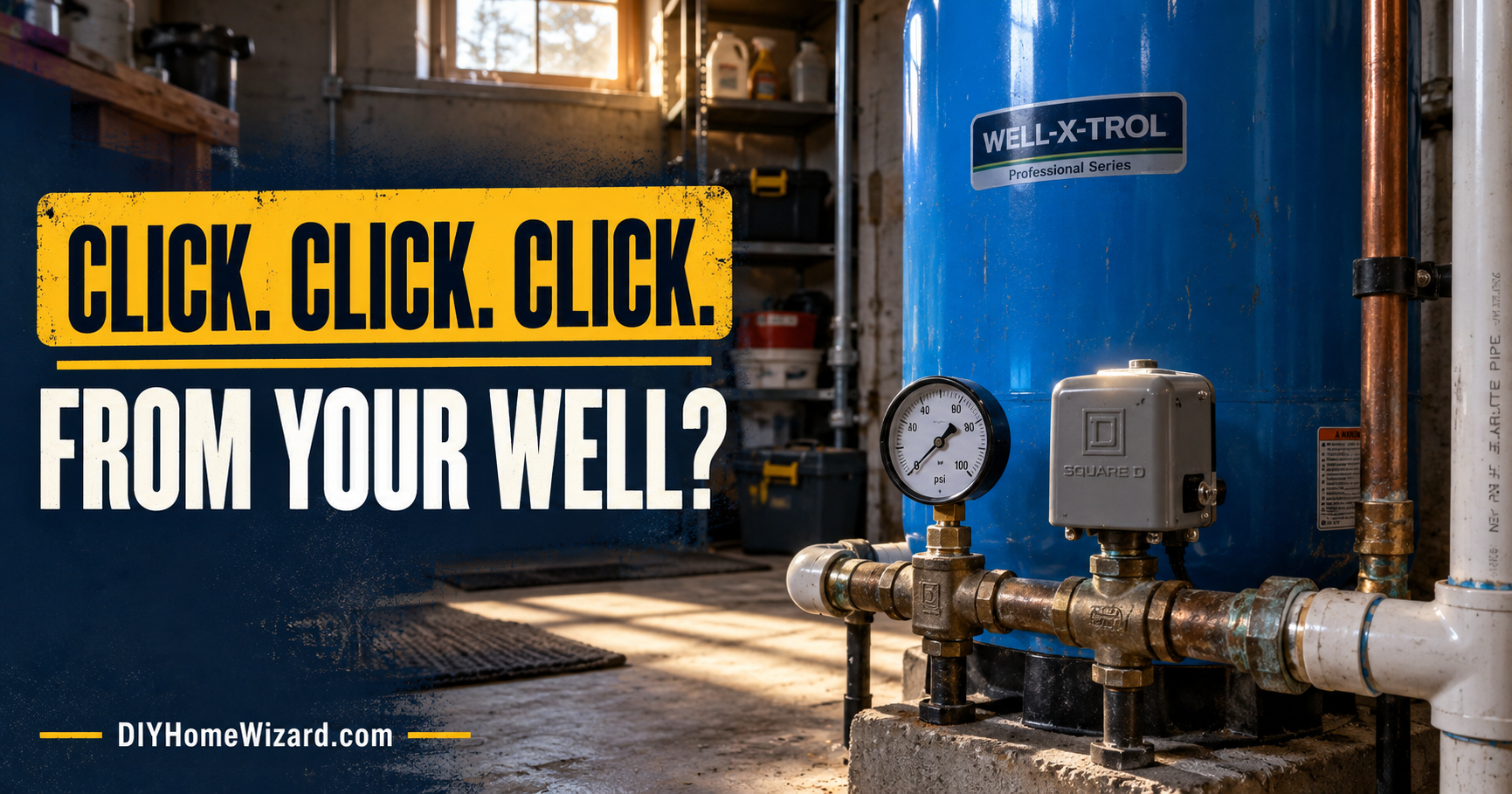
In most cases, the click is coming from the pressure switch near the pressure tank, not from the pump deep in the well. That little switch tells the pump when to turn on and off. When the system is healthy, it does its job quietly enough that nobody thinks about it.
When it starts clicking constantly, though, it is usually trying to tell you something.
The big question is whether you are hearing a normal pump cycle, rapid short cycling, electrical chattering, or a pump that is trying and failing to start. Those noises sound similar at first, but they point to very different problems.
When a Well Pump Click Is Normal
A normal well system often makes two noticeable clicks during a complete cycle.
The first click happens when water pressure falls to the pressure switch’s lower setting. That click tells the pump to start.
The second click happens when the pump has restored pressure to the upper setting. That click tells the pump to stop.
On a common 40 and 60 PSI system, the pump may click on around 40 PSI and click off around 60 PSI. A 30 and 50 system follows the same basic idea at lower pressure.
You may hear this while taking a shower, filling a bathtub, running the washing machine, or watering outside. That is ordinary well system behavior.
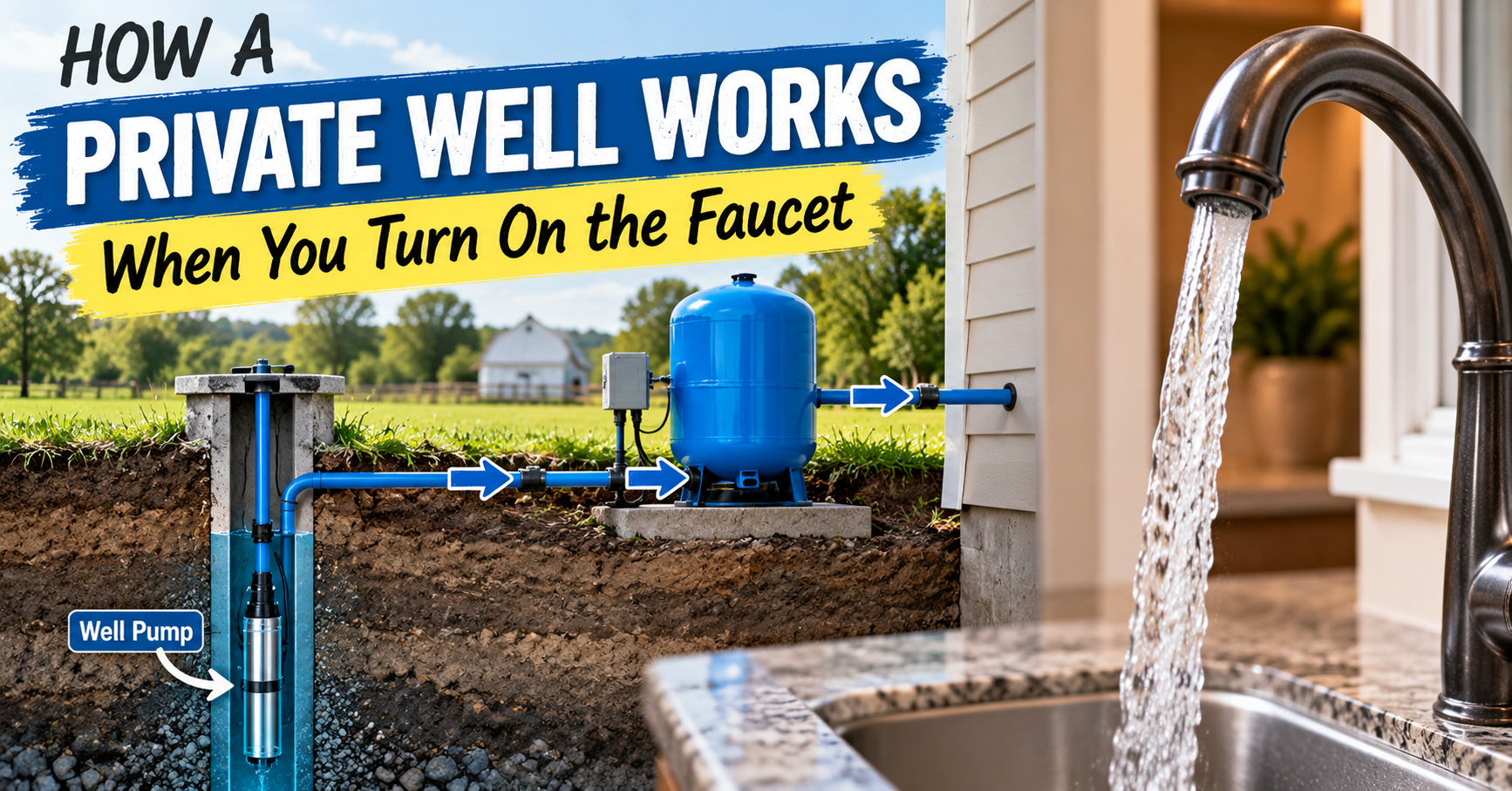
If you are new to private wells, how a private well works when you turn on the faucet makes the whole pump, tank, and pressure switch cycle much easier to picture.
One clear click when the pump starts and another when it stops is fine. Ten clicks in a minute while someone washes their hands is not.


The Quick Way I Separate Normal Clicking From a Problem
I listen for three things:
- How often the clicking happens
- Whether the pump is actually running
- What the pressure gauge does during the clicking
A normal system usually makes one click, runs for a while, then makes another click and stays quiet until water is used again.
A troubled system may click every few seconds. It may click rapidly without the pump running. It may click, hum, and then trip the breaker. Or it may click at the same time every night when nobody is touching a faucet.
The pressure gauge gives the biggest clue. If the needle is falling and rising through a normal range, the click may simply be the switch doing its job. If the needle is bouncing wildly, stuck, or barely moving while the clicking continues, there is more to investigate.


Rapid Clicking Usually Means Rapid Cycling
The most common cause of a well pump clicking repeatedly is short cycling.
Short cycling means the pump turns on and off far more often than it should. Instead of running for a sensible amount of time, it may run for only a few seconds, shut off, and restart almost immediately.
That repeated starting and stopping is hard on the pump motor, pressure switch, and electrical components. It also makes the house sound like somebody is flicking a light switch in the basement every few seconds.
A failing pressure tank is often behind this problem.
The pressure tank stores a usable amount of water under pressure. It gives you a cushion so the pump does not need to run every time someone fills a cup or rinses a spoon.
When the tank loses its air charge, becomes waterlogged, or develops a failed bladder, it cannot store enough water. Pressure drops almost instantly when a faucet opens. The switch clicks on. Pressure rises quickly. The switch clicks off. Then the cycle starts all over again.
The switch makes the noise, but the tank may be the real culprit.
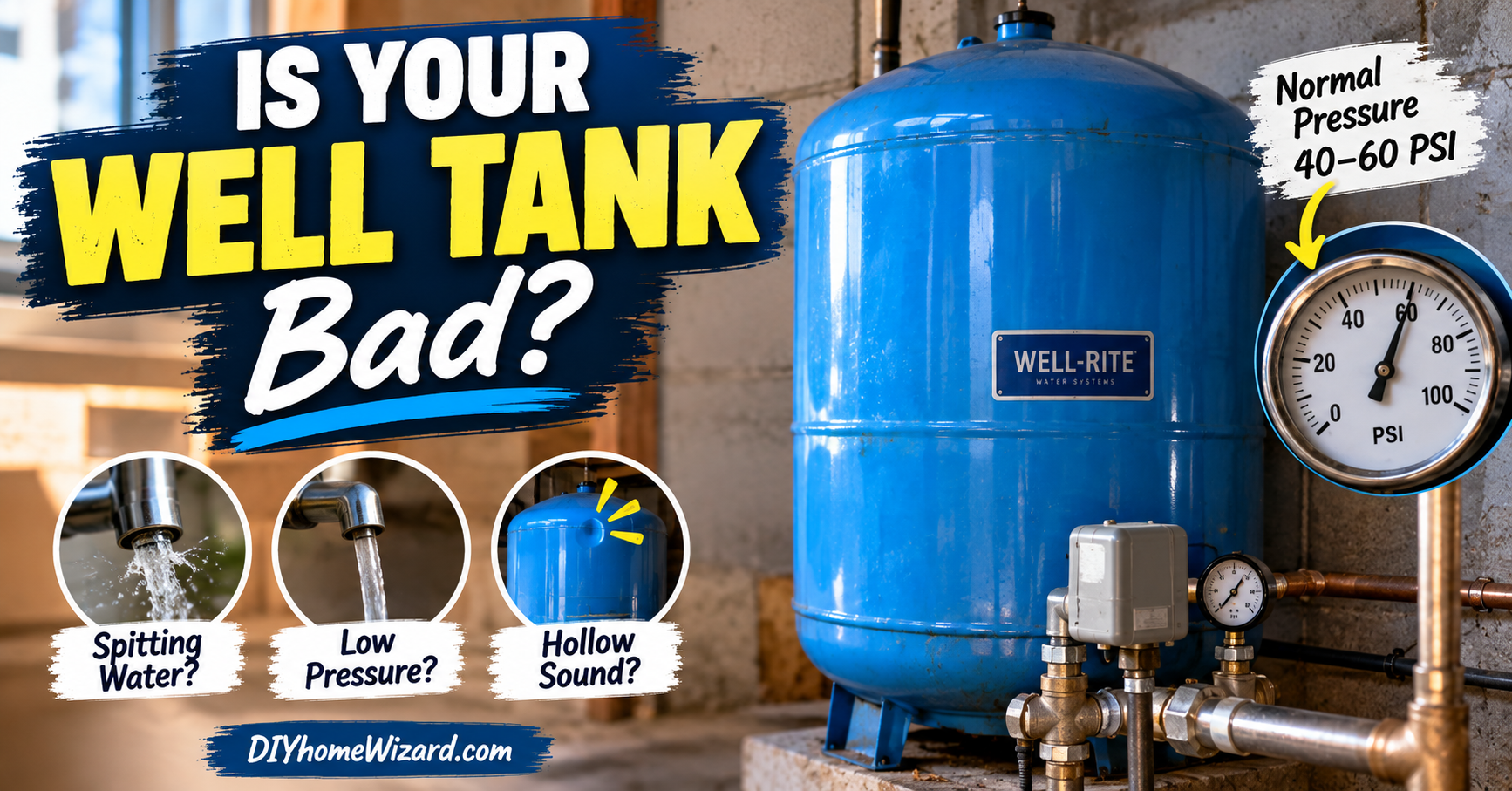
If your pump is clicking on and off frequently, compare what you are seeing with the warning signs in how to tell if a well pressure tank is bad.
What Short Cycling Looks Like in Real Life
Short cycling has a pretty recognizable pattern once you know what to look for.
You might open a faucet and hear the pump start almost immediately. Then, before you have done much more than wet your hands, it shuts off. A moment later, it starts again.
In some homes, the pressure in the shower surges between strong and weak. In others, the lights may dim slightly every time the pump starts. You may hear a click from the pressure switch, followed by the pump, then another click and silence.
The pressure gauge often moves up and down faster than it should.
A healthy pressure tank should let you use a reasonable amount of water before the pump starts. The exact amount depends on tank size and settings, but a pump should not need to start every few seconds during ordinary water use.
A short cycling problem rarely gets better on its own. It is like a vehicle that keeps starting and stopping at every driveway. Eventually, something wears out from doing more work than it was built to do.



The Pressure Switch Can Click Even When the Pump Is Not Running
Sometimes you hear the pressure switch click, but the pump does not start.
That changes the diagnosis.
The pressure switch may be responding correctly to low pressure. It closes its contacts and tries to send power to the pump. But the pump may not start because of a problem elsewhere in the electrical system.
Possible causes include:
- A tripped breaker
- A loose wire
- Burned pressure switch contacts
- A failed pump control box
- A failed start capacitor on some pump systems
- Damaged wiring down the well
- A seized pump motor
- A pump that is stuck because of sand or mechanical damage
This is where people often say, “The well pump is clicking,” when the actual sound is the pressure switch trying to start it.
The click means the switch may be receiving the signal to start. It does not prove the pump is receiving power or able to run.
If the switch clicks but there is no water, no pump sound, and no pressure rise, I do not keep cycling it over and over. Repeated attempts can overheat components or trip the breaker.
A Rapid Chatter Is Different From an Ordinary Click
A pressure switch should make a firm, definite click.
Rapid chattering sounds different. It may sound like buzzing, snapping, or a frantic series of tiny clicks. It can happen when the switch contacts repeatedly open and close instead of moving cleanly.
That is not normal.
Chattering can damage the electrical contacts because every tiny opening and closing can create heat and arcing. It can also make the pump start and stop in a way that shortens its life.
A chattering pressure switch can be caused by:
- A failing pressure switch
- Loose electrical connections
- Rapid pressure changes from a bad pressure tank
- A clogged pressure sensing connection
- A damaged switch mechanism
- A pump system that cannot stabilize near the switch setting
If I hear true electrical chatter, I do not stand around listening to it perform. I shut off the pump breaker and have the system checked.
A clean click is a normal signal. A buzzing, sizzling, or rapidly chattering switch is a warning.



Why a Bad Pressure Switch Makes Clicking Noises
The pressure switch is one of the first parts I inspect when the clicking becomes strange.
It has electrical contacts inside that open and close as water pressure changes. Over time, those contacts can burn, pit, stick, corrode, or weld together.
A bad switch may click late, click repeatedly, fail to click at all, or click without delivering reliable power to the pump.
It can also get confused when rust or mineral buildup clogs the small opening that carries water pressure to the underside of the switch. The pressure in the plumbing may change normally, but the switch is receiving a delayed or inaccurate signal.
That can make the pump start too late, stop too late, or cycle unpredictably.
I would not remove the switch cover with power on. Well pump circuits commonly use 240 volts, and the exposed terminals deserve real caution.
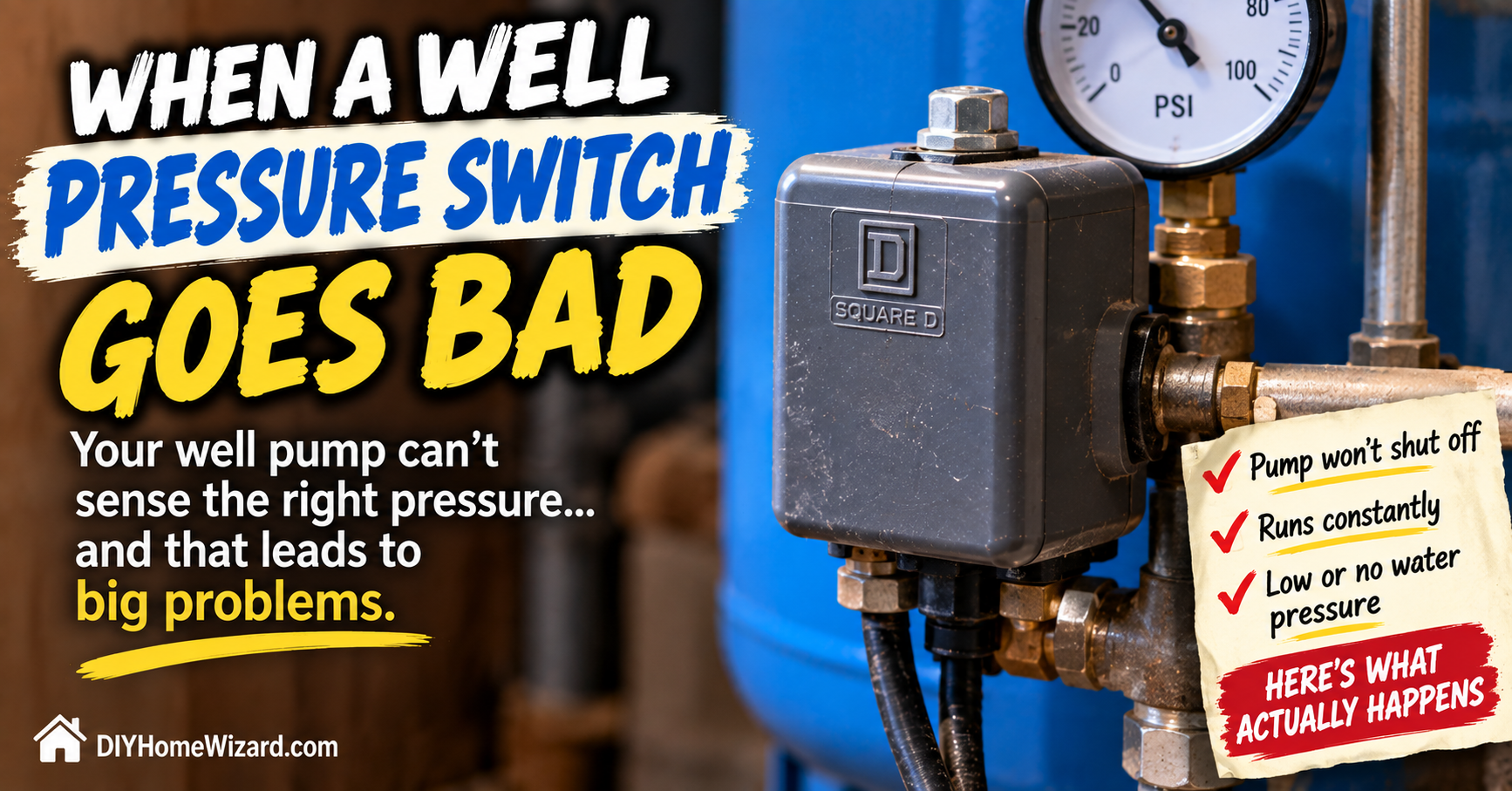
For a fuller breakdown of stuck contacts, clogged ports, and symptoms that point to the switch itself, read what happens when a well pressure switch goes bad.
A Stuck Pressure Gauge Can Hide the Whole Story
A pressure gauge that does not move can make clicking noise diagnosis much harder.
You may hear the pressure switch click every few seconds while the gauge calmly sits at 50 PSI. That can lead you to think the switch is broken, when the real problem is a gauge that has stopped reporting pressure.
A stuck gauge can also hide low pressure, excessive pressure, or a tank that is cycling rapidly.
Before I change settings or replace parts, I make sure the gauge tells the truth. I open a faucet and watch whether the needle moves down. Then I let the pump refill the tank and watch whether it moves up again.
If the needle stays in one spot through the whole cycle, I compare it with another gauge on a hose bib or faucet.
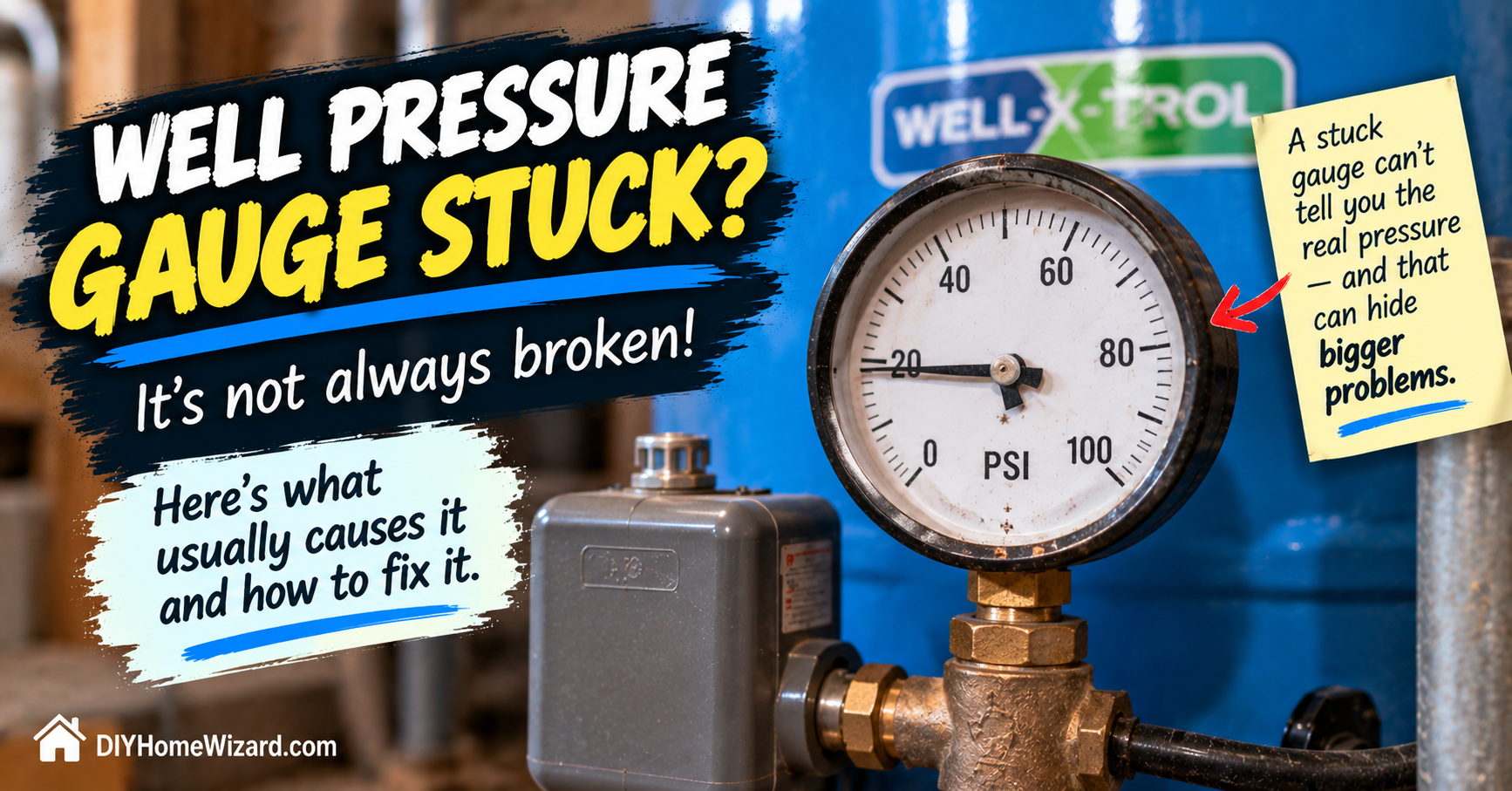
My guide to a stuck well pressure gauge and how to check it explains why that little gauge can become the most misleading part of a well system.
Clicking When Nobody Is Using Water
A well pump should not repeatedly start when every fixture is off.
One occasional cycle can happen if a toilet slowly leaks, an ice maker refills, a water softener regenerates, or somebody forgets an outside hose. But a pump starting over and over during the night means water or pressure is leaving the system somewhere.
The cause may be inside the house, outside at a hydrant, in a water treatment system, or between the well and pressure tank.
Common causes include:
- A running toilet
- A leaking faucet
- A leaking outside hydrant
- A water softener using water unexpectedly
- A failed check valve
- A leak in the well line
- A leaking pressure tank fitting
- A pressure tank problem that causes rapid cycling
The pressure switch does not know why pressure is falling. It only knows it has reached its cut in point and needs to start the pump.
I start by making sure all fixtures are off. Then I watch the pressure gauge. If pressure gradually falls with no water use, the system is losing water or pressure somewhere.
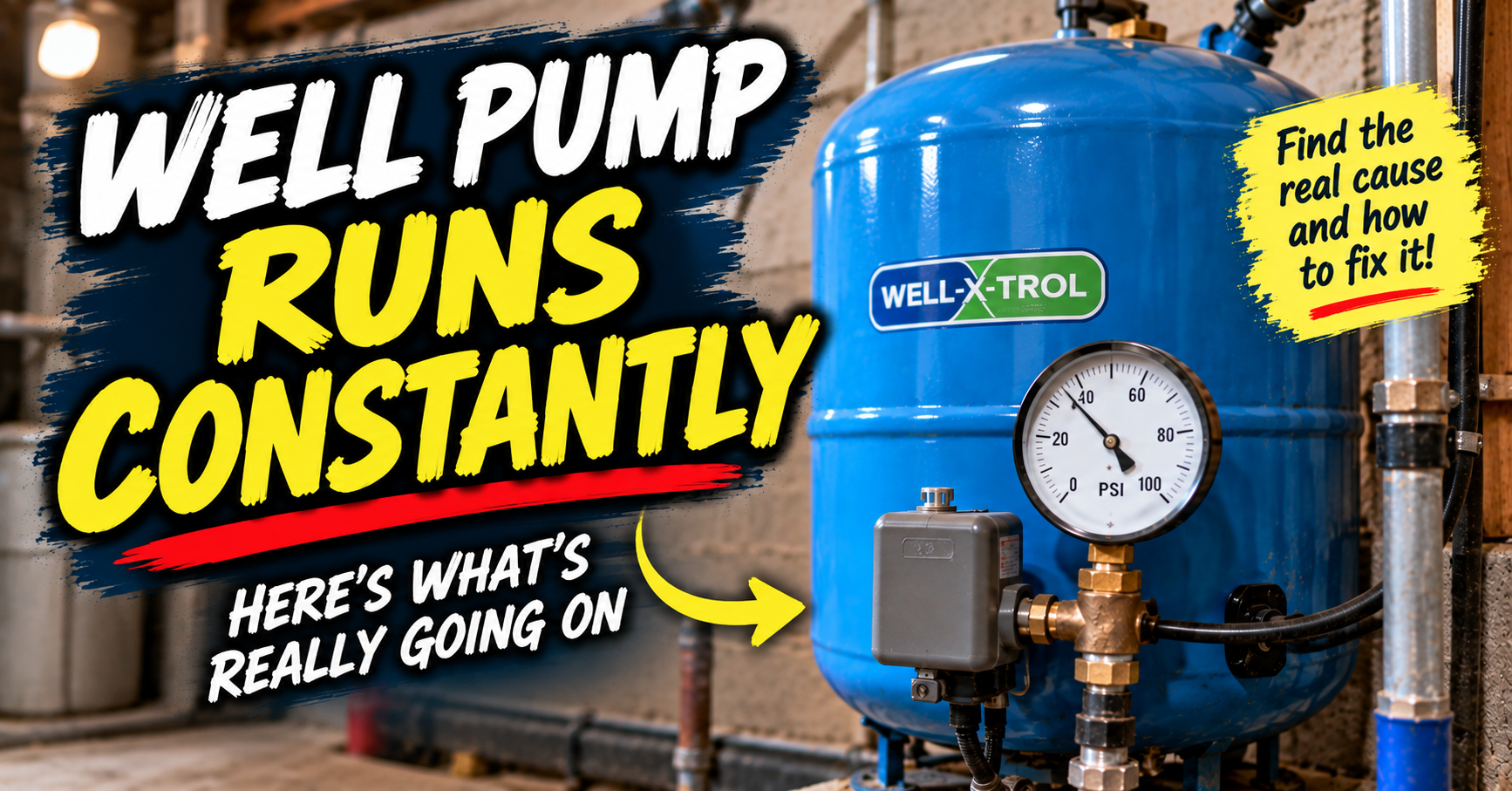
A pressure drop that happens overnight is particularly frustrating because everything seems normal while you are awake. If that is your pattern, why a well loses pressure overnight can help you narrow down the likely causes.
The Pump May Click Because It Is Running Out of Water
A low yielding well can create strange cycling and clicking too.
When the water level in the well drops too far, the pump may not receive enough water to produce normal pressure. The pump can run longer than usual, pressure may rise slowly, and the pressure switch may cycle in unusual ways as the system struggles to recover.
This is more likely after heavy water use, during a dry spell, while filling a pool, running irrigation, or when multiple appliances use water at once.
A low water situation does not always mean the well is permanently dry. It may mean demand is temporarily exceeding what the well can provide.
The important thing is not to let the pump run endlessly while it cannot build pressure. Some systems have pump protection devices, but many older systems do not.
If water output drops sharply after heavy use and then returns after the system rests, that deserves investigation before the pump is allowed to keep fighting for water.


A Clicking Pump That Trips the Breaker Needs Attention
If the pressure switch clicks, the pump tries to start, and then the breaker trips, stop resetting it over and over.
A breaker trips because it is protecting the circuit from a problem. Repeatedly forcing it back on can make the situation worse.
Possible causes include:
- A shorted wire
- Damaged pump cable
- A failing motor
- A locked pump
- A faulty control box
- Incorrect breaker or wiring size
- Water entering electrical connections
- A pressure switch with damaged contacts
Sometimes the pump may hum for a moment before the breaker trips. Other times, you may only hear the switch click and then notice the lights dim.
This is not a good homeowner guessing game. Electrical testing needs to be done safely, and the pump wiring may run underground and down the well.
I would turn the breaker off and call a qualified well professional or electrician rather than letting a breaker become the system’s daily on and off button.
Why the Pressure Tank Matters More Than People Think
The pressure tank does not pump water. It does something almost as important. It gives the pump a break.
Without a healthy tank, every tiny water demand can trigger a pump cycle.
That means more clicking, more motor starts, more contact wear, and more chances for a small problem to become an expensive one.
The tank needs the correct air charge to work properly. It also needs an intact bladder or diaphragm, depending on the style of tank.
Checking air pressure is not the same as reading water pressure. The water pressure must be fully relieved, and the pump power must be off before checking tank precharge at the air valve.
A common setup uses a tank precharge about 2 PSI below the pressure switch cut in setting. That means a 40 and 60 system often uses around 38 PSI of air in the tank when empty of water.
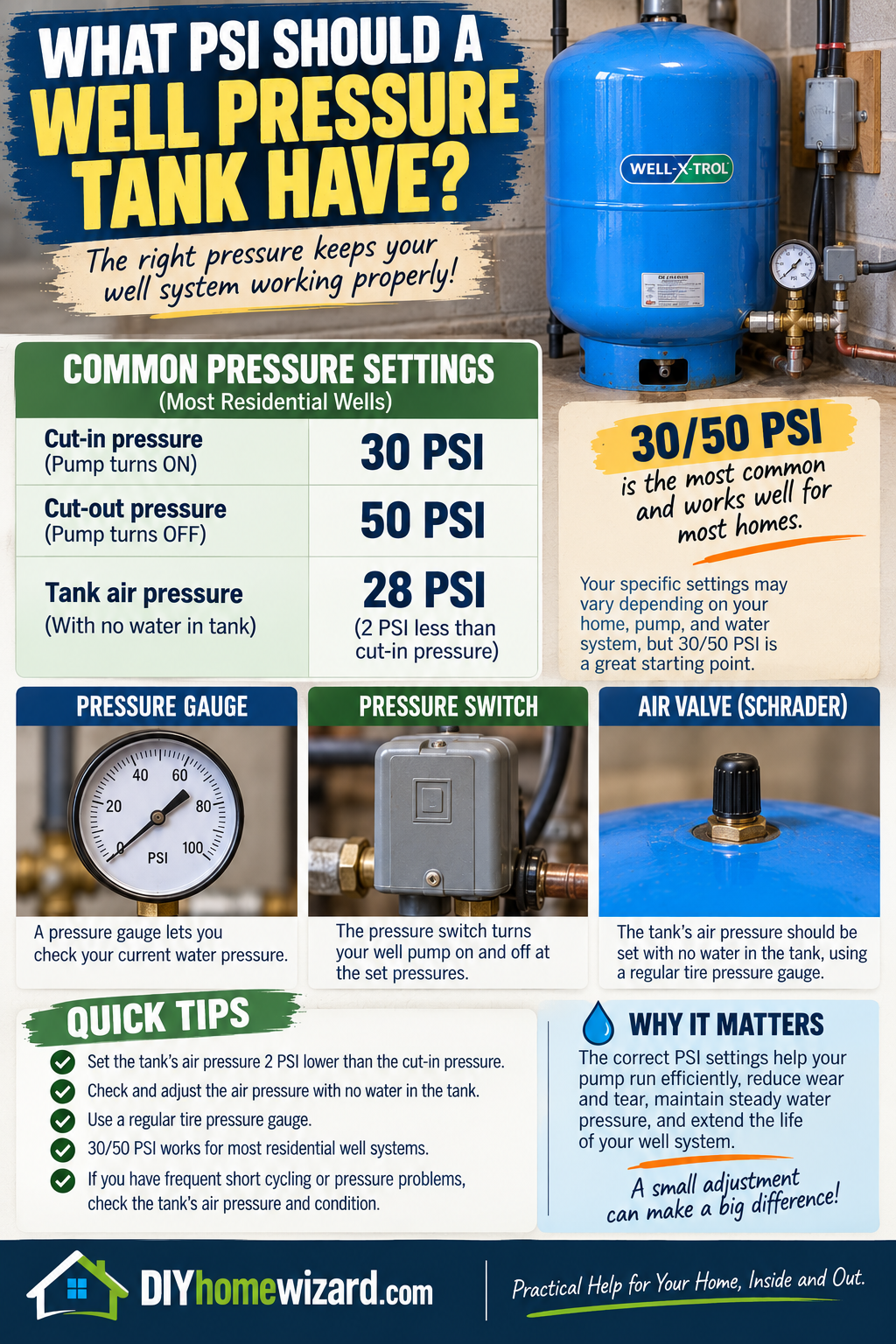
For the step by step explanation, see what PSI a well pressure tank should have. An incorrect tank charge can cause short cycling that sounds exactly like a pressure switch problem.
How Often Should a Well Pump Normally Click?
There is no single perfect number because every home uses water differently.
A family taking showers, doing laundry, running the dishwasher, and filling water bottles will naturally trigger more pump cycles than a vacant house.
What I look for is whether the pump has a reasonable run time and whether it stays off for a while after pressure has been restored.
During normal use, it may run while water is flowing and then run a little longer to refill the pressure tank after the faucet closes. That is expected.
What is not expected is a pump that clicks on and off every few seconds, runs every few minutes with no water use, or needs to start for every small task.
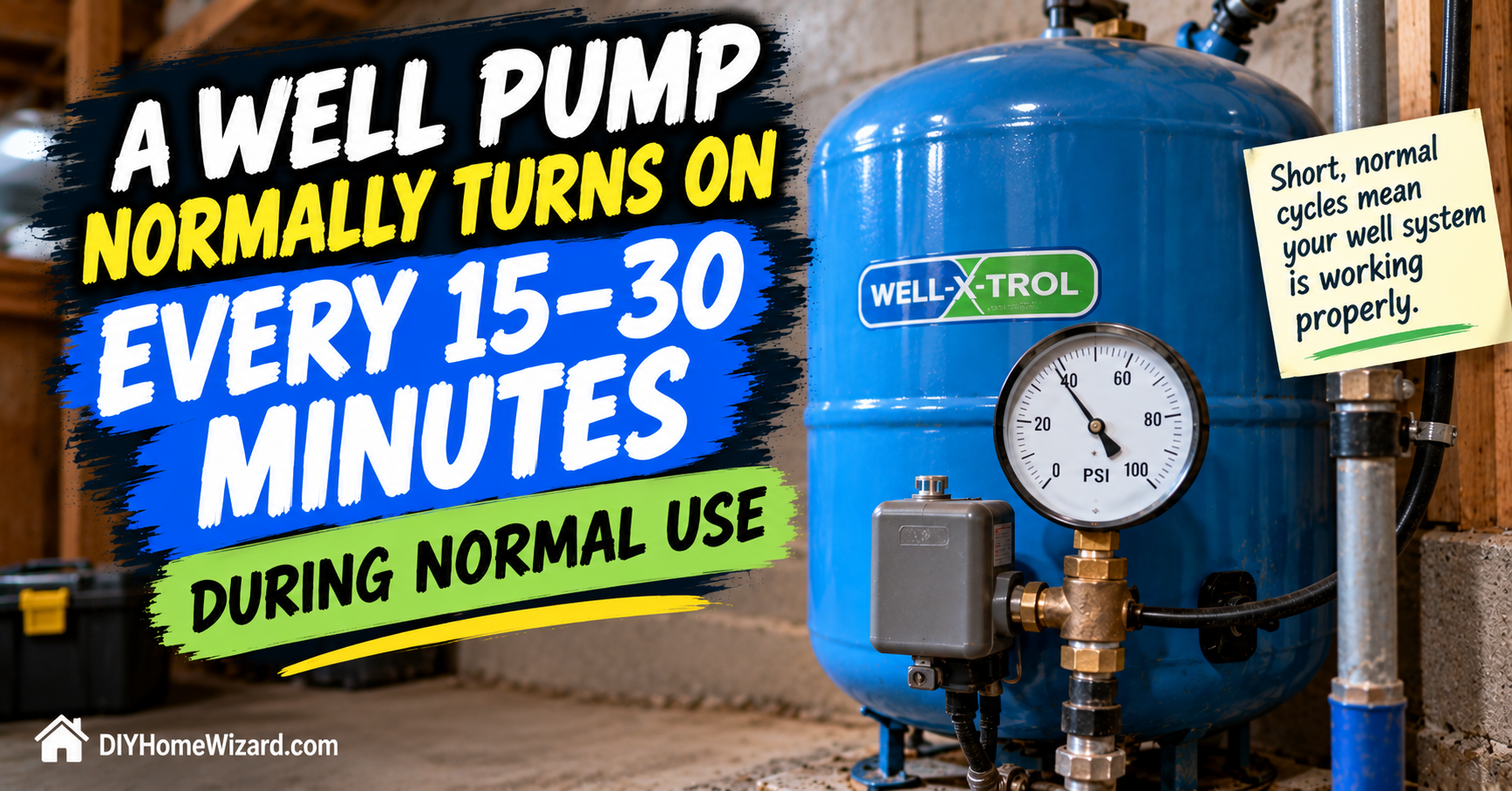
If you are trying to decide whether your system is acting normal or cycling too much, how often a well pump should turn on during normal use gives a better baseline.
What I Check Before Calling Someone
I do not open electrical boxes or start turning pressure switch adjustment nuts just because I hear clicking. But there are several safe observations that make diagnosis much easier.
First, I listen to the timing.
Does it click once before the pump starts and once when it stops? Or does it click repeatedly?
Next, I look at the pressure gauge.
Does pressure steadily fall when water is used and rise when the pump runs? Or is it bouncing quickly, stuck, or failing to rise?
Then, I check obvious water use.
A running toilet, water softener, outdoor hose, or automatic livestock waterer can keep a pump cycling while everyone believes the house is quiet.
I also look around the pressure tank for puddles, dripping fittings, rust, or a pressure relief valve that is leaking.
Those observations do not repair the system, but they keep you from spending money on the wrong part.
What Not to Do When the Switch Keeps Clicking
There are a few things I avoid.
I do not keep resetting a tripped breaker.
I do not leave a pump running constantly when it cannot build pressure.
I do not adjust a pressure switch without a reliable pressure gauge.
I do not hold pressure switch contacts closed with a screwdriver or other metal object.
I do not work inside a live pressure switch enclosure.
I do not assume a clicking switch needs replacement before checking the pressure tank and pressure gauge.
A pressure switch is not complicated, but it is connected to water pressure and high voltage. That combination deserves patience.
When the Clicking Means You Should Shut the Pump Off
I would shut off the pump breaker and get help if I notice any of these signs:
- The switch is buzzing, sizzling, smoking, or smells burned.
- The pump will not stop after reaching normal pressure.
- The breaker trips repeatedly.
- Water is leaking onto the pressure switch or electrical wiring.
- The pump runs but pressure does not rise.
- The system has no water and repeated cycling is not restoring it.
- The pressure gauge climbs above the normal shutoff setting.
- The switch contacts appear melted, blackened, or stuck together.
A normal well system can make some ordinary mechanical noise. An electrical smell, visible arcing, or breaker trip is not ordinary noise.
Frequently Asked Questions
Is it normal for a well pressure switch to click?
Yes, one click when the pump starts and another when it stops is normal.
Repeated clicking, rapid chatter, clicking with no pump operation, or clicking every few seconds should be investigated.
Why does my pressure switch click every few seconds?
The most common cause is a pressure tank that has lost its air cushion or has a failed bladder. This causes pressure to rise and fall too quickly, forcing the pump to short cycle.
A faulty pressure switch, clogged sensing port, or system leak can also cause repeated clicking.
Why does my well pump click but not start?
The pressure switch may be calling for the pump, but the pump may not be receiving power or may not be able to start.
Possible causes include damaged wiring, a failed control box, burned contacts, a tripped breaker, or pump motor failure.
Why does my well pump click at night?
The system may be losing water or pressure while the house is quiet. Check for running toilets, dripping fixtures, leaking hydrants, water treatment equipment, and plumbing leaks.
A pressure tank problem can also make the pump cycle more often than it should.
Can a bad pressure tank make a clicking noise?
Yes. The tank itself usually does not click, but a bad tank can cause rapid pressure changes. The pressure switch responds by clicking the pump on and off repeatedly.
Can a clogged filter cause a clicking well pump?
A clogged filter can reduce water flow, but it does not usually cause rapid pressure switch clicking by itself.
It can contribute to pressure problems, especially if it is severely restricted. The gauge behavior and pump cycle will help show whether the filter is part of the problem.
Why does my pump click once but water pressure stays low?
The pump may be running but unable to build enough pressure. A weak pump, low water level, leak, clogged intake, failed check valve, or restriction can all cause this.
A stuck pressure gauge can also make the pressure reading unreliable, so confirm the gauge first.
Can I replace a pressure switch myself?
Some homeowners can replace one safely, but it involves electrical wiring and a pressurized plumbing connection. The pump breaker must be off and the circuit verified dead before touching any wires.
If you are not fully comfortable with that process, a well professional or electrician is the right call.
The Sound Is a Clue, Not the Diagnosis
A well pump clicking noise is often the pressure switch doing its normal job.
The difference between normal and trouble is the pattern. One click on and one click off during a regular pump cycle is expected. Repeated clicking, buzzing, breaker trips, no water, or wildly changing pressure points to a system that needs attention.
I start with the simplest clues: the pressure gauge, the timing of the clicks, whether the pump runs, and whether water is being used somewhere in the house.
That approach usually tells me whether I should look at the tank, the switch, a leak, the electrical system, or the pump itself. It also saves me from replacing the loudest part just because it is the part making all the noise.
Calder Voss writes about private wells, household water systems, and the practical lessons that become obvious only after a repair has already interrupted dinner.