
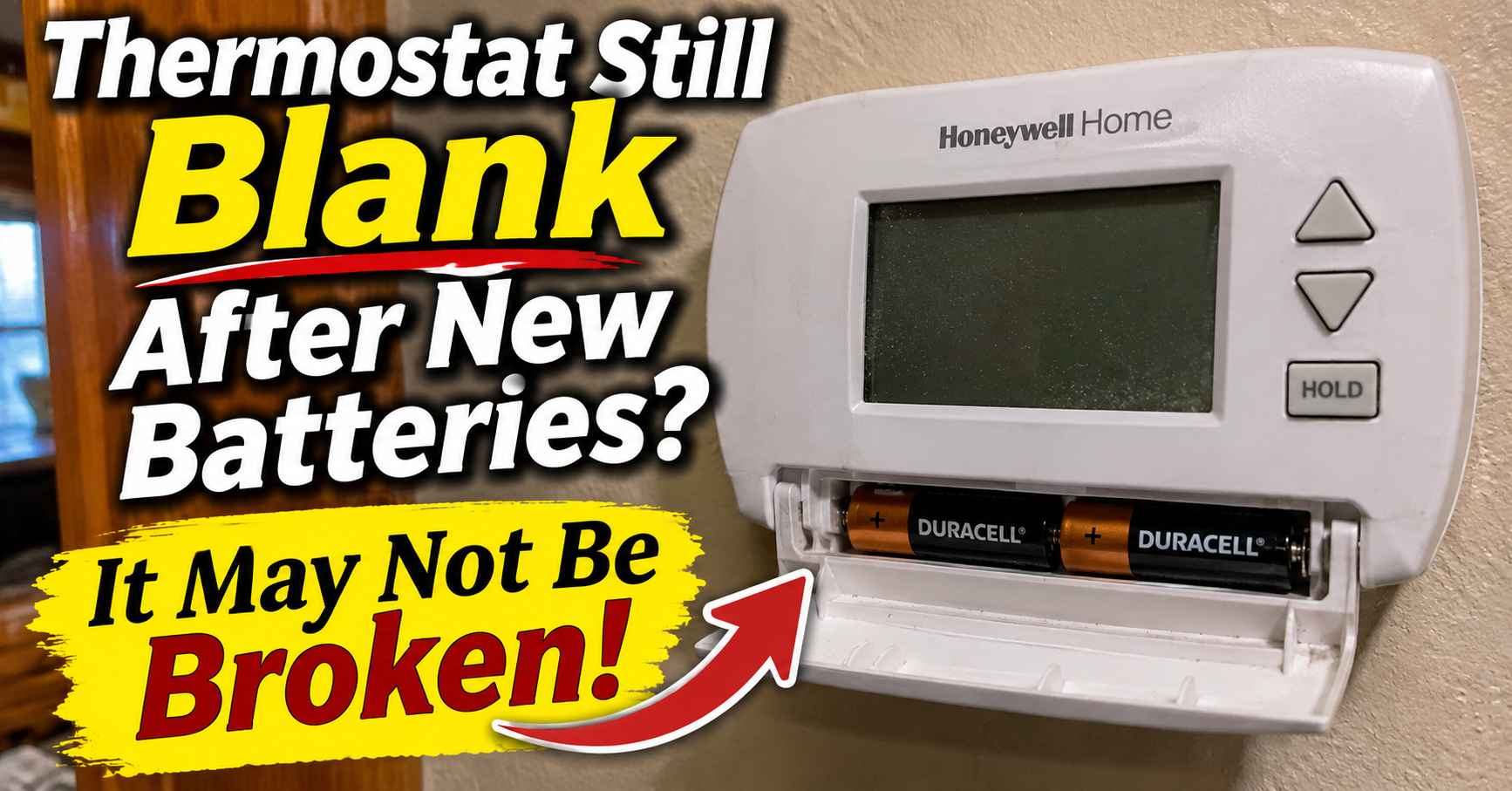
There is a special kind of irritation that comes from changing the thermostat batteries, snapping it back on the wall, and seeing the exact same blank screen staring back at you.
Most people assume the thermostat itself just died. Sometimes that is true. But a thermostat that stays blank after fresh batteries can also be telling you it has lost power from the heating and cooling system.
The good news is that there are a few simple things worth ruling out before buying a replacement thermostat or calling for service.
Make sure the new batteries are actually the problem
It sounds obvious, but I would still start here because batteries can be installed backward, a battery can be weak right out of the package, or the contacts can be dirty enough that the thermostat never gets a solid connection.
Take the batteries back out and look closely inside the compartment.
Check for white or greenish crust on the metal contacts. That is corrosion, and it can keep the batteries from doing their job even when they are brand new. A dry cloth or cotton swab can remove light dust. If there is heavy battery leakage or the springs are badly corroded, replacing the thermostat is usually the more sensible move.
Also make sure the thermostat uses the type of batteries you installed. Many take alkaline AA or AAA batteries, but not every wall thermostat works the same way.


Some thermostats only use batteries as backup
This is where a lot of homeowners get thrown off.
Your thermostat may have batteries, but those batteries may only save the time and settings during a power outage. The screen itself can still depend on power coming from the furnace, air handler, or HVAC control board.
So if the thermostat stays blank after new batteries, the real issue may be that the heating and cooling equipment is not sending low-voltage power to it.
That is why a thermostat can seem like the problem when it is really just the first thing that noticed something farther down the line.


Make sure it is clicked firmly onto its wall plate
Many thermostats pull straight off the base mounted to the wall. When you put the front piece back on, it has to seat correctly against the contacts.
If it is even slightly crooked or not fully snapped into place, the display may stay dark.
Take it off again, line it up carefully, and press it back into place without forcing it. If the screen flickers or turns on when you press one side, the connection may be loose or the wall plate could be damaged.
I would not start bending terminals, pulling wires, or poking around behind the thermostat while the system has power. A simple loose fit is one thing. Damaged wiring is another.
Check the furnace or air-handler switch
Many homes have a regular-looking light switch near the furnace, air handler, or indoor HVAC equipment. It is often called a service switch.
Someone may have bumped it off without realizing what it controls.
If that switch is off, the thermostat may lose power. The furnace or air handler may look completely dead too.
Check that it is turned on, then give the system a few minutes. If the thermostat comes back to life, you have likely found the issue without spending a dime.
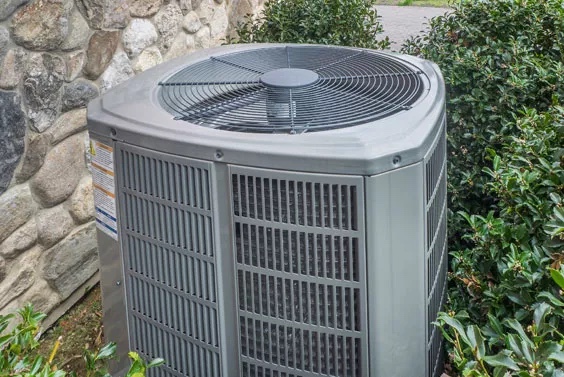
This is also a good reminder that basic home HVAC maintenance is more than changing a filter once in a while. Knowing where the shutoffs, breakers, filter slot, and drain line are makes small problems much less mysterious.



Look for a tripped breaker
Your heating and cooling system may use more than one breaker.
There can be one for the outdoor AC or heat pump, another for the furnace or air handler, and sometimes a separate breaker for equipment in an attic, garage, basement, or crawlspace.
Go to the electrical panel and look for a breaker that is sitting halfway between on and off. That is usually a tripped breaker.
Reset it by moving it firmly all the way off first, then back on once.
If it immediately trips again, do not keep resetting it. A breaker that trips repeatedly is doing its job by warning you about a fault. That is the point where I would stop and call an HVAC or electrical professional.
A clogged drain can shut off the system
This surprises people because a drain problem does not sound like it should blank out a thermostat.
High-efficiency furnaces, air conditioners, and heat pumps can have a safety switch on the condensate drain system. If water backs up because the drain line is clogged, that switch may shut down the equipment to keep water from overflowing into the house.
When that happens, a thermostat that relies on HVAC power can go blank.
You may notice water around the indoor unit, a wet drain pan, a musty smell, or a system that quit after running normally during humid weather.
Do not bypass a float switch just to make the system run. The switch may be preventing a soaked ceiling, flooded closet, or damaged furnace.


The furnace door may not be fully closed
Many furnaces have a safety switch behind the access panel. When the panel is removed, the furnace shuts off for safety.
If the panel is loose, crooked, or not seated all the way after changing a filter or looking inside, that switch may not engage. The furnace will not run, and the thermostat can lose its power source.
This is an easy thing to check. Remove the panel, line it up carefully, and put it back on securely.
Do not tape down or bypass the safety switch. If the door will not stay in place, there may be a reason it is not fitting correctly.
A blown low-voltage fuse can leave the thermostat dead
Inside many furnaces and air handlers is a small low-voltage fuse that protects the thermostat wiring.
A short in the thermostat wire, a bad contactor, damaged outdoor-unit wiring, or an installation mistake can blow that fuse. When it does, the thermostat may go blank even though the house still has power and the furnace breaker is on.
This is especially common after someone installs a new thermostat, changes thermostat wiring, does work near the outdoor unit, or has a pet chew a wire outside.
The fuse itself may be inexpensive. Finding out why it blew is the important part.
If you are comfortable identifying your exact furnace model and following its manual, you may be able to confirm whether the low-voltage fuse is blown. But I would not replace fuse after fuse without finding the fault. That is how a small issue becomes a burned board or damaged wiring problem.


Smart thermostats have a few extra ways to lose power
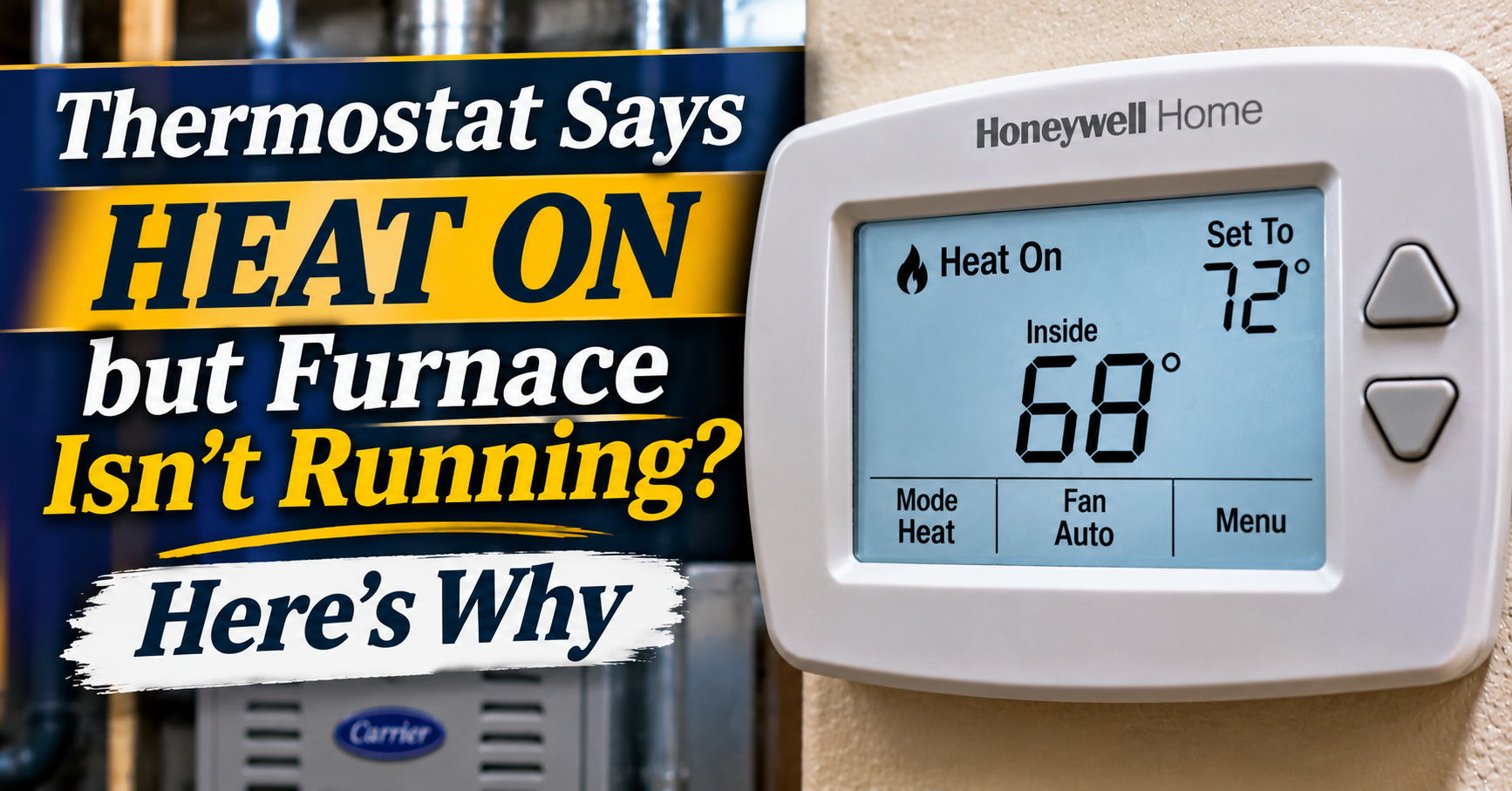
A smart thermostat can have a blank screen for the same reasons as any other thermostat, but it may also depend more heavily on a working C-wire connection.
The C-wire gives steady power from the HVAC system to the thermostat. If that connection comes loose, is miswired, or stops receiving power from the equipment, a smart thermostat may not charge or stay on.
Before buying a new smart thermostat, check whether the old one also stays blank. If both do, the thermostat is probably not the root cause.
If only the smart thermostat is blank while the old thermostat works fine, then the wiring setup, compatibility, or power requirements may be the real issue.
What the blank screen is telling you
A blank thermostat does not always mean the thermostat is bad.
- If fresh batteries bring it back, the problem was probably simple battery power or dirty contacts.
- If it lights up when it is pressed firmly onto the wall plate, the base connection may be loose.
- If it comes back after resetting a breaker or turning on the furnace switch, it lost HVAC power.
- If it stays blank after checking batteries, the wall plate, breakers, the furnace switch, and access panel, the issue may be a blown fuse, drain safety switch, wiring problem, control-board issue, or failed thermostat.
That order matters. Replacing the thermostat before checking power is a little like replacing a lamp because the room breaker is off.

When I would call an HVAC technician
It is time to bring somebody in if the breaker trips again, the thermostat wire looks damaged, the furnace has standing water around it, the low-voltage fuse keeps blowing, or the thermostat stays blank even though the equipment has power.
I would also call if you smell burning, hear buzzing from the furnace or air handler, see melted wiring, or are not comfortable removing an access panel.
A thermostat is a small thing on the wall, but it is connected to the part of the house that keeps everybody warm in January and cool in August. There is no shame in stopping before a basic check turns into a bigger repair.