

Our laundry room has a way of collecting more than laundry. Paper towels, toilet paper, detergent, and all those other household supplies need somewhere to go. The trouble is that having a shelf and being able to use it well are two different things.
We found that out with our paper towels. We had space on the upper shelf, but getting the rolls to stay stacked was almost impossible. They wanted to lean and fall over.
My wife came up with a fix I thought was pretty clever. She placed a curtain rod vertically between the shelf and the ceiling, creating a side to hold the rolls next to the cabinet. Now the paper towels have their own spot instead of taking over the shelf.
That got me thinking about how many laundry room storage problems come down to the same thing. We do not always need a bigger room. Sometimes we need a better way to use the awkward space we already have.
Start With the Space You Already Have
Before buying shelves or bins, take a look around your laundry room when you are not in the middle of doing laundry. That last part is important because it is hard to come up with good ideas when the washer is beeping and a basket of socks is staring you down.
Look for spaces that are available but not doing much:
- The open area between an upper shelf and the ceiling.
- A narrow gap beside the washer or dryer.
- The back of a door that can still open fully.
- The side of a cabinet.
- Wall space above a folding area.
- The space underneath a utility sink.
Not every space needs to be filled. You still need room to move, open appliance doors, reach shutoff valves, clean around the machines, and service equipment.
The goal is to find the spots where a small change would make your everyday routine easier.


Use a Curtain Rod to Keep Paper Towels Stacked
This is the idea my wife came up with for our laundry room, and it solves a problem that had been driving us nuts.
We had an upper shelf next to a tall cabinet. The cabinet gave our paper towels support on one side, but the other side of the stack was open. Once we tried to stack the rolls, they did not want to stay put.
My wife positioned a curtain rod upright between the shelf and the ceiling. The rod acts like a divider on the open side, while the cabinet supports the other side. The rolls sit on the shelf with their round ends facing outward.
In our setup, we can stack two columns of paper towels in the space. The shelf carries the weight, and the rod helps keep the rolls from leaning sideways.
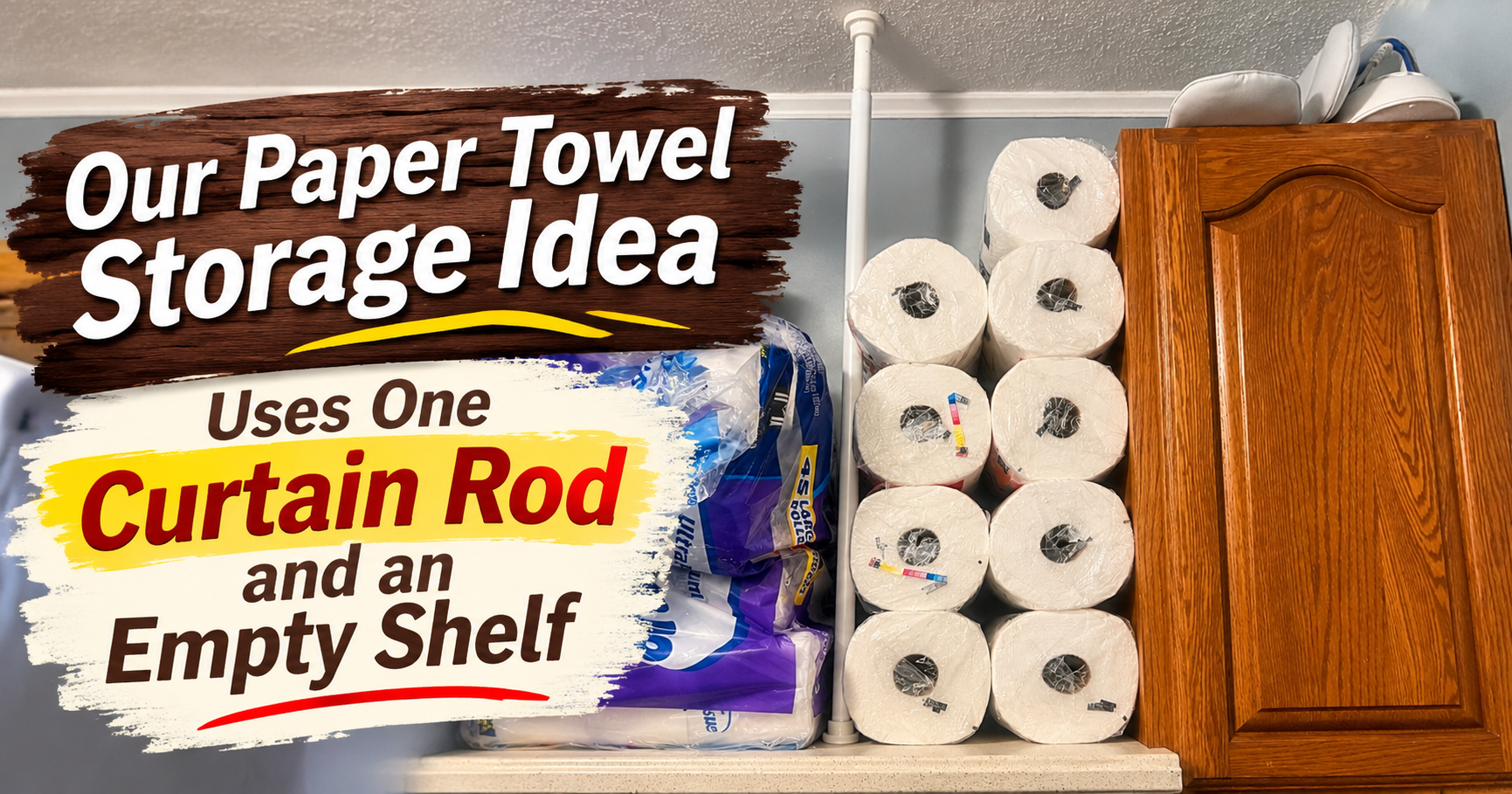
I shared photos and more details about how our curtain rod paper towel storage idea works if you want a closer look at the arrangement.
A tension rod needs to fit securely between suitable surfaces, so measure the space and follow its instructions. It is also worth remembering that one rod will not stop rolls from moving in every direction. If they can roll off the front, use a lower stack or a suitable front barrier.


Save High Shelves for Lightweight Supplies
That space near the ceiling can be useful, especially in a small laundry room. But I would be picky about what goes up there.
Extra paper towels and toilet paper are good possibilities because they are lightweight. A spare box of tissues or an empty laundry basket may work too, as long as everything fits securely and is easy to reach.
A giant detergent bottle is another story.
Even if the shelf itself can support the weight, think about what happens when you have to lift that bottle down. Reaching overhead with a heavy container is awkward, and spilling detergent from that height would turn a quick laundry job into a project nobody wanted.
For high shelves, I would follow a simple rule: store things that are light enough to bring down comfortably, and keep heavy supplies lower.
If the shelf is above your reach, use a stable step stool. The top of a washing machine is not a ladder, even if it is standing right there looking convenient.
Make the Gap Beside the Washer Useful
A narrow gap between the washer and dryer or between a machine and the wall can look like wasted space. Depending on the layout, it may fit a slim rolling cart or a narrow freestanding organizer.
That kind of spot could hold lightweight laundry supplies, cleaning cloths, or a small container for odds and ends. If you are buying a cart, measure the opening at the floor and higher up. Baseboards, hoses, dryer vents, and uneven walls can make the usable space narrower than it first appears.
Before sliding anything into the gap, check a few things:
- The washer and dryer still have the clearances required by their manufacturers.
- The cart does not press against hoses, cords, gas lines, or the dryer vent.
- You can still reach shutoff valves and pull the machines out for service.
- The cart cannot slide into moving or hot parts.
A narrow space is only useful if it does not make the appliances harder or less safe to use. Sometimes leaving a gap open is the better choice.


Give Detergent a Place That Can Handle Drips
Laundry detergent has a special talent for leaving a sticky ring exactly where you do not want one.
A shallow, easy-to-clean tray beneath the bottle can help contain small drips. Choose one large enough for the container to sit flat, and wipe it out when detergent collects.
For a large bottle with a spout, make sure the spout is easy to reach without hanging the bottle over the edge of a shelf. A bottle that has to be pulled forward every time someone does laundry is more likely to tip or drip.
I would also keep detergents and laundry packets in their original containers, closed securely and stored up high or in a locked cabinet away from children. Clear jars may look nice in a picture, but the original container has the label, directions, and safety information.

If you find an old bottle while rearranging, I covered how I check whether laundry detergent has expired before deciding whether it is still worth using.
Put Frequently Used Supplies Where You Can Reach Them
Not everything in a laundry room needs the same kind of storage.
The detergent you reach for every few days should not require a step stool. The backup package of paper towels probably does not need to take up the easiest spot to reach.
I would sort the room into three simple groups:
- Everyday supplies: Keep these within comfortable reach.
- Backups: Store these on a higher shelf or in a cabinet until needed.
- Occasional items: Give these a less convenient spot if they are used only once in a while.
Think about how you actually do laundry. If you always set the stain remover beside the washer, a small tray or designated spot nearby may work better than putting it in a cabinet across the room.
A storage setup can look perfectly organized and still be annoying if you have to move three things every time you need one bottle.


Use a Shelf Divider Instead of Adding Another Shelf
Sometimes a shelf has enough space but lacks a way to keep things separated. That was exactly the problem with our paper towels.
A divider can create smaller sections on a wide shelf. Depending on what you are storing, that might mean a purpose-made shelf divider, a small bin, or a properly fitted tension rod like the one my wife used.
The key is matching the divider to the job.
A curtain rod can help contain our lightweight paper towel rolls. I would not count on that same rod to hold back heavy detergent jugs or glass containers. For heavier items, a sturdy bin or appropriately installed divider makes more sense.
Look at what keeps falling over, spreading out, or getting mixed together. The best divider is the one that addresses that particular problem.
Keep Under-Sink Storage Organized Without Hiding a Leak
If your laundry room has a utility sink, the cabinet underneath can be a convenient place for cleaning supplies. It can also become the place where everything gets shoved until somebody needs a bottle in the very back.
A removable tray or small bin can group supplies together and help catch minor drips. Measure around the plumbing before buying anything, because the drainpipe often takes up the best-looking part of the cabinet.
I would leave enough open space to see the pipes and check for moisture. If a container is wedged so tightly around the plumbing that you cannot see or reach anything, it is not doing you any favors.
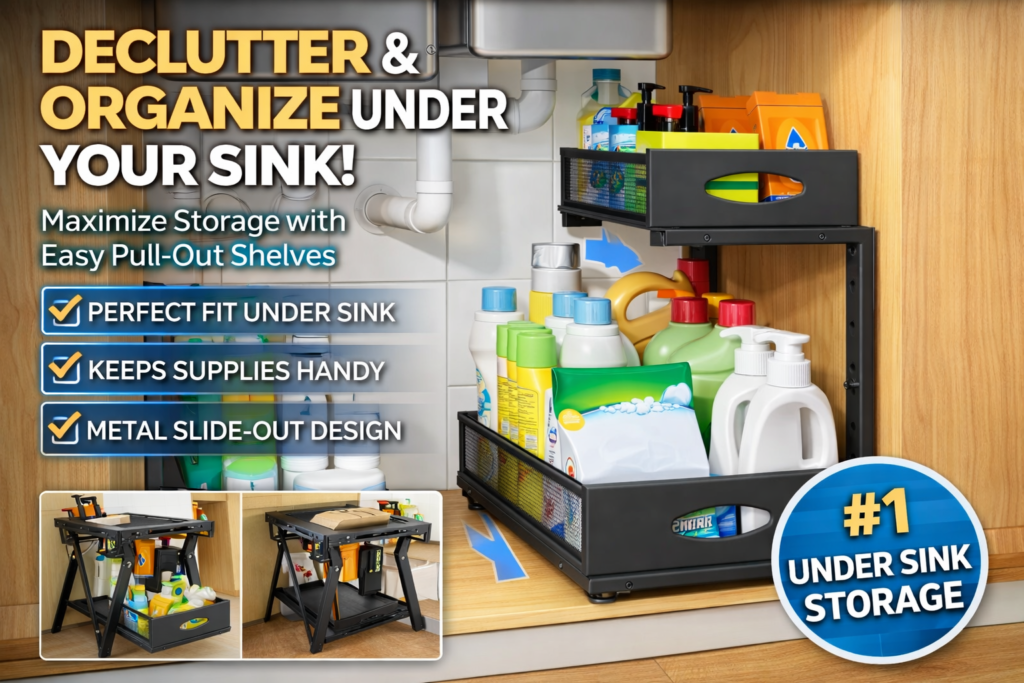
Our article on making under-sink storage more usable has more ideas for working around that awkward plumbing.
Keep cleaning chemicals in their original containers, and follow their labels for storage. Never mix products, and keep them secured away from children and pets.


Use the Back of the Door Carefully
The back of a laundry room door may have room for an over-the-door organizer, hooks, or a narrow rack. That could be handy for lightweight items such as cleaning cloths, empty reusable bags, or small laundry accessories.
Before loading it up, open and close the door fully. Make sure the organizer does not hit the wall, interfere with the latch, or block access through the doorway.
A hollow-core door may not support screwed-in hooks or racks without the right hardware. If you are unsure what the door can hold, use an appropriate over-the-door option and follow its weight limit.
I would avoid hanging heavy bottles where they can swing, leak, or come loose every time the door closes. A door that sounds like a box of bowling pins every time somebody walks through is not much of an improvement.
Create a Spot for the Small Stuff
Every laundry room seems to attract small things that do not belong in the washer.
Pocket change. A lonely sock. A hair tie. A receipt that almost went through the wash. Something made of plastic that no one in the house claims to own.
A small container near your sorting area gives those things somewhere to land. It does not need to be fancy. The main thing is choosing a spot where it will not get knocked into the machine or buried under folded clothes.
If you have young children, keep coins and other small objects out of their reach. An open dish full of pocket change is not a good choice where little hands can get to it.
You could also keep a separate, clearly marked spot for single socks. When the missing one eventually appears, you might actually remember where its partner went. No promises, though. Some socks appear to have their own travel plans.

Keep Laundry Baskets From Taking Over the Floor
Laundry baskets are useful right up until you are stepping around three of them to reach the washer.
If you have open shelf space, check whether an empty basket can slide underneath. A basket that fits beneath a folding surface or shelf is easier to put away than one that has to be carried into another room.
Another possibility is choosing stackable baskets for clean or sorted laundry. Measure the shelf and the basket first, especially if the shelf has a front lip that could catch the handles.
Do not stack loaded baskets so high that they become unstable. And leave appliance doors, walkways, and any utility equipment accessible.
If baskets are constantly sitting in the same walkway, that is useful information. It may mean the room needs a more convenient parking spot, not that everyone needs another lecture about putting them away.
Be Careful With Storage Around a Furnace or Water Heater
A utility room sometimes has to be a laundry room, storage room, and home for the furnace or water heater all at once. That makes planning more important.
Paper towels, cardboard boxes, laundry baskets, and cleaning supplies should not be crowded against heating equipment. Keep required clearances around appliances, vents, burners, and access panels, and follow the equipment manufacturer’s instructions and local requirements.
Do not store flammable products near heat or ignition sources. If you are unsure whether a shelf or storage area is too close to a propane furnace or water heater, ask a qualified technician.
I also would not place a shelf, basket, or pile of supplies in front of an alarm. Detectors need the placement and open space specified by their manufacturers.

For a propane home like ours, the location matters. I explained the basics in where a propane gas detector should go in a house.
Choose Storage That Fits the Room, Not Just the Picture
A matching set of containers can look great. But before buying a whole cartload, I would measure the space and think about what needs to go in each one.
A few things worth checking:
- Shelf depth: Will the container fit completely on the shelf without hanging over?
- Height: Can you remove the container without hitting the shelf above it?
- Weight: Can you lift it comfortably when it is full?
- Visibility: Can you see what is inside, or will you need to label it?
- Cleaning: Can you remove and wash it if something spills?
- Access: Can you reach plumbing, outlets, appliance controls, and shutoff valves?
A single tray that stops detergent drips may be more useful than six matching baskets that do not quite fit. Ask me how often the simple solution turns out to be the one that was needed all along.
A Simple Way to Decide What Goes Where
If the whole room feels crowded, you do not have to empty every cabinet and make a weekend project out of it.
Pick one frustrating area first. Maybe it is the shelf where paper towels fall over, the floor where baskets pile up, or the cabinet where cleaning supplies disappear behind the plumbing.
Then ask:
- What am I trying to store here?
- Does it need to be this easy to reach?
- Is the shelf or cabinet strong enough?
- What keeps going wrong with the current setup?
- Would a divider, tray, hook, or different location solve that problem?
That is essentially what happened with our paper towels. We did not need a new laundry room. We needed a way to keep the rolls from leaning into the open part of the shelf.
Common Laundry Room Storage Questions
What is the best way to add storage to a small laundry room?
Start with the space you already have and the item that causes the most trouble. An upper shelf, narrow gap, cabinet side, or door may provide room for a suitable organizer. Keep appliance clearances, walkways, and service access open.
What should I store on a high laundry room shelf?
Lightweight backup supplies, such as paper towels or toilet paper, can be good choices if the stack is stable and you can reach it safely. Keep heavy bottles and containers lower, where they are easier to lift.
Can I store things between my washer and dryer?
Possibly, if there is enough room and the appliance manufacturers’ clearance requirements are met. Do not block vents, pinch hoses, crowd a gas connection, or make the machines difficult to service.
How can I keep paper towels from falling over on a shelf?
A divider can help contain them. In our laundry room, my wife positioned a curtain rod vertically between the shelf and ceiling, using the cabinet on the opposite side to help support the stack. Your shelf may need a different arrangement or a front barrier.
Where should laundry detergent be stored?
Keep it in its original, securely closed container, following the product label. Store it where it will not tip or spill, and keep it up high or locked away from children. A washable tray can help catch small drips.
Is it safe to store paper towels in a utility room?
Paper towels can be stored in a dry utility room, but keep them away from heat sources and maintain the required clearance around furnaces, water heaters, vents, and other equipment. They should not block alarms, access panels, or walkways.